TL;DR
8/10. The best book on how Tolkien built Middle-earth, by a philologist who held Tolkien’s own academic post. It reverse-engineers the deepest world in fantasy into method: build names first, let the world grow to fit, exploit the reader’s assumption that a name implies a history. Demanding, scholarly, and worth the work.
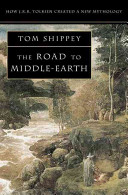
Tom Shippey set out to answer a question every writer who loves Middle-earth eventually asks: how did Tolkien do it? The Road to Middle-earth is the best answer in print, a scholarly study that reverse-engineers the deepest fictional world ever built and shows you the machinery underneath. Shippey is uniquely qualified for the job, having held the same academic post Tolkien once held and taught the same philology syllabus, so he reads Middle-earth from the inside of Tolkien’s own discipline.
The book’s central thesis is one a working writer should think about. Shippey argues that Tolkien’s entire fiction grew out of philology, the historical study of languages, and out of Tolkien’s conviction that you could feel real history inside old words, and that by reconstructing the lost world those words implied, you could build something that felt true instead of invented.
The method, made visible
Shippey shows, with examples, how Tolkien worked backward from words to worlds, and any writer can use that, even one who never intends to invent a language.
A single archaic term, a place-name in an old poem, a gap in the historical record, became for Tolkien a seed: if this word survived, what world must have existed to produce it? He then built that world. The names came first and the story grew to fit them, the reverse of how most writers work.
The lesson generalizes beyond Tolkien’s specific obsession. It’s a demonstration that a writer can generate depth by working backward from concrete detail to the implied reality behind it, instead of forward from a vague concept. A name that sounds like it’s a history makes the reader assume the history exists. Shippey shows Tolkien exploiting that assumption at industrial scale, and a writer can borrow the principle without learning Old Norse.
Keep reading
Invented languages and naming in fiction: building names that feel real: Shippey’s whole thesis is that Tolkien built worlds out of words. How naming creates the illusion of depth.
Watch: Double Book Review--Road to Middle Earth and Tolkien: Author of the Century, Tolkien Lore
Shippey on why the sound matters
One of the book’s most useful sections explains Tolkien’s belief that the sound of words carries meaning and beauty independent of definition, that certain phonetic shapes simply feel ancient, or lovely, or sinister. Tolkien chose his invented names for this felt quality, so Elvish sounds beautiful and the Black Speech sounds foul before you know what either means. For a writer naming characters and places, this is a concrete, usable insight: the sound does work the meaning can’t.
Shippey takes this further than a casual reader would, and the payoff is practical.
He shows how Tolkien used contrast between language families to signal allegiance and character without explanation. The soft, flowing sounds of Elvish, the harder consonants of Dwarvish, the guttural ugliness of orc-speech, each set of sounds carries an emotional charge that primes the reader before a single fact is given. A name like Lothlórien feels safe and old; a name like Mordor feels like a closing door.
That’s not accident, and Shippey shows the deliberate phonetic engineering behind it. A writer can apply the principle immediately, building name-sounds that match the feeling a place or person should evoke, so that the reader’s ear does part of the characterization. It’s one of the few transferable techniques to come out of Tolkien’s hyper-specialized method, and Shippey is the one who makes it explicit enough to steal.
Keep reading
How to name characters and places so they stick: the practical version of Tolkien’s sound-and-meaning theory, for writers who will never build a language.
The real warning
This is a demanding book, and the opening chapters on philology are heavy going for anyone outside the field.
Shippey takes most of the first chapter just to define his terms. That chapter tests my patience, and a reader who only wants writing tips will be ready to quit before the payoff arrives. It’s literary scholarship, not a craft guide, and it expects you to work. The reward is real, but it’s earned instead of handed over, and a writer who dislikes academic prose may bounce off.
Is The Road to Middle-earth worth reading?
For the writer willing to push through the philology, it’s the single most illuminating book about how Tolkien built Middle-earth, and by extension about how a writer can build any deep secondary world. It turns Tolkien’s magic into method, and that’s what a working writer needs. Not an easy read and not for everyone, but for the right reader it’s the closest thing to a blueprint of the deepest world in fantasy. A fantasy writer who skips it and then wonders why their world feels like cardboard has nobody to blame but themselves.
Explore the hub
The Writing Hub: world-building and the craft behind it, gathered in one place.
Frequently Asked Questions
Other Books From – Biography and Memoir



About the author