TL;DR
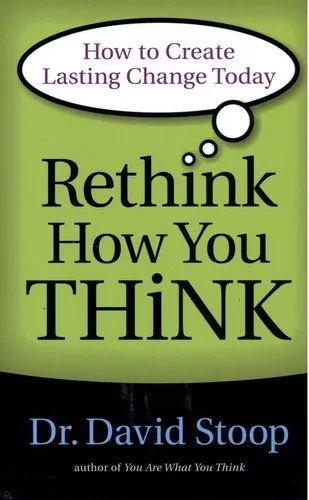
6/10. The follow-up to You Are What You Think, and the more explicitly religious of the two. The opening observation is the strong part: most of our behavioral patterns are in place by around age six. That’s why deciding to change something rarely changes it.
Stoop pairs six movements and gives each a chapter. Fear to love. Resentment to gratitude. Lust to purity. Idolatry to contentment. Mistrust to trust. Loneliness to connection. Each chapter proposes the same mechanism. That’s sustained meditation on scripture instead of a decision or a technique. The frame is the renewing of the mind, and the claim is that this was described long before neuroscience arrived at anything similar.
I have mixed feelings about this one. The opening diagnosis is sharp enough that it’s stayed with me, and the treatment only works if you already share the author’s faith. That’s a frustrating combination in a book that promises lasting change to everyone.
Why is most behavior set by age six?
Because that’s when the patterns get installed, and the argument is the strongest thing in the book. A child put in place whatever you’re trying to change, and he was responding sensibly to conditions that no longer exist. A boy who learned that expressing need produced trouble developed a pattern that worked in that house. The adult still carrying it is running software written for a different machine, and calling him irrational misses the point entirely.
The consequence is that the adult deciding to be different is arguing with somebody who’s not present. You can’t out-decide something that was never a decision. That’s why willpower approaches fail so consistently and so predictably. That reframe is useful and it explains a great deal of failed self-improvement. It also, awkwardly, sets up a mechanism the book doesn’t deliver.
I think the software comparison is exactly right. Code written for old hardware rarely fails loudly. It misbehaves in quiet ways nobody can trace, and that’s how these childhood patterns behave in grown adults.
Watch: You Are What You Think by Dr. David Stoop · Audiobook preview, Google Play Books
What is the proposed method in Rethink How You Think?
Daily meditation on scripture, sustained over time, on the premise that repeated exposure reshapes the underlying patterns in a way that a decision can’t. Structurally this is right. If years of repetition in childhood installed the pattern, then years of repetition is a plausible way to change it, and a one-off resolution isn’t. Stoop is applying a correct principle.
The difficulty is that the method is inseparable from the frame. A reader who doesn’t hold the theology can’t substitute a secular equivalent, because the mechanism as described depends on what is being meditated on and not merely on the repetition.
So the book delivers a diagnosis that applies to everybody and a treatment that applies to a subset, and it doesn’t acknowledge the gap. That gap is my biggest frustration with the book. Stoop sets up a problem that belongs to every reader and then prescribes a cure only some of them can take, and he never pauses to say so. One candid paragraph near the front would have saved a lot of readers a lot of time.
How does Rethink How You Think use neuroscience?
Loosely, and I part company with the book on this. The argument that scripture described the renewing of the mind long before modern research arrived at neuroplasticity is doing rhetorical work instead of explanatory work. It’s a common move in this genre: find a broad modern finding, note that an ancient text said something that can be read as compatible, and imply that the ancient text anticipated the science.
Neuroplasticity is a real and well-supported finding. It says that the brain changes with repeated experience, which supports meditation, exercise, therapy, language learning, and a great many other things equally. It doesn’t privilege any particular content, and the book implies that it does.
A reader should notice that the science is being used as endorsement instead of as evidence.
This move is lazy wherever it shows up. A real finding stretched to dress up a claim it doesn’t support cheapens the science and the faith at once, and neither deserves that treatment.
Which of the two Stoop books should you read?
The first, unless you want the devotional version.
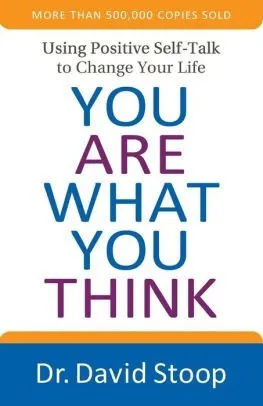
You Are What You Think gives you a cognitive model that works whether or not you share the theology, and the theology arrives as application. This one places the entire method inside a scriptural practice, so a reader outside that frame gets the diagnosis without a treatment.
If you’re inside the frame and want a structured year of practice organized around six specific movements, this is a reasonable book for that, and the six pairings are well chosen.
If you’re not, read the first one and take the opening observation from this one, which is worth having and fits in a paragraph.
Verdict
Read the first book instead unless you want the devotional version. This one has the better opening observation and the narrower method. If the scriptural practice isn’t something you’ll do, the book has nothing else to offer you, and it doesn’t tell you that until you’re well into it.
I’d prefer a book like this be upfront about its audience. The opening chapter is worth anyone’s time, and the rest belongs to a narrower readership than the cover suggests. Buy it knowing that and you won’t feel shortchanged.
Explore further
The Psychology of Writing Hub: what drives creative work and what stops it.