Latest
What’s New at The Writing King: Week of October 25, 2026Challenger Remembrance Day: The Engineer Who Wouldn’t SignJoel Salomon: The Truth About MoneyReddit Is Putting Up a Login Wall. Wikipedia Won’t Be Far Behind.Victoria Chemko: The Body Is the First TechnologySir Patrick Stewart: A TributeA Yale Economist Says We Won’t Be Missed. He Forgot the Bread Line.Walter Koenig: A TributeAI Has Paid Off Outside Tech. Apollo Is Reading the Wrong Scoreboard.I Don’t Post Bad ARC Reviews. I Send the Author a Note.The Little Red Book of Stuff That Works!Your Kids Are Your Own FaultGrow a PairYou’re Broke Because You Want to BeIt’s Called Work for a Reason!No Time for TactShut Up, Stop Whining, and Get a LifeWilliam Bessette: AI Enablement and Child Welfare TechnologyFree Book Planning ToolsWhat’s New at The Writing King: Week of October 18, 2026Ghostwriting by the Numbers: Timelines, Word Counts and the First CallPromising Young Woman (2020) ReviewBillions for AI, Pennies for the Plumbing: AI Companies Should Pay to Keep PHP AlivePHP2Shell: AI Found a 22-Year-Old Crack Under Your Website in Two DaysPetrov Day: The Officer Who Didn’t Believe the ComputerKindle Unlimited Is Now Kindle+. AI Audiobooks Just Joined the BuffetChina Is Using Bots to Fan the Data Center Backlash. The Backlash Is Still Real.The Society of Authors Signed an Ethical AI Charter, Then Ran From It in Eight DaysMo Gawdat Says the AI Dystopia Starts in 2027. Read the List, Skip the DatesWhen to Quit Writing a Book: I’ve Abandoned Dozens, and I’d Do It AgainGetty Images Filed for Bankruptcy. Can You Prove You Licensed Your Book’s Images?Fluff Words: Cut Them From Your Prose, Keep Them in Your DialogueWhere Can Writers Learn Storytelling From Movies? Richard Lowe Publishes 1,226 Film and TV Reviews With Writing Craft NotesWhere Are the Independent Bookstores and Public Libraries Worth Visiting in Tampa Bay? Author Richard Lowe Profiles 44 of ThemWhere Can You Hear Founders and Executives Tell Their Own Stories? Richard Lowe’s Leaders and Their Stories Publishes Every Unscripted Interview With a Full TranscriptWhat Should You Know Before Hiring a Ghostwriter? The Writing King Publishes 57 New Answers, Including What to Do When It Goes WrongAuthor Richard Lowe Publishes Eight Volumes of Enemies of You, a Researched Series on the Forces Working Against Ordinary AmericansThe Jackal (1997) ReviewThe Day of the Jackal (2024) ReviewYour First Novel Is an Apprentice Piece: What Beta Readers and Editors Can’t FixWhen the Cloud Gets Bombed: What the AWS Data Center Strikes Teach About BackupsHuman-Written Book Labels Are Gatekeeping With a FeeThe Enshittification of Microsoft Office: Why I Switched to a Free CloneGlobal Encryption Day: The Padlock Every Writer Depends OnWriting Your Worst Moments in a Memoir: Show the Evidence, Skip the VerdictHow to Register a Copyright for Your Book (and What Doesn’t Count)Your AI Chats Aren’t Private: Deleted ChatGPT Logs in CourtThe Board Seat Scam: A 419 Letter in a Business SuitI Joined the Science Fiction Book Club 30 TimesCitations in a Memoir: Endnotes, Footnotes and Fair Use

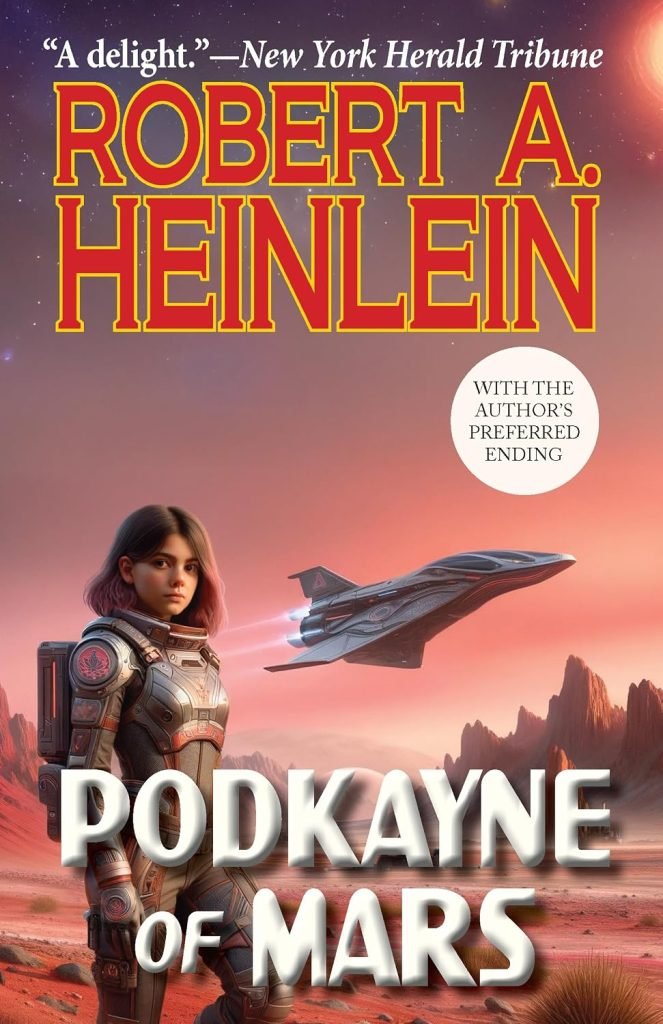
Podkayne of Mars

Podkayne of Mars
Category:Science Fiction
Pages:191
Language:English
Share:

Buy Now

Description:

TL;DR

Heinlein’s 1963 novel about Podkayne Fries, a fifteen-year-old girl from Mars traveling to Earth with her troublemaking younger brother. It’s best known now for the fight over its ending. Heinlein lost that fight, and his readers eventually won it back.

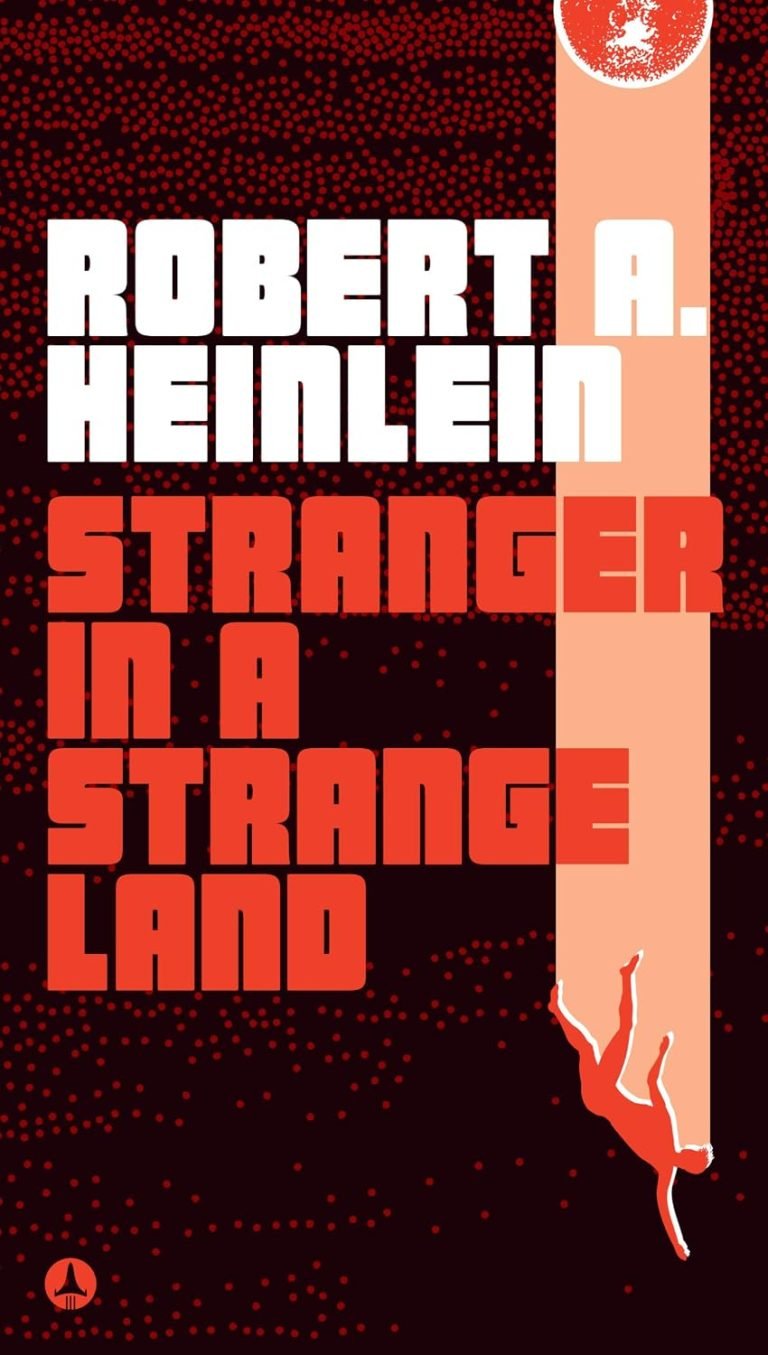
After I finished Stranger in a Strange Land, I went hunting for everything else Heinlein had written. Podkayne of Mars was one of the books I tracked down.

It’s a smaller book than Stranger, and a stranger one in its own way.

What is Podkayne of Mars about?

Podkayne Fries, called Poddy, is fifteen and wants to be a starship captain. The book is her diary. Her parents promise her a trip to Earth, then cancel it when three babies they’d kept in the creche arrive early through an administrative mix-up. Her great-uncle Tom, a senator and elder statesman of Mars, takes her instead, along with her eleven-year-old brother, Clark, aboard the liner Tricorn.

Clark is a genius and a menace. At customs he jokes that he’s carrying two kilos of happy dust. That gets him searched and keeps everyone’s eyes off a package hidden in Poddy’s luggage. The package is a nuclear bomb. Clark disarms it and keeps it. Heinlein lifted the customs gag from a real incident he described in his travel book Tramp Royale.

The ship stops at Venus. Heinlein made it a gambling planet owned outright by a single corporation, where murder is punished with a fine set by what the victim would have earned. There the adventure turns into a political thriller. Uncle Tom turns out to be Mars’s secret envoy to a key conference on Luna, and the children are his cover. A faction opposed to him kidnaps Clark. Poddy is captured trying to rescue him, and the captors use both children to put pressure on Tom.

Clark escapes and kills them. He forgets about the bomb he’d rigged to go off if the escape failed.

The novel ran in three parts in Worlds of If magazine, starting in November 1962, before Putnam published it as a book in 1963. Heinlein’s working title was Podkayne Fries: Her Life and Times.

What happened to the ending of Podkayne of Mars?

It was changed over Heinlein’s objections. In his original ending, Poddy goes back for a baby Venerian fairy, a small semi-intelligent creature, and dies shielding it from the blast. Clark narrates the last chapter, admits he fouled up, and plans to raise the fairy himself. The editors, Heinlein’s agent Lurton Blassingame and his wife, Virginia, all pushed for a version where she lives. The 1963 book has Poddy badly hurt and recovering, and Uncle Tom laying the blame on her parents. The two versions differ only on the last page.

Heinlein was bitter about it. In a letter to Blassingame he compared the change to revising Romeo and Juliet so the young lovers live happily ever after. The original ending saw print in 1989, in his posthumous collection of letters, Grumbles from the Grave.

Then the readers got a vote. Baen Books printed both endings in a 1993 edition and invited essays on which was right. The 1995 Baen edition included 27 of them, and the death ending won. Later editions use it.

The author’s choice came back.

Is Podkayne of Mars a book for young readers?

It reads like one, and some catalogs shelve it as young adult. Heinlein didn’t think of it as one of his juveniles, and Putnam published it. His juveniles came out from Scribner. The lesson at the end, about parents and what children pay for their choices, is aimed squarely at adults. Modern critics are rough on its dated views about women and work.

Why does Podkayne of Mars belong on this shelf?

It’s part of the Heinlein run that shaped me as a reader. It’s also a useful lesson for writers about who controls an ending. Publishers change books, and sometimes the change sticks for decades. Sometimes the original finds its way back. I’d add one more lesson. Poddy’s voice, a bright teenager writing in her diary and sure she has the universe figured out, is the reason to read it, and voice is the hardest thing in fiction to fake. Heinlein wrote her at fifty-five, and she still sounds fifteen.

Keep reading

My tribute to Robert Heinlein: the books I hunted down after Stranger in a Strange Land, and what I think of them now.
Frequently Asked Questions

Who is Podkayne Fries?
A fifteen-year-old girl from Mars, Podkayne Fries, travels toward Earth with her brother Clark and their great-uncle, a senator. A stop on Venus turns into a political kidnapping plot.
When was Podkayne of Mars published?
It was serialized in Worlds of If in late 1962 and early 1963, and G. P. Putnam’s Sons published the book in 1963.
How did Heinlein want Podkayne of Mars to end?
In Heinlein’s original ending, Podkayne dies shielding a baby from a bomb blast. Putnam required a version where she survives, and that version ran in 1963.
Which ending do current editions of Podkayne of Mars use?
After Baen Books printed both endings and ran a reader essay contest in the 1990s, the original death ending was declared the winner, and later editions use it.
Who is Clark in Podkayne of Mars?
Podkayne’s eleven-year-old brother, a brilliant and dangerous troublemaker who smuggles a nuclear bomb aboard their ship.
Who wrote Podkayne of Mars?
Robert A. Heinlein, author of Stranger in a Strange Land and The Moon Is a Harsh Mistress.

About the author

Robert A. Heinlein

Robert Anson Heinlein (July 7, 1907, Butler, Missouri to May 8, 1988, Carmel, California) was an American science fiction novelist and one of the central architects of the genre. Often grouped with Isaac Asimov and Arthur C. Clarke as the Big Three of twentieth-century SF, he received four Hugo Awards for Best Novel (Double Star 1956, Starship Troopers 1960, Stranger…

More about Robert A. Heinlein

Back