Latest
Profiles in CourageAmerican SoldierI, RobotA World at Arms: A Global History of World War IICampus BattlefieldTime for a Turning Point21 Days to Success with LinkedIn: Business Social Networking the Gnik Rowten WayLifeOpen: An AutobiographyDid I Ever Tell You This?: A MemoirBeneath a Scarlet SkyLove’s Executioner and Other Tales of PsychotherapyStranger in a Strange LandShattered Sword: The Untold Story of the Battle of MidwayThe Bell JarThe Phone Book: The Curious History of the Book That Everyone Uses But No One ReadsDesigning Casinos to Dominate the CompetitionTrump: The Art of the DealMasters of NetworkingNetworking Your Way to SuccessSoldier for Life: Leader Lessons from the 12th Sergeant Major of the ArmyThe Library BookFlorida Roadkill21 Days to Success Through Networking: The Life and Times of Gnik RowtenPodkayne of MarsRight Wing RevolutionThe MAGA DoctrineThe College ScamStop, in the Name of GodPa’anRadioThe Sage of SagittariusDoes Explicit Sex Sell Books? An Answer to The Absolute Degeneracy of Modern WritingThe Mary Sue: How a 1973 Star Trek Parody Became a Writing TermWhat the AI Writing Survey Says About Jobs, Freelancers and Fiction AuthorsHow Long Does Google Take? Crawling, Indexing and Recovery TimesLife of Pi50 Years of Duty: One Police Officer’s Compelling Journey from State Trooper to County SheriffBreaking Rank: A Top Cop’s Exposé of the Dark Side of American PolicingBlack in Blue: Lessons on Leadership, Breaking Barriers, and Racial ReconciliationCalled to Rise: A Life in Faithful Service to the Community That Made MeVigilance: My Life Serving America and Protecting Its Empire CityTurnaround: How America’s Top Cop Reversed the Crime EpidemicCollaborate or Perish! Reaching Across Boundaries in a Networked WorldThe Profession: A Memoir of Community, Race, and the Arc of Policing in AmericaSTEP-UP and LEAD: A Guide for Dynamic, Innovative Leadership in Law EnforcementStriving for Justice: A Black Sheriff in the Deep SouthThe Diagram GalleryGar Travis: A Tribute to One of the Best Faire PhotographersReverse Tropes: Six Ways to Turn a Tired Trope Inside Out

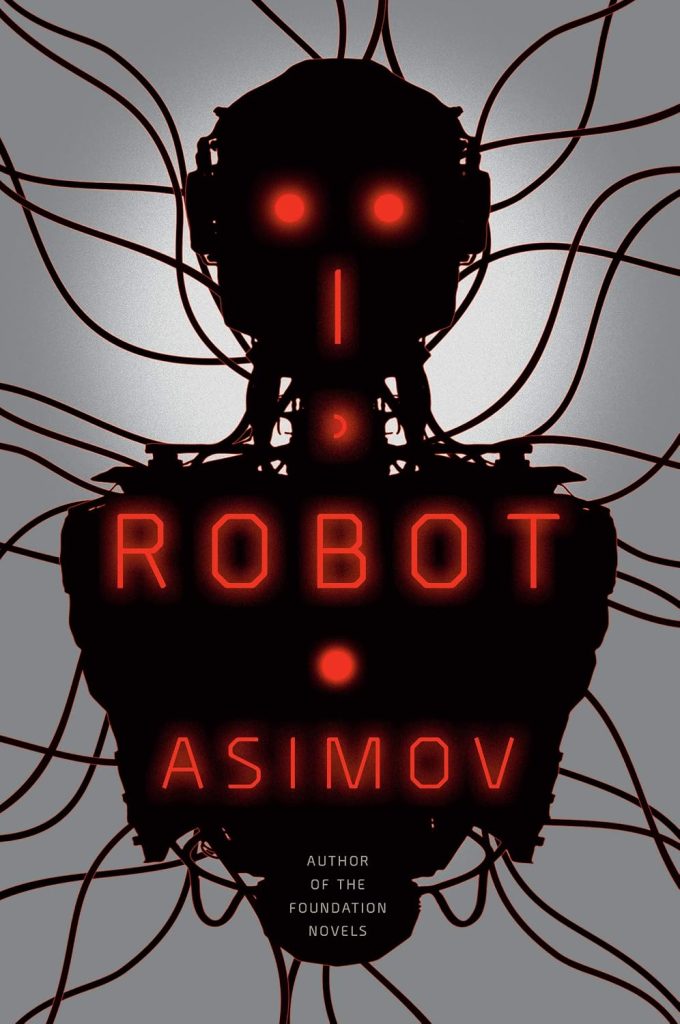
I, Robot

I, Robot
Author:Isaac Asimov
Category:Science Fiction
Publisher:Gnome Press
Published:December 2, 1950
ISBN:055338256X
Pages:253
ISBN:9780553382563
Language:English
Share:

Buy Now

Description:

TL;DR

Isaac Asimov’s 1950 collection of nine robot stories, framed as the memories of robopsychologist Susan Calvin. It’s where the Three Laws of Robotics took hold, and it’s where I started reading Asimov at about eight years old.

I was somewhere around eight years old when I started reading Isaac Asimov, and I, Robot was where I began. I was hooked instantly.

What grabbed me was the way he thought through the logic of his robots. The Three Laws collided with one another and created puzzles that had to be reasoned out. I’d never read anything like it. For a kid who spent his time looking at the sky and wanting to be an astronaut, it was the perfect thing to find.

What is I, Robot about?

It’s nine stories, first published between 1940 and 1950, stitched together with a frame. Dr. Susan Calvin, a robopsychologist at U.S. Robots and Mechanical Men, tells a reporter about her career, and each story is a case from it.

They run in order of increasing stakes. “Robbie” is about a mute robot who looks after a little girl. “Runaround” sends two engineers to Mercury with a robot stuck in a loop between two of its laws. “Liar!” gives a robot the ability to read minds, with ugly results. By “The Evitable Conflict,” machines are running the world’s economy in the background, and the humans have only started to notice.

The Three Laws run through all of it. A robot may not harm a human or allow one to come to harm. It has to obey orders unless they conflict with the first law. And it protects itself unless that conflicts with the first two. Nearly every story is a puzzle about what happens when those rules meet the real world.

Where did the title I, Robot come from?

Not from Asimov. He wanted to call the book Mind and Iron. The publisher chose I, Robot over his objection, borrowing it from a 1939 story by Eando Binder. Gnome Press printed 5,000 copies of the first edition in December 1950.

The 2004 film starring Will Smith shares the title, the Three Laws and a few character names, and not much else. It grew out of an unrelated screenplay.

Why does I, Robot belong on this shelf?

Every argument people are having about artificial intelligence today, about what rules a thinking machine should follow and what happens when the rules conflict, was already in this book in 1950. People who have never read a word of Asimov argue about alignment, guardrails and machines that follow instructions too literally, and they’re replaying his plots. A robot that obeys the letter of an order and wrecks its spirit drives half the stories here, and half the worries in the news.

Asimov didn’t predict the technology. He predicted the arguments.

He also coined the word robotics, in “Liar!” in 1941. Seventy-five years later, the stories still read like logic problems with people in them.

Keep reading

My tribute to Isaac Asimov: why Asimov set the bar I’ve measured writers against my whole life.

Frequently Asked Questions

What is I, Robot by Isaac Asimov?
A 1950 collection of nine connected short stories about robots, framed as robopsychologist Susan Calvin recounting her career to a reporter. The stories explore the Three Laws of Robotics.
What are the Three Laws of Robotics?
A robot may not harm a human or let one come to harm; it must obey human orders unless they conflict with the first law; and it must protect itself unless that conflicts with the first two laws.
What stories are in I, Robot?
Robbie, Runaround, Reason, Catch That Rabbit, Liar!, Little Lost Robot, Escape!, Evidence and The Evitable Conflict.
Did Asimov choose the title I, Robot?
No. He wanted to call it Mind and Iron. The publisher chose I, Robot, a title taken from a 1939 story by Eando Binder.
Is the I, Robot movie based on the book?
Only loosely. The 2004 film borrows the title, the Three Laws and some character names, but it grew from a separate screenplay.
Who coined the word robotics?
Isaac Asimov, in his story Liar!, published in 1941 and later collected in I, Robot.

About the author

Isaac Asimov

Isaac Asimov (January 2, 1920 to April 6, 1992) was a Russian-born American writer and professor of biochemistry at Boston University, widely considered one of the most prolific and influential writers of the twentieth century. He wrote or edited more than five hundred books across every major Dewey Decimal category except philosophy, ranging from science fiction and mystery to popular…

More about Isaac Asimov

Back