TL;DR
7/10. A phenomenal, much-reread favorite and a technical masterwork. The world-building ranks among the best in science fiction, and the ecological theme runs years ahead of the famous stories that share its premise. It holds at a 7 mainly on pacing: it moves too fast, and the final climax is over in a blink. More terror and more patience would have lifted it.
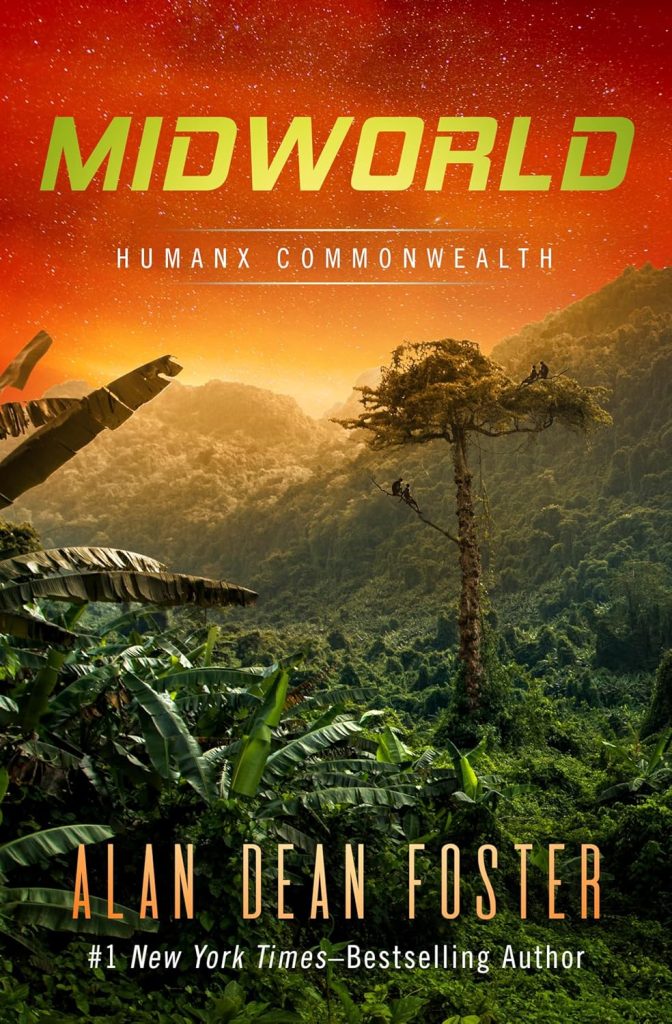
I’ve read Midworld twelve times. On a jungle planet swallowed by a single globe-spanning rainforest, a primitive human society lives in fragile harmony with a vast and dangerous living world, until outsiders arrive to exploit it. Alan Dean Foster’s novel, part of his Humanx Commonwealth series, is technically a masterwork, and its world-building is among the very best I’ve ever read.
In hindsight it’s a strong precursor to later and far more famous stories built on the same premise. A green world. A native people in balance with it. The threat of outside plunder. Foster got there first, and the book remains a favorite of mine despite the one real flaw I’ll get to. Foster is a prolific professional, and here his strengths are on full display, the richest kind of world-building wrapped around a fast, fun adventure with an ecological point.
The living world: among the best ever built
The setting is the reason I keep coming back. Foster renders the planet-wide rainforest as a complete, layered, lethal ecosystem. The flora and fauna of every level of the canopy world.
The deadly life below. The detailed web of relationships the native society reads as easily as we read a street. This is among the best world-building in science fiction, the kind of immersive, biologically imagined place that feels like it goes on existing after you close the book.
On craft alone it’s a masterwork. Any writer who wants to learn how to build a living, breathing setting should study what Foster does here.
Keep reading
World-building that makes the setting a character: Foster’s living rainforest, some of the best world-building in the genre.
Watch: Midworld Audiobook by Alan Dean Foster, Free Audiobook
The ecological theme, ahead of its time
The environmental message, the value of living in harmony with nature against the destructiveness of exploitative outsiders, was prescient for its era and still matters, and it’s impossible to read now without noticing how closely the premise anticipates later, far more famous stories built on the same bones: the lush living planet, the indigenous people attuned to it, the outside force arriving to strip it. Foster got there early.
For a reader or writer interested in ecological science fiction, Midworld is a notable, ahead-of-its-time example of using an alien world to say something about how we treat our own.
Keep reading
Environmental themes in fiction without preaching: Foster’s eco-SF as a model for dramatizing a green message through story.
Too fast, and the heroes nearly too perfect
Here’s my one real complaint, and it’s a complaint about pacing. The book is fast, and a little too fast. The approach to the Star People’s station cried out for more, more buildup, more dread, more time spent in the tightening tension, and instead it moves quickly past the very moments that should have been savored. The final climax is the worst offender: it’s over so fast that if you blink you might miss it. After all that gorgeous world-building, the payoff deserved more room to land.
The two heroes, both natives of the planet, also edge close to Mary Sue territory, they do the right thing nearly every time, which can strain belief, though they’re written well enough that they rise above the problem instead of drowning in it. It’s a fun read throughout, and I think more terror, more fear woven through that lethal world, would have made it markedly better.
Keep reading
Pacing a climax so the payoff lands: the case for slowing down at the moments that matter most, where Midworld rushes.
Is Midworld worth reading?
It’s a phenomenal book and a personal favorite, a technical masterwork carried by world-building that ranks among the best in science fiction and an ecological theme that arrived years ahead of the famous stories that share its premise.
I keep it at a 7, and the gap between that and a higher score is almost entirely pacing: it moves too fast, the approach to the station and especially the climax are rushed past in a blink, and a little more terror and a little more patience at the key moments would have lifted it. The heroes verge on too perfect but are good enough to sustain it. For the world alone it’s worth reading, and rereading, which I’ve done a dozen times.
Brilliant on world and theme, rushed at the finish.
Explore the hub
The Entertainment Hub: science fiction and the worlds it builds, gathered in one place.
Frequently Asked Questions
Other Books From – Fiction


About the author