
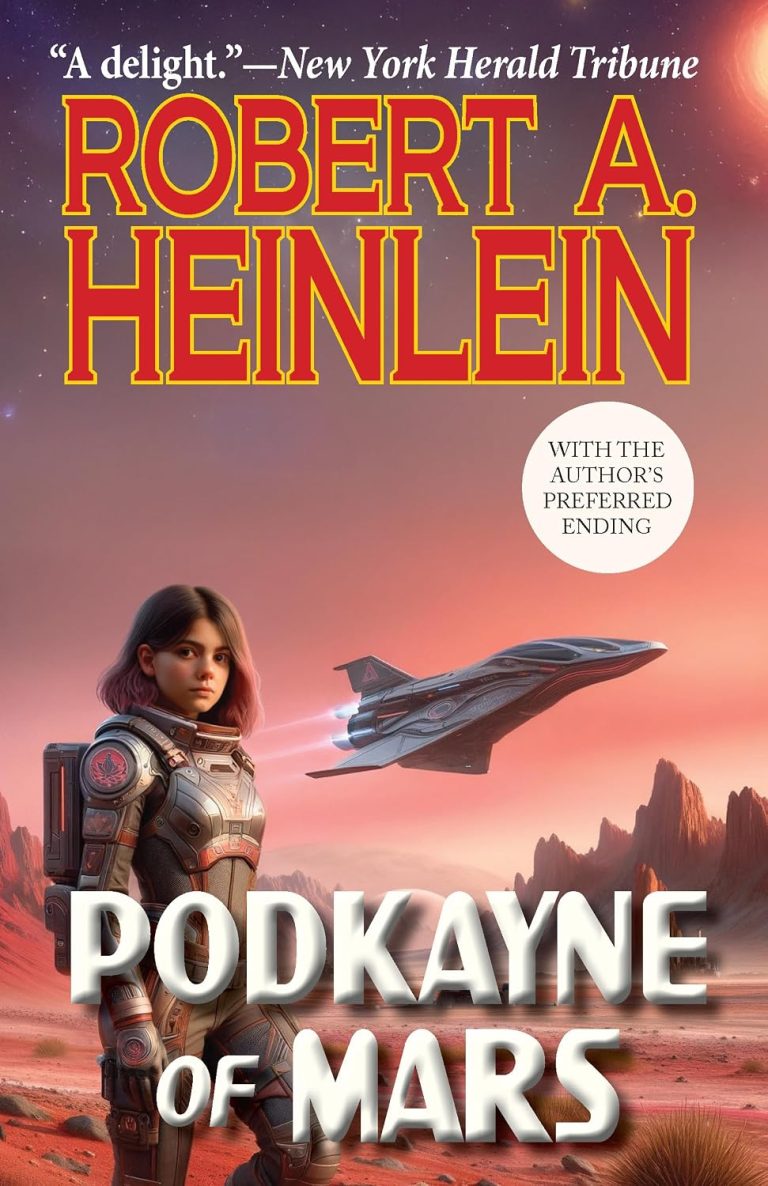
Robert Anson Heinlein (July 7, 1907, Butler, Missouri to May 8, 1988, Carmel, California) was an American science fiction novelist and one of the central architects of the genre. Often grouped with Isaac Asimov and Arthur C. Clarke as the Big Three of twentieth-century SF, he received four Hugo Awards for Best Novel (Double Star 1956, Starship Troopers 1960, Stranger in a Strange Land 1962, The Moon Is a Harsh Mistress 1967), three Retro Hugos, and was the first writer to be named SFWA Damon Knight Memorial Grand Master in 1975. He is the only author to win the Hugo for Best Novel four times in an open category.
He graduated from the United States Naval Academy at Annapolis in 1929 and served as a Navy officer until medical retirement for tuberculosis in 1934. He published his first story Life-Line in Astounding Science Fiction in 1939 and quickly became the central writer of editor John W. Campbell's Golden Age of Science Fiction, helping define modern hard SF and the future history as a literary form. His Future History stories and novels were later collected as The Past Through Tomorrow. From 1947 to 1958 he wrote a series of twelve juvenile science fiction novels for Scribner's, including Have Space Suit Will Travel, Citizen of the Galaxy, Tunnel in the Sky, The Star Beast, and Time for the Stars, that introduced generations of teenage readers to the genre.
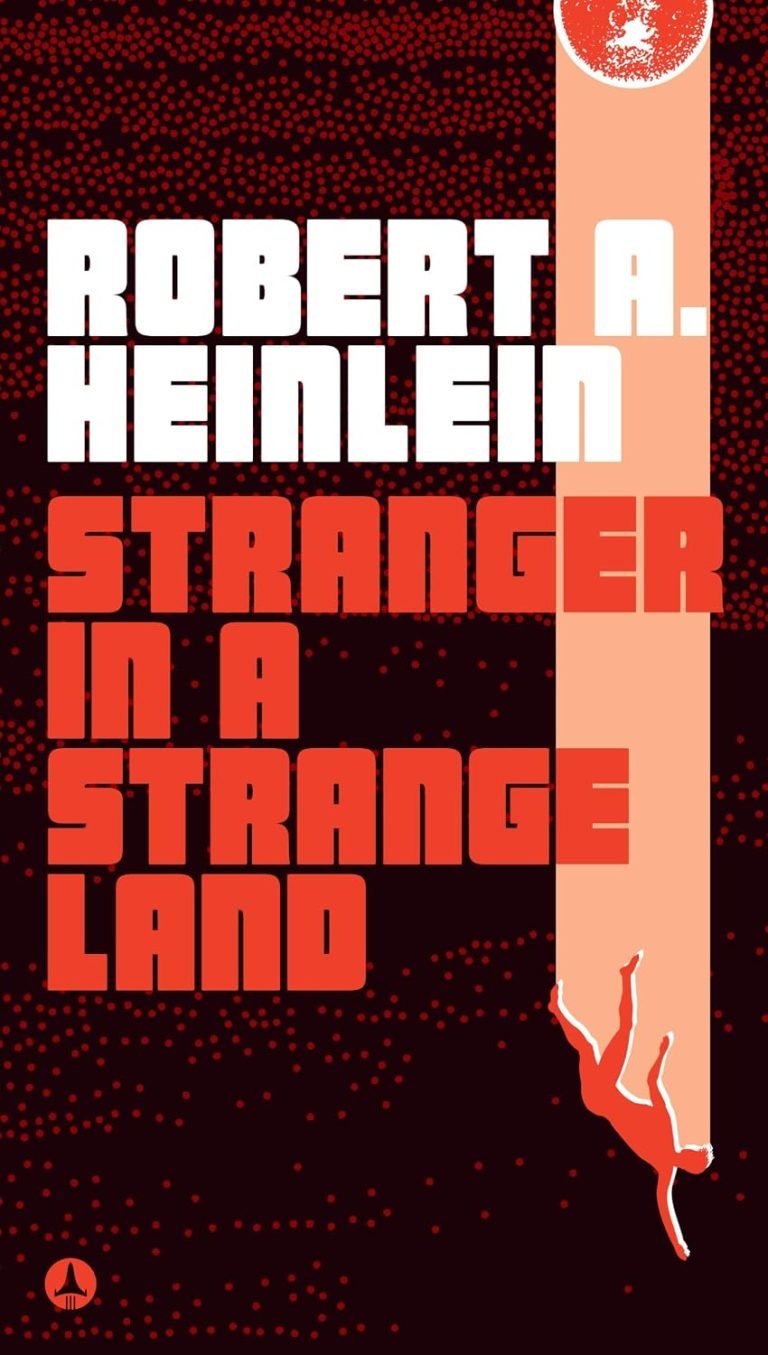
His four Hugo-winning novels represent the range of his work. Double Star is a tight political thriller about a third-rate actor recruited to impersonate a Martian-allied politician. Starship Troopers is a powered-armor military SF novel that has stayed continuously in print since 1959, was loosely adapted as the 1997 Paul Verhoeven film, and is on the official reading lists of the United States Marine Corps and the Navy. Stranger in a Strange Land follows a human raised by Martians who returns to Earth and founds a new religion, became a foundational text of 1960s counterculture, and introduced the word grok into English. The Moon Is a Harsh Mistress is the story of a lunar penal colony's revolution against Earth told in Loonie dialect, with a sentient supercomputer named Mike, and is widely regarded as his masterpiece.
His later novels (Time Enough for Love, The Number of the Beast, Friday, Job: A Comedy of Justice, The Cat Who Walks Through Walls, To Sail Beyond the Sunset) tied his universes together through the recurring character Lazarus Long and the World as Myth metafiction. He coined or popularized many terms now standard in SF and in general usage: grok, waldo, TANSTAAFL, speculative fiction. He was inducted into the Science Fiction Hall of Fame in 1998.
A note from Richard: From about age twelve I loved Heinlein's books. The Moon Is a Harsh Mistress is the most impressive to me, period. At first I was turned off by the strange accents and language, but I soon got used to it. Stranger in a Strange Land is a strange book. It heavily influenced me when I was in my teens, although now I realize how poorly written it really is. All of Heinlein's books written before Stranger in a Strange Land are really good. After Stranger it seems like he made a turn and the writing and story quality degraded. Even though it did not match the book at all, I love the movie adaptation of Starship Troopers. The book is great as well.
Robert A. Heinlein
Robert A. Heinlein

Robert A. Heinlein
Professional ghostwriting for executives, founders, coaches, and authors who want to get the book done right. 113+ books authored. 54+ ghostwritten for clients.
Ready to discuss your book?
BOOK YOUR PRIVATE CONSULTATIONNo pitch. No pressure.
© 2026 Richard Lowe. The Writing King. All rights reserved.