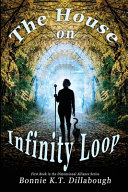
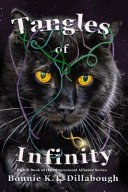
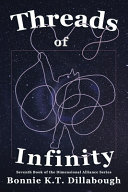
The second book in Bonnie Dillabough’s Dimensional Alliance, where the multiverse and its stakes come into full view. A tribute and a review.
If the first book opened the door, Infinity on Fire is where Jenny realizes how much is on the other side of it, and how much now depends on her. The weight of the multiverse settles onto her shoulders in this second volume of The Dimensional Alliance, and Bonnie Dillabough begins building out the larger universe that the opening book only hinted at.
Picking up Jenny’s story after she inherits the house, the cat, and the key, the book widens the scope from personal discovery to larger stakes. The impossible door has led her to adventures beyond her own universe, and now she must begin organizing the response to a threat that reaches across dimensions. This is the volume where a portal-fantasy premise grows into a multiverse-spanning series.
Second books are where a lot of series die.
The author spent everything on the opening, and the follow-up just wanders around the same rooms. I’m pleased that Bonnie didn’t do that here. She took the house and the key and made them cost Jenny something, and I think that’s the braver choice for a writer only months into being a novelist.
What happens to Jenny in the second book of The Dimensional Alliance series?
The shape of this second book reflects a sound instinct about series structure, whether Bonnie planned it consciously or felt her way there: the first book is wonder and the second is weight. Having shown Jenny the multiverse, Bonnie now makes her responsible for it, and that shift from exploring a world to defending it’s exactly the escalation a second volume needs to turn a promising opening into a saga. The fate of everyone Jenny cares about is now in play.
That shift from wonder to weight is sharp. It’s what makes me care about a character, because now she has something to lose. Jenny gets there in this book, and I rooted for her in a way the first volume only set up.
In memory
A tribute to Bonnie Dillabough: the friend, mentor, and author behind The Dimensional Alliance, in her own story and mine.
The universe takes shape
This is also where Bonnie’s distinctive blend comes forward, the science fiction and fantasy braided together that would define the series, with its mix of the wondrous and the heartfelt. She described her own writing as pretending on paper, getting to tell crazy stories and make people smile, and the joy of that invention is visible as the multiverse expands here. For a writer who had published her very first novel only months before, the confidence with which she enlarges her world in book two is strong.
I love her phrase, pretending on paper. Plenty of writers treat their work like a grim duty, and some of them are proud of the misery. Bonnie wrote for the joy of it, and it shows on the page.
Keep reading
Writing a series: how each book raises the stakes: the discovery-to-responsibility escalation that turns an opening into a saga.
Dragons and robots, side by side
One of the things that made Bonnie’s universe memorable is a genre blend most writers wouldn’t dare: dragons and robots coexisting in the same multiverse, fantasy and science fiction intertwined. It’s the kind of combination that could read as a gimmick in less sincere hands, but Bonnie made it work through sheer conviction, treating her invented worlds with the seriousness of someone who had been dreaming them for decades.
The multiverse that expands across Infinity on Fire is wide enough to hold magic and machinery at once, and that capaciousness is part of its charm. Bonnie wasn’t interested in policing the borders between genres; she wanted room for wonder, wherever it came from.
Genre purists grumble about mixes like this, and they’re wrong. Readers don’t care about the border between fantasy and science fiction. They care whether the story makes them feel something, and dragons next to robots will do that if the writer believes in them. Bonnie believed.
Bonnie wrote eight of these books, with a ninth nearly finished and a full nine-book arc mapped out, before she passed. Infinity on Fire is the volume where you can feel her settling in for the whole series, the one she very nearly completed.
That ninth book still saddens me. She was so close, with the whole arc mapped out and nearly all of it written. I’d give a lot to read how she meant it to end.
For a reader meeting the series now, this second book is the one that confirms the promise of the first, the moment a charming premise reveals itself as the foundation of something Bonnie meant to build for years, and the moment a first-time novelist became, unmistakably, a writer with a long road ahead of her.
If you read the first book and liked it, don’t stop there. This is the volume where I’m convinced the series justifies its size, and I’d hand it to anyone who still believes a writer who starts late can’t think big.