Latest
How to Turn Your Expertise Into a Book People Want to Read | The Expert MethodWhat’s New at The Writing King: Week of October 25, 2026Challenger Remembrance Day: The Engineer Who Wouldn’t SignJoel Salomon: The Truth About MoneyReddit Is Putting Up a Login Wall. Wikipedia Won’t Be Far Behind.Victoria Chemko: The Body Is the First TechnologySir Patrick Stewart: A TributeA Yale Economist Says We Won’t Be Missed. He Forgot the Bread Line.Walter Koenig: A TributeI Don’t Post Bad ARC Reviews. I Send the Author a Note.AI Has Paid Off Outside Tech. Apollo Is Reading the Wrong Scoreboard.The Little Red Book of Stuff That Works!Your Kids Are Your Own FaultGrow a PairYou’re Broke Because You Want to BeIt’s Called Work for a Reason!No Time for TactShut Up, Stop Whining, and Get a LifeWilliam Bessette: AI Enablement and Child Welfare TechnologyFree Book Planning ToolsWhat’s New at The Writing King: Week of October 18, 2026Ghostwriting by the Numbers: Timelines, Word Counts and the First CallPromising Young Woman (2020) ReviewBillions for AI, Pennies for the Plumbing: AI Companies Should Pay to Keep PHP AlivePHP2Shell: AI Found a 22-Year-Old Crack Under Your Website in Two DaysKindle Unlimited Is Now Kindle+. AI Audiobooks Just Joined the BuffetPetrov Day: The Officer Who Didn’t Believe the ComputerMo Gawdat Says the AI Dystopia Starts in 2027. Read the List, Skip the DatesWhen to Quit Writing a Book: I’ve Abandoned Dozens, and I’d Do It AgainThe Society of Authors Signed an Ethical AI Charter, Then Ran From It in Eight DaysChina Is Using Bots to Fan the Data Center Backlash. The Backlash Is Still Real.Getty Images Filed for Bankruptcy. Can You Prove You Licensed Your Book’s Images?Fluff Words: Cut Them From Your Prose, Keep Them in Your DialogueWhere Can Writers Learn Storytelling From Movies? Richard Lowe Publishes 1,226 Film and TV Reviews With Writing Craft NotesWhere Are the Independent Bookstores and Public Libraries Worth Visiting in Tampa Bay? Author Richard Lowe Profiles 44 of ThemWhat Should You Know Before Hiring a Ghostwriter? The Writing King Publishes 57 New Answers, Including What to Do When It Goes WrongWhere Can You Hear Founders and Executives Tell Their Own Stories? Richard Lowe’s Leaders and Their Stories Publishes Every Unscripted Interview With a Full TranscriptAuthor Richard Lowe Publishes Eight Volumes of Enemies of You, a Researched Series on the Forces Working Against Ordinary AmericansThe Jackal (1997) ReviewThe Day of the Jackal (2024) ReviewYour First Novel Is an Apprentice Piece: What Beta Readers and Editors Can’t FixWhen the Cloud Gets Bombed: What the AWS Data Center Strikes Teach About BackupsHuman-Written Book Labels Are Gatekeeping With a FeeThe Enshittification of Microsoft Office: Why I Switched to a Free CloneGlobal Encryption Day: The Padlock Every Writer Depends OnWriting Your Worst Moments in a Memoir: Show the Evidence, Skip the VerdictHow to Register a Copyright for Your Book (and What Doesn’t Count)Your AI Chats Aren’t Private: Deleted ChatGPT Logs in CourtThe Board Seat Scam: A 419 Letter in a Business SuitI Joined the Science Fiction Book Club 30 Times

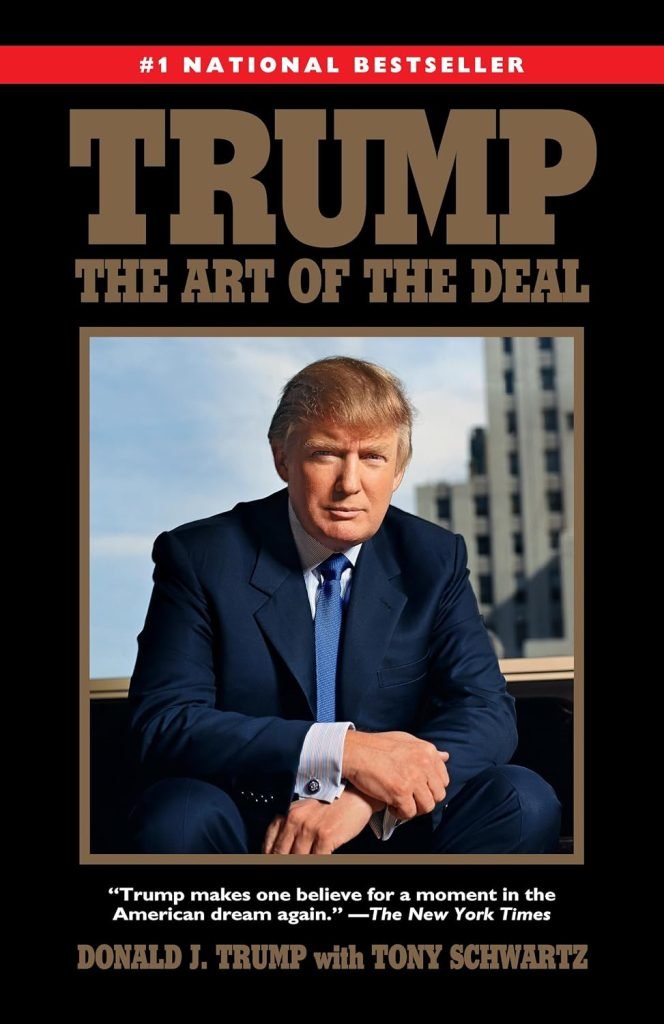
Trump: The Art of the Deal

Trump: The Art of the Deal
Publisher:Random House
Published:November 1, 1987
ISBN:0394555287
Pages:256
ISBN:9780394555287
Language:English
Share:

Buy Now

Description:

TL;DR

Donald Trump’s 1987 business memoir, written with journalist Tony Schwartz. It spent 13 weeks at number one on the New York Times list and did more to build a public image than any real estate deal could. It’s also a famous example of a book written with a collaborator.

Few books show what a book can do for a reputation as clearly as this one. In 1987 Donald Trump was a well-known New York developer. After The Art of the Deal, he was a national figure, the embodiment of the successful businessman to millions of people who had never been to New York.

The book did that. A building can’t.

What is The Art of the Deal about?

It opens with a week in Trump’s life, phone call by phone call, meeting by meeting, to show the reader how he works. Then it lays out his rules for dealmaking: think big, protect the downside, know your market, use publicity and fight back when you’re pushed. The rest is the stories of the deals themselves.

The tone is confident from start to finish, and the voice is so specific that readers came away feeling they’d spent a week in the office with him. Plenty of people who never agreed with him on anything can still quote a line from it.

Trump Tower on Fifth Avenue. The renovation of the Grand Hyatt next to Grand Central. The casinos in Atlantic City. And the Wollman Rink in Central Park. The city had spent six years and millions of dollars failing to rebuild it, and Trump’s company finished it in a few months under budget. The rink reopened in November 1986, in time for the skating season, and the story of the city’s six years against Trump’s few months made headlines well beyond New York. That chapter is the one readers remember.

Who wrote The Art of the Deal?

Tony Schwartz, a magazine journalist. His name is on the cover with Trump’s. He received a reported $250,000 advance and half the royalties.

He spent about eighteen months following Trump, listening in on calls and sitting in on meetings to capture the voice.

Schwartz later spoke publicly about the book. In 2016 he said writing it was his greatest regret, and he donated his royalties from that year to charity. Trump has said the book is his. The arrangement, a subject with a famous name and a professional writer doing the drafting, is the most common one in publishing.

How successful was The Art of the Deal?

Random House printed 150,000 copies in the first run, and it wasn’t enough. The book reached number one on the New York Times bestseller list, stayed there for thirteen weeks and spent forty-eight weeks on the list in all.

It has sold over a million copies.

Why does The Art of the Deal matter to anyone thinking about a book?

Because it shows the reach. A business book with a strong voice and a clear persona can define a person in public for decades, longer than any project it describes. That’s true whatever anyone thinks of the subject.

It’s also a famous case in the history of ghostwriting, and a useful one to study. The voice is consistent from first page to last. The stories are told in scenes. And the persona is so sharp that readers still quote it.

Keep reading

Donald Trump’s ghostwriter proves the power of a book: how a 1987 business book shaped a public image for decades.

Frequently Asked Questions

Did Tony Schwartz write The Art of the Deal?
Yes, Tony Schwartz, a journalist, drafted it after following Trump for about eighteen months. Both names appear on the cover.
When was The Art of the Deal published?
Random House published it in November 1987.
How long was The Art of the Deal a bestseller?
It spent thirteen weeks at number one on the New York Times list and forty-eight weeks on the list overall.
What is the Wollman Rink story in The Art of the Deal?
After New York City spent six years and millions of dollars failing to rebuild the Central Park skating rink, Trump’s company finished it in a few months, under budget.
Does Tony Schwartz regret The Art of the Deal?
In 2016 he said writing it was his greatest regret and donated his royalties from that year to charity.
Is The Art of the Deal a ghostwritten book?
It was written with a collaborator, Tony Schwartz, who did the drafting, and it’s a well-known example of the arrangement.
Categories and tags
CategoriesBusiness

About the author

Donald J. Trump with Tony Schwartz

Donald J. Trump

Donald J. Trump is a New York real estate developer and television personality who became the 45th and 47th president of the United States. His 1987 business memoir, The Art of the Deal, written with journalist Tony Schwartz, spent thirteen weeks at number one on the New York Times list.

More about Donald J. Trump

Tony Schwartz

Tony Schwartz is a journalist and author who wrote The Art of the Deal with Donald Trump, following him for about eighteen months to capture his voice. He later founded The Energy Project, a consulting firm, and wrote books on performance and work.

More about Tony Schwartz

Back