TL;DR
7/10. The standard graded-vocabulary reference for children’s authors: which words suit which reading levels, with level-keyed synonyms. Nearly unique and useful within its narrow lane. A reference, not a craft guide, and its grade levels are generalizations meant to guide instead of dictate. A specialist’s tool worth having.
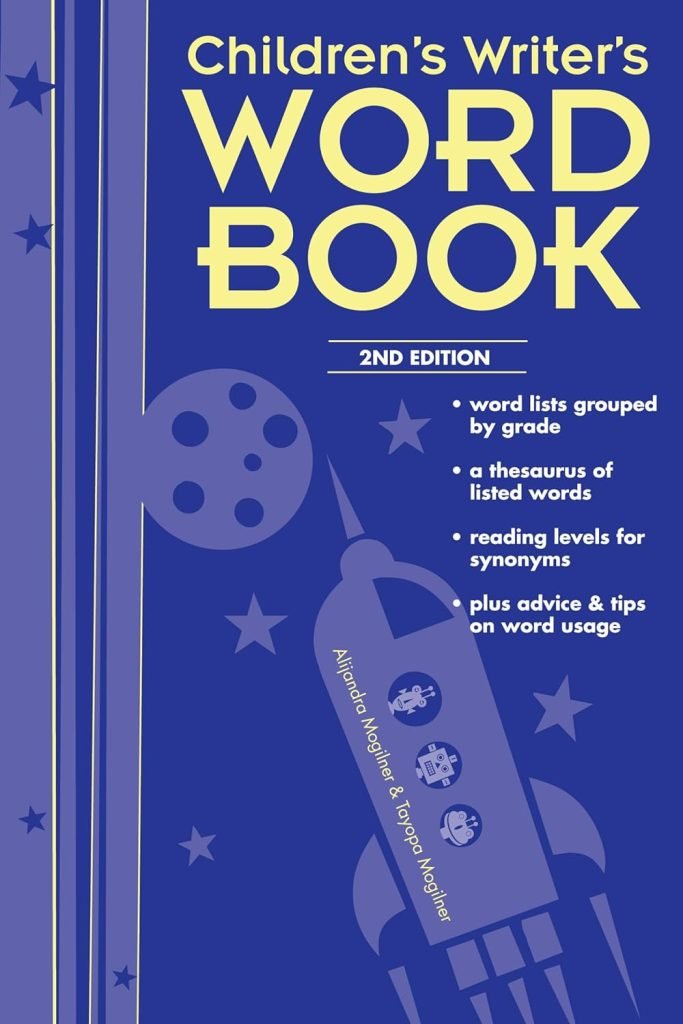
Writing for children has a constraint adult fiction doesn’t: the vocabulary has to match the reader’s developmental stage, and a word that’s perfect for a ten-year-old can be wrong for a six-year-old. Children’s Writer’s Word Book by Alijandra Mogilner is the standard reference for solving that problem, a specialized tool that tells a children’s author which words are suitable at which reading levels. For its narrow, real purpose, it’s useful and close to unique.
The challenge it addresses is invisible to most writers and acute for children’s authors. Match vocabulary to the wrong age and the book fails its reader, too hard and a young child is lost, too simple and an older one is bored, and a writer’s intuition about what a six- or nine- or twelve-year-old knows is notoriously unreliable. Adults who think they can guess what a second grader knows are kidding themselves, and I’d trust this book’s data over that guess every time.
What does Childrens Writers Word Book offer?
The book is organized as a graded word list, indicating the reading or grade level at which words are typically understood, along with thesaurus-style alternatives keyed to those levels. A writer can look up a word, see whether it suits their target age, and find a simpler or more advanced synonym as needed. It also includes guidance on the characteristics of writing for different age groups, the sentence complexity, concepts, and vocabulary right for each developmental stage.
For an author trying to pitch a manuscript precisely at early readers, middle grade, or somewhere between, this graded data is exactly the grounding that intuition can’t reliably supply.
Keep reading
Writing children’s books: matching story and reader: Mogilner supplies the vocabulary data; here’s the wider craft of writing for young readers.
The value, and the limits
The book’s value is that it’s close to the only resource of its kind, filling a real gap with concrete, usable data instead of vague advice to keep it simple. A children’s writer serious about hitting a precise reading level gets real data to work with here, and that beats guesswork by a mile. The limits are inherent to what it is. It’s a reference, not a craft guide, so it helps with word choice and nothing else, not story, character, or the harder art of writing something children want to read.
Its grade-level assignments are generalizations, since real children vary enormously, so the data is a guide instead of a rule. And like any vocabulary reference it can be misused. A writer who lets the list dictate every word ends up with stilted prose that serves the grade level instead of the story, and stilted prose is a lousy thing to hand a young reader.
Keep reading
Word choice: picking the right word, not just a correct one: the craft of choosing words, of which grade-level fit is one consideration among several.
Is Childrens Writers Word Book worth reading?
For the real need of matching vocabulary to a young reader’s developmental stage, it’s a valuable and nearly unique reference, and a serious children’s writer working to a precise reading level should own it. It loses points only for the inherent limits of a vocabulary reference, that it addresses word choice alone, that its levels are generalizations, and that it must be used as a guide instead of a straitjacket.
Within its narrow lane it’s excellent and hard to replace; outside that lane it does nothing, and a children’s author needs the rest of the craft elsewhere. For a specialist’s tool, I’m impressed by how hard it is to replace.
Explore the hub
The Writing Hub: children’s writing, word choice, and the rest of the craft, gathered in one place.
Frequently Asked Questions
Other Books From – Being an Author