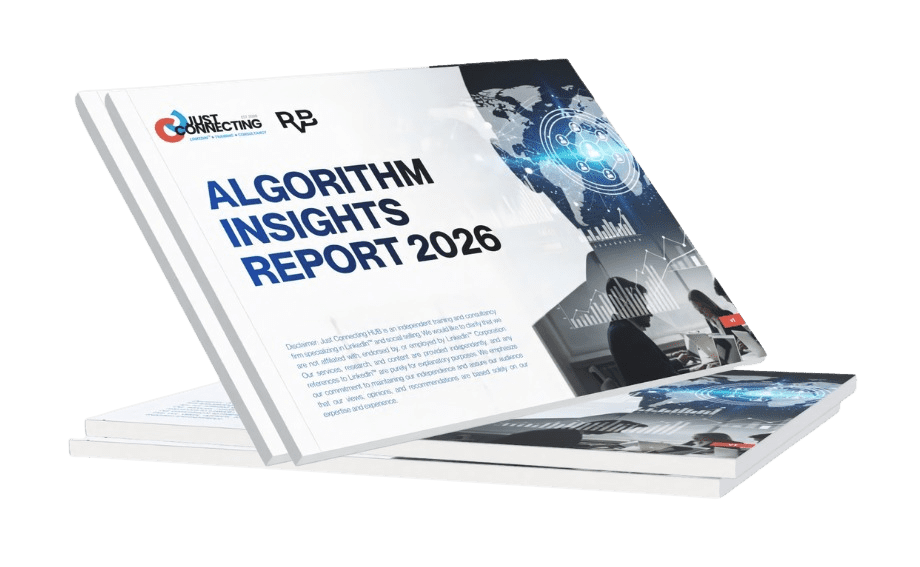
If you want more than the minimum, Focus on LinkedIn is the full treatment, updated for the platform as it works now.
Every client I work with asks the same question after their book is finished: “What should I be doing on LinkedIn?” Less than you think.
I think LinkedIn is the best place an author with a nonfiction book can spend a little time, and it’s also where I watch authors waste the most of it. They finish a book that took a year of their lives and then pour the next year into posting daily for likes from strangers, while the book sits there unread. That trade makes me wince.
I wrote an entire book about LinkedIn. Focus on LinkedIn sold 15,000 copies in three days on Kindle, and the dramatically expanded new edition covers everything from crisis management to Sales Navigator techniques. I know the platform. I also know that it’s changed dramatically, and for most published authors, LinkedIn is a tool that should take about thirty minutes a week. It was never meant to become a second career.
For more, see why most book marketing fails. The problem is that LinkedIn advice comes from two kinds of people. Social media consultants who make money selling LinkedIn strategies. And people who spend hours a day on the platform and assume everyone should do the same.
Neither perspective helps a published author whose book is the business asset and whose time belongs to the work that produced the book in the first place. The part of LinkedIn that works for authors is small, and it’s the only part I’d ask anybody to spend time on.
How should an author set up a LinkedIn profile?
Most authors treat their LinkedIn profile as a resume. It should be a book promotion page. The people who find you on LinkedIn after hearing about your book, seeing you speak, or getting a recommendation will look at your profile before they look at anything else. That profile needs to make one thing clear: you wrote a book, here’s what it’s about, and here’s where to get it.
For more, see LinkedIn’s Algorithm Changed. Here’s What Actually Works in 2026. and viral posts on LinkedIn.
Your headline should mention the book or the expertise the book represents. Not your job title. “Author of [Book Title] | [What the Book Is About]” communicates more in one line than a corporate title ever will.
Your About section should lead with the book, what it covers, who it’s for, and what readers get from it. Include a link to purchase or to your website. This is making it easy for interested people to find what they came looking for.
The Featured section is the most underused tool on LinkedIn for authors. Pin your book there. Link to your website, a sample chapter, a media appearance, or a booking page.
The Featured section sits near the top of your profile and catches the eye before anything else. If you’re a published author and your Featured section is empty, you’re wasting the best real estate on the platform.
Empty Featured sections on author profiles drive me a little crazy. Somebody heard you on a podcast, went looking, and landed on a page that says nothing about the book. You won that visitor with a year of writing and then gave them nowhere to go.
From the podcast
Mike O’Neil has worked LinkedIn since it had a hundred thousand users and wrote two books about profiles. He’s blunt about which parts of yours carry the weight, on Leaders and Their Stories:
The area of your profile that matters the most obviously is your headline. That and your picture. Those are the two things. I don’t mean your body picture. I mean your mug.Everything below that’s read only after somebody has already decided to look.
What should authors post about on LinkedIn?
The biggest trap on LinkedIn is writing about LinkedIn. Posts about “how I grew my network” or “my journey to 10,000 followers” perform well on the platform because the algorithm rewards content about the platform itself. But those posts do nothing for your book or your business.
Post about the subject matter of your book. If you wrote a book about leadership, post about leadership. If you wrote a memoir about building a company, post about what you learned building the company. Every post should reinforce the same expertise and perspective that your book represents. My advice in 2024 was to post about your own story, the victories and the stories tied to your work, and skip straight technical information. Everybody’s posting that, and it just sits there and festers. People love stories.
The post isn’t the product. The book is the product. The post exists to remind people that you have something deeper to offer on this topic.
I tell authors to run every draft post through one question: would this make sense coming from the person who wrote your book? If it wouldn’t, delete it. The engagement-bait crowd will beat you on likes most weeks, and that’s fine, because likes from people who’ll never read the book don’t add up to anything.
Keep posts short. Three to five paragraphs. One idea per post. No hashtag stuffing, no “agree?” at the end trying to bait comments, no fake vulnerability stories designed to game the algorithm. Write something that’s worth reading on its own and that makes the reader think “this person knows what they’re talking about, I should look at their book.”
Two to three posts per week is enough. More than that and you’re spending time on LinkedIn that should be spent on revenue-generating work.
A few weeks into a posting run, start adding polls. You ask a question with up to four answers, and people tell you what they care about. My working advice in early 2026 was about one poll a week, with total posts at three or fewer. LinkedIn said in 2022 it would show fewer polls in the feed, though polls haven’t seemed to hurt me. ChatGPT can draft poll questions from your published posts. I run polls for the audience they bring, and I don’t care how people answer.
Are LinkedIn Comments Worth More Than Posts?
LinkedIn’s algorithm weighs comments more heavily than likes or shares. A post with fifty comments reaches significantly more people than a post with fifty likes. This means that engaging with other people’s content is as valuable as creating your own.
Spend ten minutes a day leaving real comments on posts in your area of expertise. Not “Great post!” but actual thoughts that add to the conversation.
When you leave a thoughtful comment on a post that’s high engagement, the people reading that thread see your name, your headline (which mentions your book), and your perspective. This is visibility that costs nothing and takes minutes.
This is also where your book becomes a networking tool.
When someone posts about a topic your book covers, a comment that adds real value and comes from someone whose headline says “Author of [Book on That Topic]” is the most natural promotion possible. You’re not pitching. You’re contributing, and your book’s existence speaks for itself.
The One Article That Matters
LinkedIn’s article feature lets you publish long-form content directly on the platform. Most authors over-invest here, writing weekly articles that take hours and get minimal readership. The platform doesn’t push articles the way it pushes posts, so the return on time invested is usually poor.
The exception: write one definitive article that’s an extended introduction to your book’s core argument. Make it the best thing you’ve ever written on LinkedIn. Pin it to your Featured section. Link to it in conversations when people ask about the topic. This single article becomes a permanent asset that works for you without requiring ongoing effort.
That article shouldn’t be a chapter from your book. It should be a standalone piece that makes the reader think “if this is what they give away for free, the book must be exceptional.”
Give real value. Hold nothing back. The article sells your book by showing the quality of your thinking.
What should authors not waste time on in LinkedIn?
LinkedIn newsletters sound appealing but require consistent commitment to maintain subscribers. Unless you’re prepared to publish weekly for a year, don’t start one. A dead newsletter looks worse than no newsletter. For more on building a LinkedIn brand through content, hear Richard on Out of the Blank.
LinkedIn Live and audio events get low attendance for most users and require significant preparation for minimal return. Skip them unless you have an established audience that’s asked for live content.
LinkedIn groups are largely inactive and have been for years. Don’t invest time building or participating in groups expecting meaningful engagement. I think the consultants pushing newsletters, Lives and groups on authors are doing real harm. Every hour a writer spends propping up a dead newsletter comes out of the next book, and the next book is the thing that would have built the reputation in the first place.
Posting every day is unnecessary and unsustainable for most authors. The consultants who recommend daily posting are building their brand on LinkedIn. You’re building your brand on your book. Two to three posts per week is the sweet spot where you stay visible without LinkedIn becoming a second job.
How much time should authors spend on LinkedIn each week?
Sunday: write two to three short posts for the week, each one about a topic your book covers. Schedule them or save as drafts. Fifteen minutes.
Daily: spend five minutes leaving one or two real comments on posts in your area of expertise. Five minutes.
Monthly: check that your profile, headline, Featured section, and About section are current. Update if anything has changed. Five minutes. That’s it. Thirty minutes of actual work per week, plus five minutes a day of commenting. Everything else is optional and should only be added if you have evidence it’s producing results for your specific situation.
Your Book Is the Real Platform
LinkedIn is a distribution channel. The book is the destination. Every minute you spend on LinkedIn should serve the book, either by driving people toward it or by reinforcing the expertise it represents. If your LinkedIn activity isn’t doing one of those two things, it’s not working for you regardless of how many likes your posts get.
I’d rather see an author spend thirty minutes a week on LinkedIn and write a second book than spend thirty hours a week there and never finish another one. The platform will take every hour you hand it, most of those hours buy nothing a reader will ever see, and the people selling daily-posting programs to authors know that perfectly well.
For authors ready to write the book that becomes the foundation of their professional platform, start with a conversation about your book and your goals. You can find current ghostwriting pricing on the ghostwriting page. For fiction writers building their craft, my AI-Enhanced Book Promotion Handbook covers marketing strategy across every platform, including how to use LinkedIn without letting it consume your writing time.