
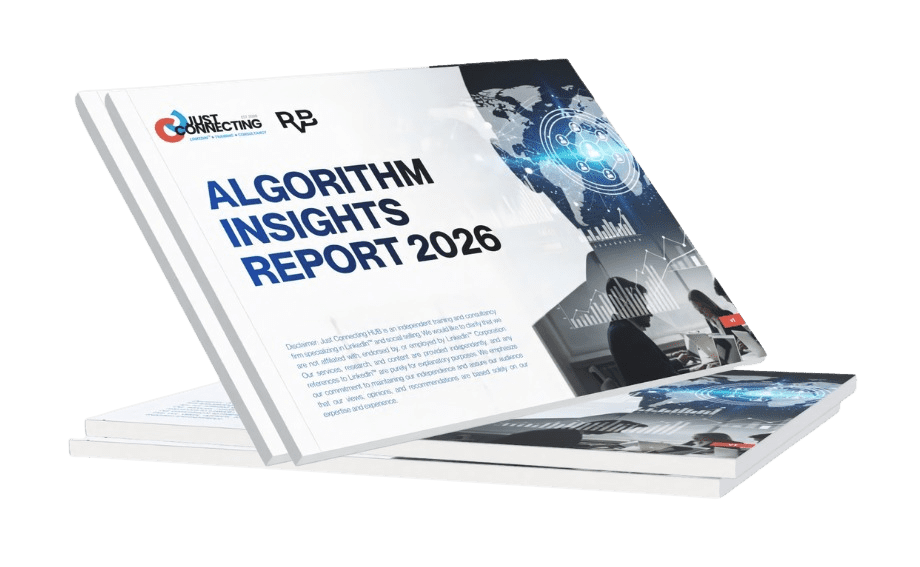
216pages of LinkedIn strategy, built from 1.3 million analyzed posts.
Affiliate link. If you buy through it I may earn a commission at no extra cost to you. I only recommend tools I actually use.
My reference for how LinkedIn actually works when I advise clients on building authority.
What works
- Built on real data from 1.3 million posts, not opinion
- Covers every LinkedIn feature, from post anatomy to ad spend to lead gen
- Pay once and every future edition arrives free, for at least a year
- Specific, measured findings you can act on, not guru folklore
What to know first
- A lot of material if you only want the basics
- Any single edition ages as the algorithm shifts, though updates are included
- Built for people who will do the work, not skim it
Why I recommend it
Most LinkedIn advice is somebody guessing in a confident voice. A guru saw their own post do well once, so now it’s a rule. Post at 9am. Use three hashtags. Never include a link. The advice contradicts itself from one expert to the next, and none of them show their work.
This is the opposite of that. Richard van der Blom is the closest thing LinkedIn has to an actual analyst. Every year he and his team take apart more than a million posts and turn the numbers into a reference on what is working right now. The 2026 edition landed on April 29th and runs on 1.3 million posts analyzed between September 2025 and February 2026, so it reflects the recent algorithm changes instead of folklore left over from three updates ago.
I keep it open when I advise clients on building authority through LinkedIn. Someone asks whether long captions work, and I can point at what the algorithm rewards instead of repeating a myth. Someone asks whether to post from a personal profile or a company page, and the report breaks down which performs better and why. The anatomy of a post that works. The formats the algorithm favors. How AI is reshaping visibility. What ad spend is worth. Specific, measured, usable.
The depth is the point. Employee advocacy and how to activate a team to multiply reach. Lead generation that turns attention into pipeline. Interviews with creators who do this full time. Checklists you can apply the same day, and video walkthroughs of the changes that matter most. All of it compared against the last two years of data, so you see the trend instead of a snapshot. Most LinkedIn guides are a blog post stretched thin to look like a book. This has the opposite problem.
I had a client, an executive with plenty to say and a feed nobody read, who was convinced LinkedIn was a waste of time. His ideas were fine. He was posting the way someone told him to post in 2021. We pulled the current data on format performance and post structure, rebuilt his openers, and changed what he led with. Reach climbed because the approach finally matched how the platform works now. That’s what a reference like this buys you.
Here’s the part that makes the €199 worth it. You pay once and the updates come included. Buying today gets you the 2026 edition, 150 pages of current analysis, plus the full 2025 annual edition at 240 pages and the 80 page October 2025 update. That’s roughly 470 pages in your hands immediately. The terms promise continuous updates for at least a year, no subscription and no upgrade fee. Read the fine print so you know what you’re getting, but the model is honest about itself.
It’s not for everyone, and I won’t pretend otherwise. If you post twice a month and want LinkedIn to stay a casual thing, this is far more than you need. It’s built for people who will do the work. But if LinkedIn is part of how you build a career or a business, and you’re tired of guessing while your reach slowly bleeds out, this is the most thorough reference I’ve found. More than 3,000 professionals bought the last edition. I’m one of them, and that’s why it’s on this list.
These are the tools I use to produce books for clients. If you would rather skip the learning curve, hire me to write yours.