Latest
AI’s Black Box Is Getting a Window. Somebody Still Has to Look Through It“It Stars C. Thomas Howell. No.” Why AI Gets Stuck in a LoopShould You Query or Self-Publish Your Memoir If You’re Not Famous?Judge the Writing, Not the Tool: What the AI Pile-Ons Get WrongThiago Ferreira: Thinkers, Not DoersYana Semova: Let AI Do the AdminLisa Hamilton-Smith: Unstoppable, AI AssistedSuperman Day: The $130 Contract Behind the CapeRaymond Chandler Day: The Novelist Who Started at FiftyJohn Steinbeck Day: The Reporter Who Wrote the NovelInternational Translation Day: The Invisible AuthorsMaya Angelou Day: The Dare That Became a MemoirNational Podcast Day: The Interview Is the Raw MaterialKurt Vonnegut Day: The Book That Took Twenty YearsTell a Fairy Tale Day: The Stories Everybody EditedHarry Potter’s Birthday: The Book Twelve Publishers MissedHarper Lee Day: The Draft Her Editor Saw ThroughGene Roddenberry Day: The Pilot Who Pitched the StarsRoald Dahl Day: Six Pencils and a Grudge Against Grown-UpsInternational Literacy Day: The Readers Books LoseJack Kerouac Day: The Scroll and the Last AddressElmore Leonard Day: Leave Out the Part Readers SkipEncourage a Young Writer Day: The Adult Who Read the PagesBack to the Future Day: The Script Where Everything Pays OffNational Library Lovers Month: The Building a Town Pays ForAlice’s Day: The Story Told on a Rowing BoatRobert E. Howard Day: The Texan Who Built ConanStephen King Day: The Daily Two ThousandEmily Dickinson Day: The Poems in the DrawerIan Fleming Day: Two Thousand Words a MorningFyodor Dostoevsky Day: The Novels Written Against the ClockZora Neale Hurston Day: The Ear She TrainedF. Scott Fitzgerald Day: The Masterpiece That FloppedElmore Leonard’s 10 Rules of Writing, and Which Ones I BreakShould Your Novel Have a Prologue? When a Cold Open Earns Its Place“People Who Use AI Deserve to Be Castrated”: When the Sentence Outruns the CrimeHow Famous Memoirs Were Really Written: What the Collaborators DidThe Bell JarOpen: An AutobiographyBeneath a Scarlet SkyFlorida RoadkillCampus BattlefieldLifeThe Phone Book: The Curious History of the Book That Everyone Uses But No One ReadsThe Sage of SagittariusDid I Ever Tell You This?: A MemoirPa’anAmerican SoldierIt Doesn’t Take a HeroMake Your Bed: Little Things That Can Change Your Life…And Maybe the World

Tag: Science

Science in fiction is either load-bearing or decoration, and readers know which. This tag collects reviews and craft pieces on scientists, laboratories and scientific ideas in film and fiction.

The moon looms large and ominous over a city skyline as catastrophic tidal forces begin to destroy the landscape below.2020s

Moonfall (2022) Review

Moonfall (2022) rates 3 out of 10 on the rewatch scale. Roland Emmerich spent around a hundred and forty million dollars of independent money on a film where the moon is a hollow alien megastructure, and it is the most…

READ MORE »

Christopher Reeve and Jane Seymour embrace in a hotel room dressed in early 1900s period clothing, with warm golden1980s

Somewhere in Time (1980) Review

Somewhere in Time (1980) rates 7 out of 10 on the rewatch scale. Universal halved the budget, the actors' strike stopped Reeve and Seymour promoting it, the critics were brutal, and it ran three weeks. Cable and video then turned…

READ MORE »

A spacecraft or astronaut approaching a hazardous cosmic phenomenon like a black hole, magnetar, or gamma ray burst againstBook Reviews

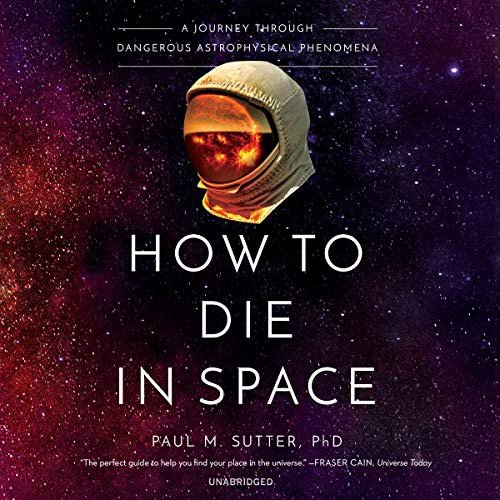
How to Die in Space

Space will kill you in dozens of ways, and Paul Sutter's astrophysics guide lays out exactly how each one works. The framing, a travel guide organized by lethality rather than physics, forces the specifics that most space writing skips, from…

READ MORE »

A child's birthmark or scar, photographed close-up to show its specific location and appearance on the skin. TITLEBook Reviews

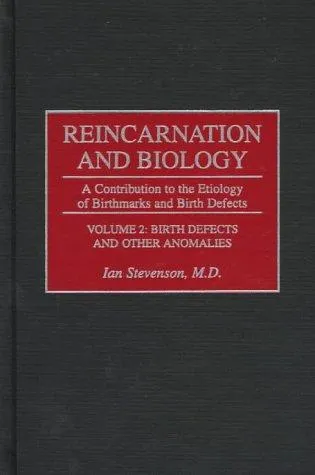
Reincarnation and Biology

Stevenson's most rigorous work documents 225 cases where children's birthmarks matched wounds on the dead people whose lives they described. Forty-nine of those cases had medical records to verify the correlation, which makes them harder to dismiss than memory alone.

READ MORE »

A worn copy of Ian Stevenson's 1966 book on a neutral background, spine and cover visible.Book Reviews

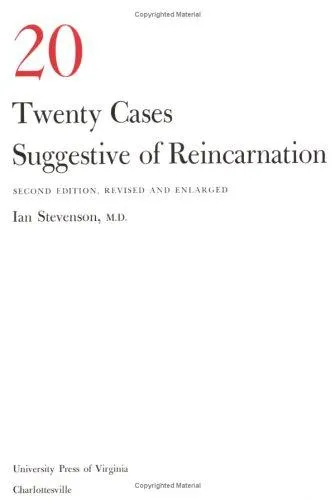
Twenty Cases Suggestive of Reincarnation

Ian Stevenson was a psychiatry department chair at the University of Virginia who spent forty years collecting cases of children who described lives that were not theirs. This book, published in 1966, is where it started: twenty carefully documented case…

READ MORE »