TL;DR
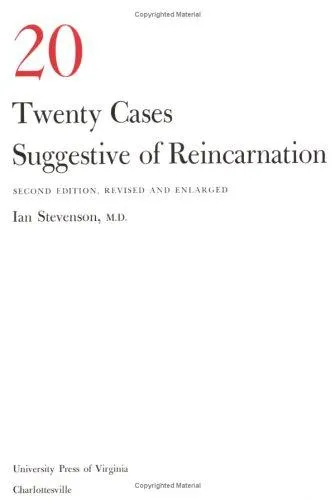
8/10. The book that started forty years of case collection by a University of Virginia psychiatrist. Twenty children, mostly from India, Sri Lanka, and Lebanon, who described lives that weren’t theirs. The most important word in it is in the title.
Ian Stevenson was chair of the Department of Psychiatry at the University of Virginia School of Medicine. That’s what makes the rest of it awkward. He wasn’t a fringe figure who drifted into strange territory. He was a department head with a conventional publication record who chose to spend his career on a subject his colleagues considered career-ending, and then did it for four decades without ever claiming more than his data supported.
I admire Stevenson’s stubbornness. He picked a subject that could only cost him, did the work carefully, and then refused to say more than the work allowed. Neither camp in the reincarnation fight earns much respect from me, the believers who want a miracle and the scoffers who won’t read the file, and it’s plain he felt the same.
This volume, published in 1966 and drawn from fieldwork he began in 1961, is where it starts. Twenty case reports of small children who made specific statements about a previous life.
What do the cases look like?
The pattern repeats across cultures with unsettling consistency.
A child starts talking about it at two or three, usually unprompted and often to the family’s discomfort. The statements are specific enough to check: a name, a village, a house, family members, an occupation, and very often the manner of death. Some children behave in ways that fit the described life and not their own, showing skills or phobias with no local origin.
The memories fade as the child gets older and are usually gone by seven or eight. And in the cases that resolve, meaning where a matching deceased person is identified, that person very often died violently and recently.
The violent-death correlation is the strangest feature of the whole body of work and Stevenson never explained it. It’s either a clue to a mechanism or an artifact of how these cases come to attention, and forty years of collection didn’t settle which. That unexplained correlation is a bigger puzzle than any single case in the book. A pattern that strong ought to have an explanation one way or the other, and forty years without one leaves me deeply uneasy.
Watch: Scientific Evidence for Reincarnation by Dr Ian Stevenson, Walter Semkiw
What was the method behind Twenty Cases Suggestive of Reincarnation?
The method is the point of the book, more than any individual case. He records what the child said, when, and to whom. He identifies the witnesses and interviews them separately. He establishes whether the two families had any prior contact. That’s the question everything turns on. Then he goes and checks the statements against whatever record exists.
The write-ups are dry to the point of dullness, and that’s deliberate. Nothing here’s written to persuade. There’s no narrative tension, no atmosphere, and no attempt to make the reader feel anything. He reports the statements, the verifications, the failures to verify, and the alternative explanations, and stops.
The dullness is the best argument in the book, and I wish more writers on strange subjects had his nerve. Atmosphere is how the paranormal shelf sells, and it’s how that shelf got its bad reputation. Stevenson gives you a witness list and a record check and lets you weigh them, and I trust him more for every page that bores me.
A reviewer in the Journal of the American Medical Association noted that he’d collected these cases painstakingly and unemotionally, and that the evidence was difficult to explain on other grounds. It was, mostly, ignored.
Why does the word suggestive matter?
Because he meant it, and he defended the choice for the rest of his life.
His position was that reincarnation was the best available explanation for a subset of these cases, and not that it was showed. He argued that the data deserved investigation instead of a verdict, and he refused to go further even when supporters wanted him to and even when it would have sold considerably more books. That restraint cost him. A stronger claim would have found an audience, and the careful version found neither the believers nor the skeptics. He spent forty years in a position almost nobody wanted to occupy with him.
A scholar punished for his caution is a scandal. A louder claim would have made him famous and made the work worse. He chose the careful version and paid for it with his standing, and most of the people who sneer at his name now have never read a page of him.
What are the objections to Twenty Cases Suggestive of Reincarnation?
They’re real and this book is where they start.
The strongest is contamination. In most cases the two families had already met and agreed on an identification before any researcher arrived. That means the child had frequently been told, directly or by inference, who he was supposed to have been. Stevenson knew this and documented it and never fully answered it.
This is my main reservation. Contamination is the objection that should worry a careful reader most, and Stevenson documenting it without answering it is why I give this book an eight. Good bookkeeping about a hole doesn’t fill the hole. The second is interpreter dependence. He worked through translators in cultures where reincarnation is an accepted structure, and a translator who shares the belief may hear confirmation in an ambiguous statement.
The third is selection. Cases reach a researcher because somebody found them interesting, and the ones that fizzled are invisible. How many children make statements that check out against nothing is unknowable. Two things can be true at once. The strongest cases resist the easy dismissals, and no alternative mechanism has been shown either. Coincidence, unconscious cueing, family construction, and memory drift each explain some cases and none explains all of them well.
Verdict
Read it as a methods book instead of an argument. What’s valuable is a credentialed researcher deciding to investigate something rigorously and then living with an inconclusive answer for forty years. That’s rarer than either belief or dismissal.
The cases are difficult, and difficulty isn’t the same as evidence. Stevenson understood that better than most of the people who cite him.
I’d put this on the shelf of anyone who argues about evidence for a living, believer or skeptic, and make them read the method chapters twice. The cases will unsettle you, and the discipline behind them should embarrass a good deal of what passes for research on both sides of the argument.
Explore further
The Writing Hub: craft, technique, and the books worth learning from.