
Quora used to be the smartest room on the internet. Adam D’Angelo and Charlie Cheever, two former Facebook employees, started it in 2009, and for a few years you could ask a question and get an answer from a NASA engineer, a physicist or a network engineer who helped pioneer the VPN. The fantasy novelist Mercedes Lackey answered questions there. People used their real names, paid moderators enforced a rule called “Be Nice, Be Respectful,” and the best answers read like short essays by people who knew what they were talking about.
Open Quora today and it reads like a waiting room where nobody knows why they’re there. Bizarre questions, recycled answers, ads, bait, and a growing pile of text that no person wrote. What happened to it makes me sad and angry in about equal parts.
Quora sucks now, and it didn’t have to.
What happened to Quora’s answer quality?
Experts out, answer farms in. The shape is a joke; the trend is the post's argument.
Quora chased traffic, and the writers who fed it got burned. For several years its Partner Program paid people to ask questions, based on how much traffic those questions pulled in. I was one of them. I had over a thousand questions on Quora, some of them drew hundreds and hundreds of answers, and for several months the program paid me between $1,000 and $1,500 a month.
Then Quora changed the deal. New requirements came in, the rates dropped, and my payments went to almost nothing. I kept trying to make it work, and I couldn’t. So I deleted every single question I’d posted. Why would I leave a thousand questions earning money for a company that had stopped paying for them?
Plenty of the questions from that era were junk, and not all of them came from people. Slate’s 2024 look at Quora’s decline found bots churning out templated questions, the kind that swap one city name for another and ask where to eat, and a feed stuffed with bizarre and nonsensical posts. A question like that exists to catch a search. Nobody on earth is waiting for the answer.
Quora shut down the English version of the program on September 1, 2022, and called it a success. Participants had written “tens of millions of questions,” according to Quora itself. The company said the program did what it was supposed to do. I suppose it did, for Quora. The people who wrote those questions found out what their work was worth once Quora had it.
Meanwhile the grown-ups left the room. Quora cut its paid moderators and its community staff, dropped the rule that people use their real names, and removed the feature that let readers suggest corrections. The Top Writer program that rewarded its best contributors ended in 2018. When a site stops paying anybody to keep it clean and stops rewarding the people who make it good, you get what Quora has now.
When a site stops paying anybody to keep it clean and stops rewarding the people who make it good, you get Quora. – Richard LoweShare on X
Watch: Why Quora Died, TritoxHD
How much of Quora is written by AI?
More every year. Originality.ai ran thousands of Quora answers through its detector and found the share that were likely AI-generated went from 3.06 percent in 2020 to 6.93 percent in 2022 and 11.86 percent in 2023. It dipped to 10.94 percent in 2024. That’s roughly one answer in nine, and detectors miss plenty.
Nobody checks who you are, nobody checks what you wrote, and the upvotes measure what readers enjoyed.
Quora didn’t fight the machines. It joined them. The company started generating answers with AI and putting them on the same pages as the human ones, and it changed its terms so user content could train AI models unless you opt out. D’Angelo joined OpenAI’s board in 2018, and Quora’s big bet is Poe, its AI chatbot platform. In January 2024 Andreessen Horowitz put $75 million into Quora, and the money was earmarked for Poe.
The people who wrote the good answers got the worst of it. They spent years explaining their field for free, their work built Quora’s search traffic, and the company now puts machine-written text beside them and spends its money on a chatbot. Would you keep writing there?
Quora’s answer to all this has been to hand out more AI. Poe lets anybody chat with a menu of AI models, and D’Angelo has talked about it becoming a web browser for AI. The people who made Quora worth visiting don’t figure in that pitch at all. A company that asks strangers to write for free and then lets the machines crowd them out is running a swindle.
| Feature | Then | Now |
|---|---|---|
| Who answered | NASA engineers, physicists, a fantasy novelist | Bots, recycled answers and AI text |
| Names | Real names required | Real name rule dropped |
| Moderation | Paid moderators enforced “Be Nice, Be Respectful” | Paid moderators and community staff cut |
| Corrections | Readers could suggest corrections | Feature removed |
| Rewarding top contributors | Top Writer program | Ended in 2018 |
| Likely AI-generated answers | 3.06 percent in 2020 | 10.94 percent in 2024, about one in nine |
| Where the company’s bet sits | Expert answers | Poe, its AI chatbot platform |
Is Quora a reliable source?
No. I’ve said on air that Quora is a horrible source, because it’s all crowdsourced. Nobody checks who you are, nobody checks what you wrote, and the upvotes measure what readers enjoyed. An answer can be confident, well written and flat wrong, and on Quora it’ll sit there looking exactly like the right one. Nobody moderates the answers and nobody checks them. It’s worse than Wikipedia, worse even than Reddit. It’s spam city now, garbage city, and I just don’t like going there.
AI search reads it anyway. Profound’s study of 680 million AI citations from August 2024 to June 2025 found Quora made up 1.5 percent of everything Google’s AI Overviews cited, enough to put it in that system’s top ten sources. So when Google hands you a neat AI summary, part of what’s under it could be a stranger’s guess from a site that no longer bothers to moderate. I hate that. Would you let a stranger at a bus stop write your encyclopedia?
That’s also why I tell people to check a summary’s sources before believing it. I wrote about the problem in the cracks in AI search. The machine can’t tell a physicist from a guy who read half a Wikipedia article, and on Quora it doesn’t even try.
What I’m learning about AI search now won’t be true in a year. Quora used to be one of the big inputs to AI, and from what I see now it no longer is, because Quora’s gone to spam shit. The same thing could happen to Reddit or Wikipedia. (See Reddit’s new login wall) You have to stay nimble and keep an eye on it, and you want multiple sources of data about you out there.
My take
Stop trusting Quora for anything that matters. It was a room full of experts under real names, and it’s turned into an AI answer farm with almost nobody moderating. Google’s AI still cites it, so check the sources under any summary before you believe it. If you answer there, write something good enough to stand on its own under your own name. Then spread yourself across other sites, because the sources AI trusts keep changing.
Should writers still answer questions on Quora?
I don’t anymore. Why hand Quora more free work? If you do, do it well and put your real name on it. I spent years on Quora, and at least one of my podcast guests told me that’s where she first found me. My book The Day Your Website Died has a chapter on Quora called “Expertise With Your Name On It,” because a strong answer tied to a real, identifiable person can still get read, remembered and cited by AI search.
The weak answers are worthless, and the AI-written ones are worse than worthless because they tell every reader you had nothing of your own to say. If you’re going to write there, write the answer only you could write, from your own experience, and link to nothing unless the link helps the reader. Treat it as publishing, because it is.
And don’t expect Quora to sell your book. Readers there are looking for an answer and a reason to leave, the same as everywhere else on social media. I’ve covered the rest of that picture in why Reddit sucks and why social media sucks.
Quora had something rare. It had experts answering strangers for free because they liked explaining things, and the company traded that for traffic, then for AI. The social media hub has the rest of the series. If you’ve got expertise worth sharing, give it a home you own: a website, or better, a book with your name on the cover. That’s what I help people build. Quora’s smartest room is still standing, but the people who made it smart walked out years ago, and nobody turned off the lights.
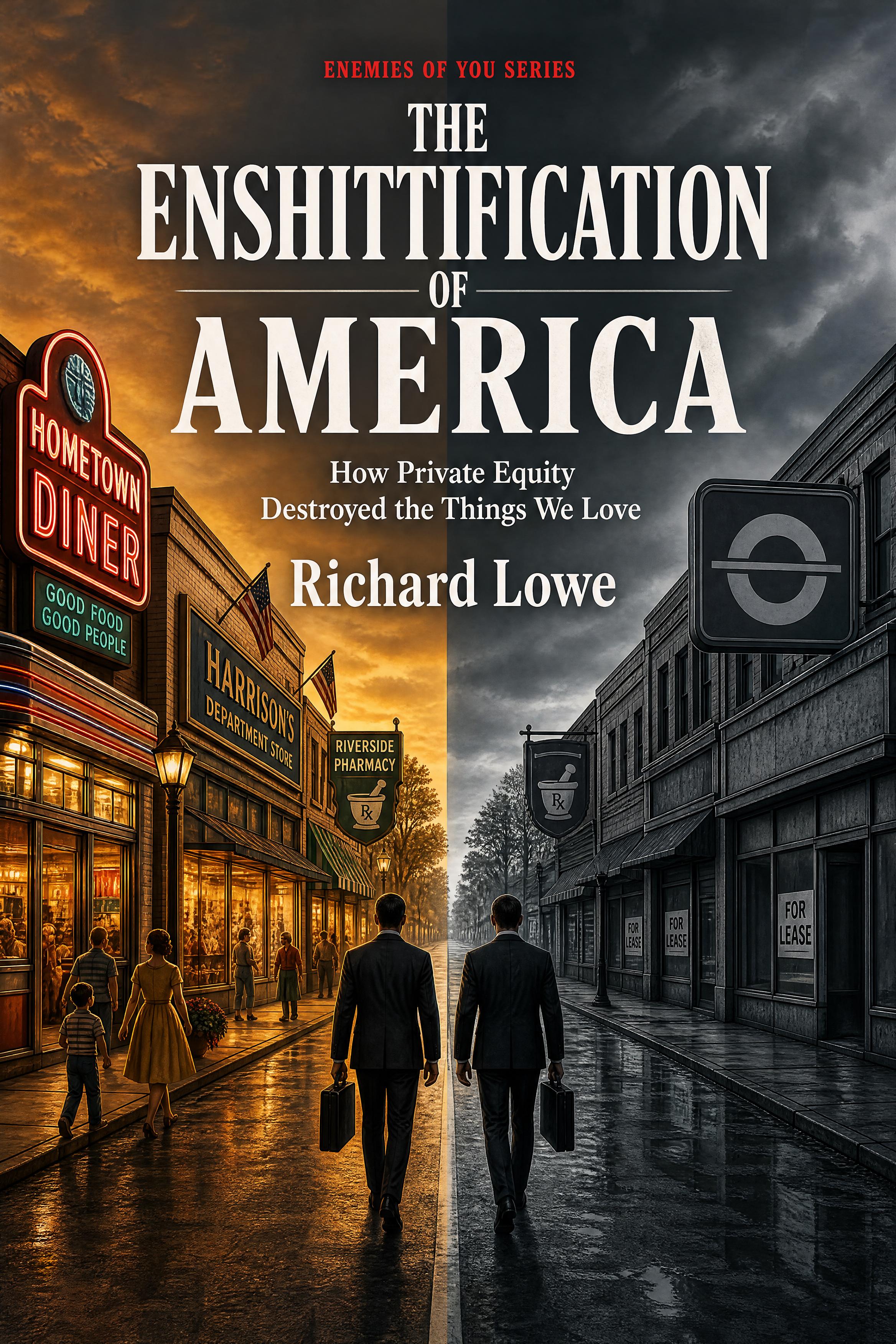
Quora followed a playbook I saw dismantle one industry after another. The Enshittification of America examines thirteen industries and how good businesses were taken apart from the inside.
