
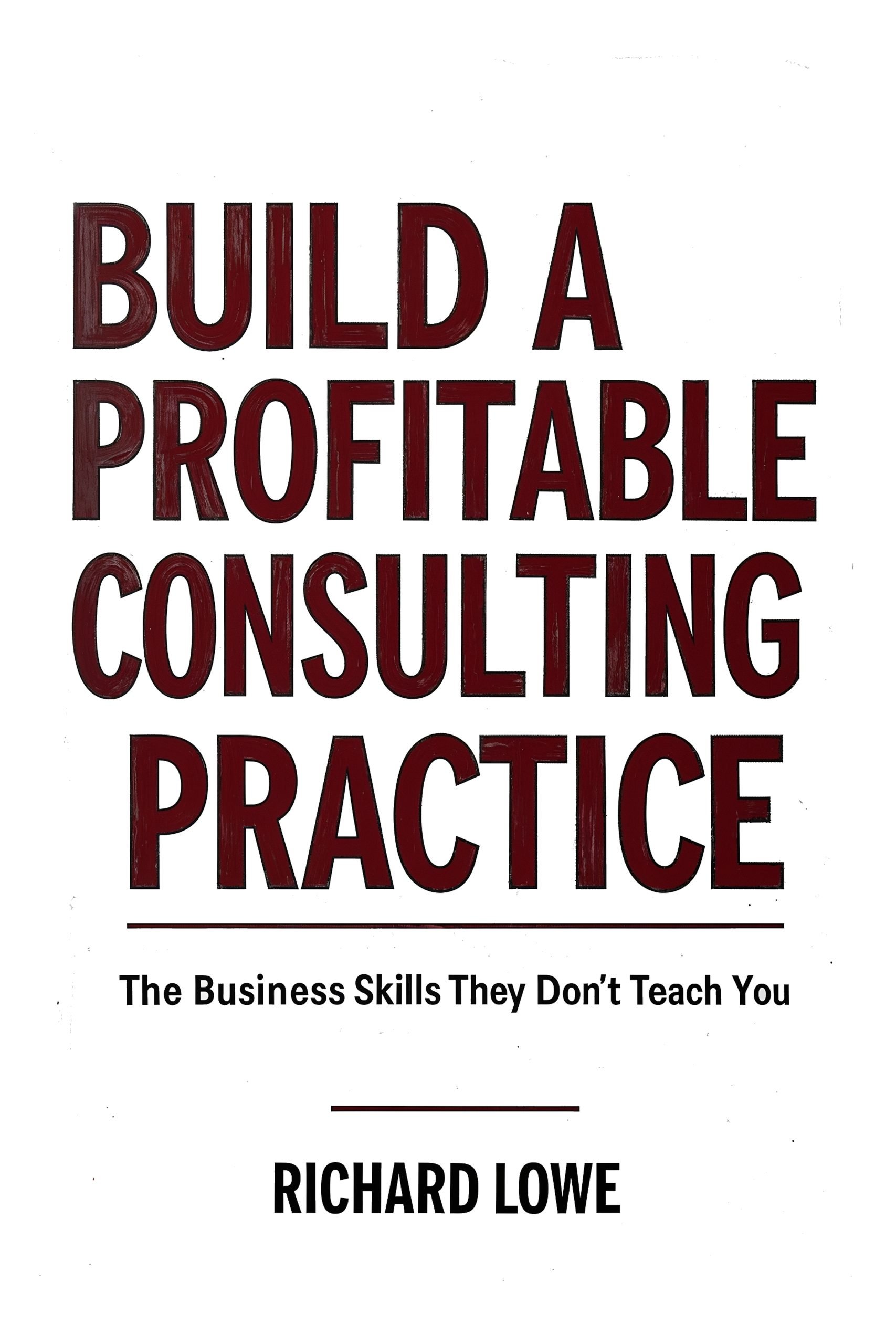
Build a Profitable Consulting Practice
The Part of Consulting Nobody Teaches
 |
Expertise doesn’t pay the bills. Contracts do. BUY FROM INGRAMSPARKAMAZONKOBOREAD A CHAPTERTABLE OF CONTENTS 170 pages · Paperback ISBN 978-1-972810-18-7 · ebook ISBN 978-1-972810-19-4 |
| 170Pages | 30Chapters | 40Years consulting | $600The first contract |
Expertise does not pay the bills. Contracts do.
My first consulting job came from a college professor almost seven feet tall named Fred, near the end of the semester where I first touched a computer. Fixing bugs in general ledger programs on a TRS-80 with sixteen kilobytes of memory and two floppy drives.
I was overconfident, underprepared and completely naive. I had my eye on the six hundred dollars and didn’t realize I had no idea how to fix the programs until I was in too deep to get out.
Looking back I did everything wrong that was available to do wrong. I didn’t validate my assumptions. I didn’t write a statement of work. I didn’t terminate the contract when it became obvious I was over my head.
Forty years later, most consultants I meet are still making some version of those mistakes, and for the same reason: they’re good at their craft, and nobody taught them the other half. Knowing your field cold doesn’t get you paid. Contracts do. Clients who pay on time do. Walking away from the wrong engagement before it eats a year does.
What is inside Build a Profitable Consulting Practice?
|
Before the work
|
Reading the client
|
|
Running it
|
The business around it
|
What do readers say about Build a Profitable Consulting Practice?
Amazon reviews of the previous edition. 2 of them, averaging 5.00 out of 5.
Great textbook for any college course that includes a field-study project for a client. Last year, this book helped my students to avoid many subtle pitfalls in their client relationships for a field-study project in my course, so I’ve assigned it again this year. Also, the author generously made time to give my class a Q&A session via Skype.
A fabulous book for anyone setting about managing a project, whether large or small, business or personal. The author clearly has tons of valuable experience in this area and has ‘been there, done that.’ One isn’t reading a bunch of theory that’s not backed up with real, live, hands-on production. A very worthwhile read.
Who should read Build a Profitable Consulting Practice?
|
Read it if
|
Not for you if
|
Why did I write Build a Profitable Consulting Practice?
Richard Lowe, the Writing King
Forty years of consulting engagements, beginning with a six hundred dollar job I was unqualified to take. Twenty of those years were spent as Director of Computer Operations and Technical Services at Trader Joe’s, managing budgets, vendors and complexity at scale, which is the other side of the table from the consultant. I’ve hired them and I’ve been them.
► Behind the Book: Build a Profitable Consulting Practice
How this one got written, what went wrong, and what got cut.
► My First Consulting Job Paid $600. I’d No Idea What I Was Doing.
One story from behind this book.
What do people ask about Build a Profitable Consulting Practice?
Also in Working for Yourself
|
The Complete Professional Playbook |
Building Relationships That Actually Hold |
|
How the Platform Works Now |
The contract is the part that protects you
The craft is what you already have.
BUY FROM INGRAMSPARKAMAZONKOBOREAD A CHAPTERTABLE OF CONTENTS
Paperback and ebook.
A chapter
Build a Profitable Consulting Practice
Working for free is the fastest way to destroy your consulting practice. Free work devalues your expertise, attracts the wrong clients, and wastes time you could spend on activities that generate revenue. The only exception to this rule is school internships, where the educational value justifies the investment.
Most consultants fall into the free work trap because they think it’ll lead to paid opportunities. Potential clients promise future projects, referrals, or long-term relationships in exchange for free consulting. These promises almost never materialize, and you end up doing real work for imaginary compensation.
I learned about free work the expensive way during my second year of consulting. A local nonprofit organization contacted me about upgrading their donor management system. They explained that their budget was extremely limited, but they had connections with several wealthy board members who might need consulting services for their businesses.
The nonprofit director painted an engrossing picture of future opportunities. She claimed that one board member owned a chain of retail stores, another ran a manufacturing company, and a third was a venture capitalist who funded tech startups. If I could help them with their database project, she was sure they’d recommend me for lucrative paid work.
I spent three weeks analyzing their existing system, designing a new database structure, and implementing the migration. The work was complex because their data was messy and their requirements kept changing. I treated it like a paid project, delivering the same quality I’d provide to any client.
The project was successful. The new system worked well, and the nonprofit was thrilled with the results. They sent a nice thank-you letter praising my expertise and professionalism. But none of the promised referrals materialized. The board members never contacted me, and the nonprofit never hired me for additional work.
That three weeks of free work could have been spent marketing to paying clients, improving my skills, or developing new service offerings. Instead, I gave away valuable expertise and got nothing in return except a warm feeling about helping a good cause.
The fundamental problem with free work is that it attracts people who don’t value consulting services. Clients who expect free work rarely become clients who pay market rates. They’re looking for cheap solutions, not professional expertise, and they’ll continue seeking free alternatives instead of paying for quality.
Table of contents
Build a Profitable Consulting Practice
- What’s a consulting project?
- Statement of work
- Pricing and contracts
- Pricing models and payment arrangements
- Never work for free
- Red flags
- Reading your client
- Controlling change
- Controlling chaos
- Communicating with the client
- Meetings
- Building and managing teams
- Remote work considerations
- Record everything
- E&O insurance
- Demand respect and treat with respect
- When it goes south
- Advanced stakeholder management
- Outsourcing
- Using VAs
- Using AI for your projects
- Modern project management tools
- CRMs and business tools
- Marketing yourself between projects
- Testimonials, referrals, and recommendations
- International and cultural considerations
- Your website and online presence
- The end of the project
- AI consulting as a service offering
- Conclusion