
A commenter on my Goodreads piece said they’d considered leaving and couldn’t find anywhere to land. Amazon already swallowed Shelfari. LibraryThing exists but is smaller and, in their words, lacking.
The general social networks aren’t built for books. So they stayed on Goodreads. It wasn’t good, but it had become the only room with the lights on.
That’s what a monopoly feels like from the inside: a slow narrowing until every door but one has closed.
Picture a town that used to have four bookshops. Three got bought and shuttered. The last one can be rude, disorganized, and hostile, and you still shop there, because it’s the only place left that sells books.
Who owns Goodreads?
Amazon. It bought Goodreads in 2013, and the acquisition changed what the site is for. A commenter captured the arc: Goodreads started as a place that promoted reading and book discussion, then soured into something meaner, now owned by the largest bookseller on earth. The company that sells your book also owns the largest platform rating your book. The reviews that hurt your sales live on a site controlled by the store.
Amazon’s absorption of the places readers talk about books is a bad deal for everyone but Amazon. A company that sells the book, rates the book, and hosts the argument about the book has every reason to keep authors dependent and no reason to treat them well, and authors pay for that every time something breaks.
The company that sells your book also owns the largest platform rating your book.
The pattern is consolidation. Amazon bought Shelfari, an early rival, and then closed it, its community folded into Goodreads. LibraryThing survives as an independent option but never reached the same scale. And Goodreads has steadily removed the connective tissue that let authors route around it: the Twitter login vanished, stranding accounts set up through it, and the automatic sharing to Facebook was cut. Each removal makes the walled garden a little more walled.
Why does the Amazon monopoly make Goodreads worse for authors?
Because there’s no competitive pressure to fix anything. A platform with real rivals has to compete for its users.
It has to answer support tickets, curb abuse, and give authors some control, or those authors leave for the competitor. Goodreads has no competitor at scale, so it has no reason to solve the problems in the comments on my post. The trolls, the unremovable listings and the broken metadata all persist partly because there’s nowhere for a frustrated author to take their business.
Monopoly removes the exit, and the exit is what disciplines a platform. When leaving is impossible, complaints are just noise the company can safely ignore, and the ignoring shows.
I found out what that looks like on the Amazon side myself. I wanted to change a paperback’s subtitle, and KDP’s rules say that takes a new edition, so I followed the instructions, unpublished the old edition and published the new one with everything else the same.
KDP terminated my account for having two versions of the same book at the same time. I started an appeal, couldn’t reach a human being, learned that few people ever come back from a termination, and decided I was done with KDP.
Are there any real alternatives to Goodreads?
Smaller ones, none with Goodreads’ reach. LibraryThing and newer reader apps exist, and some authors use them, but a review site is only as useful as the number of readers on it, and Goodreads has the readers because it absorbed the competition. The answer a commenter reached is that the alternatives are thinner, and for now Goodreads holds the audience by default instead of by merit.
So the practical move is to reduce how much your success depends on a platform you can’t control. Build reach on ground you own, and treat Goodreads as one channel among several. I’d never let a company that can shut the door without explanation decide an author’s fate.
My take
Amazon bought the competition, and authors lost their choices. Goodreads holds readers by default, and a default doesn’t have to be good. I’d never let one company that can shut the door without explanation decide a book’s fate. Use Goodreads as one channel among several. Build your reach on a site and a list you own, and keep it growing while the monopoly does whatever it wants.
How should authors handle a platform they cannot escape?
Stop trying to win on their turf and build your own. The strongest position is an author platform that sends buyers to you directly, so a hostile Goodreads listing is one input among many. When the ratings there are unfair, handle the bad reviews and move on, and understand that much of what looks like a verdict is reception more than quality.
Watch for coordinated attacks. They are review bombing and need their own response, and know that the platform won’t help you remove them. The full case against Goodreads covers why, and the publishing and marketing hub collects the strategy for building reach you control.
Authors didn’t create this mess. Amazon bought the rooms where readers gathered, closed the ones it didn’t need, and left writers with one hostile venue and no appeal. I think an author who builds a career entirely inside that system is trusting a company that has already shown it won’t pick up the phone.
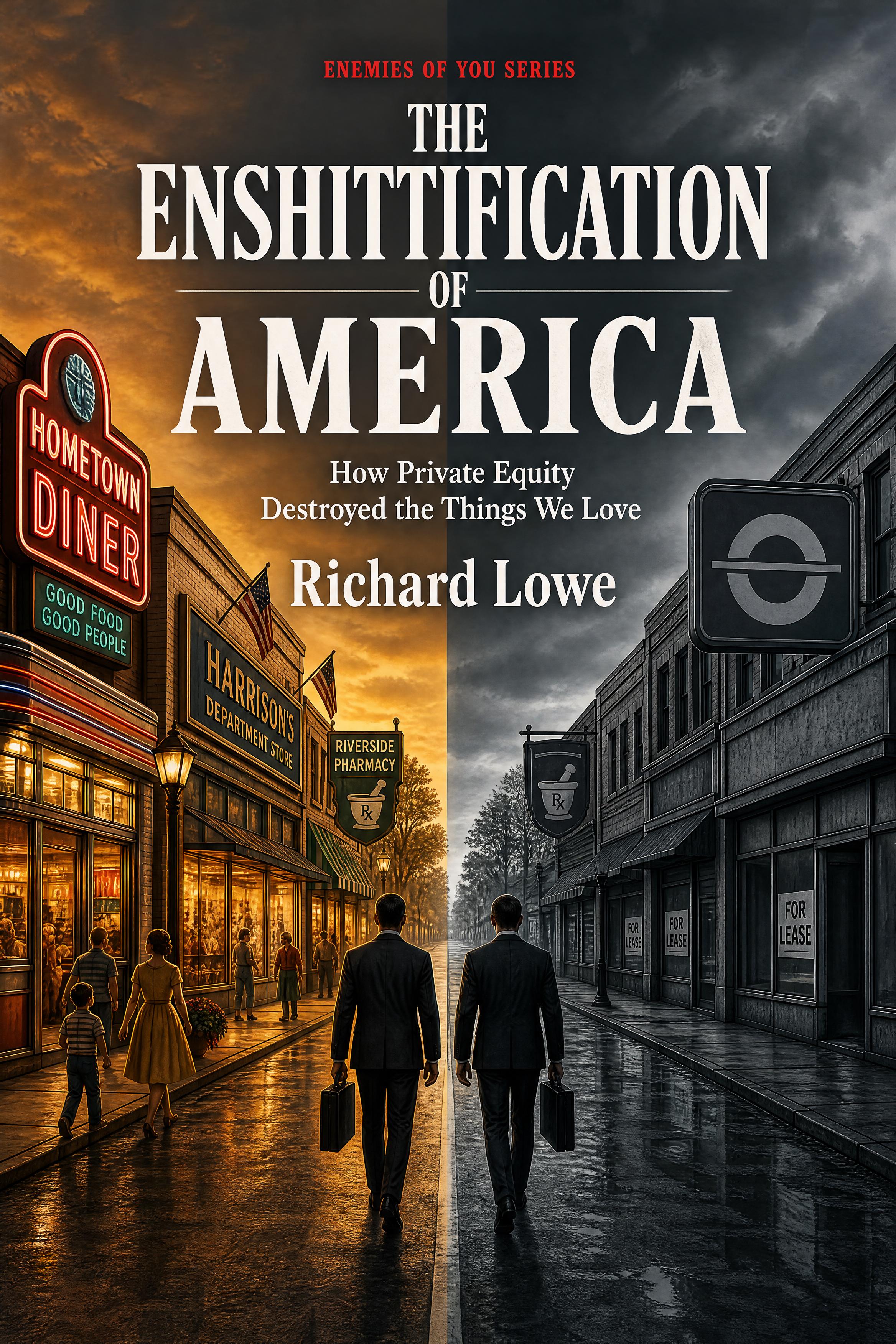
Amazon buying the competition and shutting it down fits a pattern I trace in The Enshittification of America. The book covers how good businesses get taken apart once nobody can leave.
Frequently Asked Questions
The book on this: Sell Your Books is 660 pages on marketing a book in the market as it now exists, including what happens when one company owns most of the shelf.
