
I record every call with a client of mine, and they know it before the first word. Zoom announces the recording and makes them tick a box to accept it. I record phone calls and in-person sessions too, and the contract says so in plain language. That includes the off-camera talk, and everyone on the call knows it’s recorded. Those recordings go straight into Claude, and one question I ask it a lot is this: are there red flags with this particular client?
That’s how it should be. A ghostwritten book is built from hours of someone talking about their life, their business, their mistakes and their family, and the recordings are the most sensitive thing in the whole project. Yet most people hiring a ghostwriter never ask where those recordings go, who can hear them, how long they’re kept, or whether any of it ends up feeding an AI model somewhere. You should ask all four.
What happens to ghostwriting interview recordings during a project?
Most ghostwriting interviews happen over video calls, so the meeting platform makes the recording, either on the ghostwriter’s computer or in the platform’s cloud. Some ghostwriters also record on a phone or a separate app as a backup.
Every client of mine gets a folder on my computer, with a subfolder of recordings filed by date.
Remote sessions are Zoom recordings. Zoom announces the recording and makes the client check a box to accept it. That’s part of why I use it. I record in-person sessions on a tablet and transcribe those in Word. From each transcript I make a summary document, with AI’s help, and send it to the client so they can see what we covered. I record phone calls too, and my contract says so.
Then the recording gets transcribed. Almost nobody transcribes forty hours of interviews by hand anymore. The audio goes through a transcription service, and a lot of those services now run on AI. The transcript becomes the working material for the book.
So a single interview can end up in several places at once: the meeting platform’s servers, the ghostwriter’s computer, a transcription service’s servers, a cloud backup, and wherever the working files live. Each one has its own security, retention rules and terms of service. Most clients never think about any of them.
Can my ghostwriting interviews be used to train AI?
They can, depending on which tools your ghostwriter uses and how those tools are set up. I’d push hardest on this one right now. You wouldn’t hand a stranger your diary without asking where it’s going.
Some consumer AI and transcription tools use the content you give them to improve their models unless you change a setting or pay for a business plan. Business and enterprise versions of many tools promise not to train on customer data, but the details vary by vendor and change over time, so check the specific tool’s current data policy.
Most reputable transcription tools take this seriously. You still shouldn’t have to guess. Your ghostwriter should be able to tell you exactly which tools touch your recordings and whether any of them can use your content for training. If they don’t know, walk away.
My article on ghostwriting confidentiality covers NDAs and what a ghostwriter can say about your project. This one covers the raw material underneath the book.
I’ve also written about whether your ghostwriter will secretly use AI on your book. The recordings question goes further, because a ghostwriter can write every word by hand and still run your raw interviews through a tool whose terms let it keep them.
Who owns the recordings from my ghostwriting sessions?
You should. Most ghostwriting contracts assign the rights in the manuscript to the client, but fewer say anything specific about the recordings, transcripts and notes. Those are your words, and the contract should say they belong to you, along with what the ghostwriter is allowed to do with them: use them to write your book, and nothing else.
That means no reusing your stories in other projects, no sharing clips, no keeping them around “for the portfolio.” If a ghostwriter wants to use anything from your project in their own marketing, they need your written permission, and a professional will ask.
I’d call reusing a client’s stories anywhere else, even with the names changed, a breach of the one promise this whole job rests on. Your material came out of your life, and it goes into your book and nowhere else.
What can go wrong with ghostwriting recordings?
Most exposure comes from ordinary carelessness.
Someone steals a laptop from a car, and the recordings on it were never encrypted.
A cloud folder gets shared with an “anyone with the link” setting, and the link ends up forwarded to the wrong person. An attacker takes over an email account without two-factor authentication and downloads everything attached to every message. A free transcription account keeps every file the ghostwriter ever uploaded.
I watched versions of every one of them happen during my years in corporate IT, and they happened to smart people who didn’t think it would happen to them.
There’s a legal side too. In some lawsuits, recordings, notes and transcripts can become evidence. If your memoir involves a divorce, a business dispute or a family fight that could end up in court, the raw interviews can matter far more than the finished book. That’s one more reason to agree up front on how long they’re kept and who holds them. If a lawsuit is possible, bring your lawyer in before the interviews start.
People also forget that ghostwriters get sick, retire and sometimes die. If that happens mid-project or years later, where do your recordings go? Your contract should answer that, so your story doesn’t end up in an estate sale on an old hard drive.
How should a ghostwriter store and protect my interview recordings?
The same way anyone should protect sensitive business records: encrypted drives, strong passwords, two-factor authentication on every account that touches the files, business-grade tools that don’t train on your content, and no “anyone with the link” sharing. Hold any ghostwriter to that standard. A writer who handles your recordings more casually than your accountant handles your tax returns shouldn’t be trusted with the rest of your story either.
- ► Recordings and transcripts should live on encrypted drives or in encrypted cloud storage, never on a laptop desktop or a free file-sharing link.
- ► Only the people working on your book should be able to open them, and you should know who those people are. If the ghostwriter uses an assistant, an editor or a transcriptionist, you should know that too.
- ► Two-factor authentication on every account that touches your material: email, cloud storage, meeting platform and transcription service. Stolen credentials were the most common way attackers got in during the breaches studied for Verizon’s 2025 Data Breach Investigations Report.
- ► Transcription and AI tools chosen for their data policies, set up so they don’t keep or train on your content where that option exists.
- ► An agreed point after delivery when working copies are deleted, or handed to you and then deleted.
None of it is hard. You’re checking whether the ghostwriter cares enough to do it every time.
How long should a ghostwriter keep my recordings after the book is done?
Only as long as there’s a reason to, and you should decide what that reason is.
Good interviews wander into territory that never makes the manuscript: the story about your ex-partner, or something you said while you were angry.
My contract sets it at three months after the project ends. A few clients have asked me to send them everything and then delete my copies, and I do exactly that. There’s a real case for keeping them for a while after delivery. Questions come up during editing, fact-checking and publishing, and it helps to be able to go back to what you said. A second edition or a follow-up book will need them too. Until then, Claude comes in very handy when we need to make revisions or understand why a decision was made, because I can hand it the transcripts and ask when we decided something. Once the three months are up, I delete everything.
But “for a while” should have a number on it. Agree on a retention period in the contract, whether that’s thirty days after publication, six months or a year, and what happens at the end of it: deletion, or delivery to you and then deletion.
And ask for written confirmation when it’s done. A ghostwriter who’s kept every client’s raw interviews for a decade is sitting on a liability, and it’s yours.
Should I get copies of my ghostwriting interview recordings?
Yes. Beyond security, those recordings are hours of you telling your own story in your own voice. For a memoir client, that’s a family treasure.
Your grandchildren will never hear you talk about the day you started the business or the war or the move across the country, unless someone kept the tape. My own career started with my grandfather’s World War II diary, and I’d give a great deal to have recordings of him telling those stories in his own voice.
My clients can have their recordings any time they ask. A couple have asked for them as the project went along. Most never bother.
Ask for copies of every recording and transcript as part of delivery. Store them somewhere safe, even if you never plan to listen to them. Someone in your family probably will.
What questions should I ask a ghostwriter about my recordings before I sign?
Before you sign, ask where the recordings are stored, who can reach them, which tools touch them, who owns them, how long they’re kept, and what happens to them if the ghostwriter retires or dies mid-project. Ask for every answer in writing.
- ► Where will the recordings be stored during the project?
- ► Which transcription or AI tools will process them, and can any of those tools use my content to train their models?
- ► Who besides you will have access to them?
- ► Are the accounts that hold my recordings protected with two-factor authentication?
- ► Does the contract say I own the recordings and transcripts?
- ► How long will you keep them after the book is done, and what happens then?
- ► Will I get copies of everything?
- ► What happens to my recordings if you get sick, quit or go out of business?
A professional will answer these easily. If a ghostwriter gets defensive or vague, you’ve learned something important about how they’ll treat everything else you tell them. You can ask me every one of these questions, and I’ll answer in writing.
What if my ghostwriting recordings include things that shouldn’t be in the book?
They will. Good interviews wander into territory that never makes the manuscript: the story about your ex-partner, or something you said while you were angry.
I handle this at the kickoff meeting. I tell every client not to tell me anything they don’t want in the book, because after months of interviews I won’t remember which story was meant to stay private.
If a client starts into something personal, I stop them and ask them to tell it in a way that could be published.
You can also ask your ghostwriter to stop recording for a conversation. A couple of my clients have, for one or two sessions. If there’s something you want gone from the recordings entirely, ask. Deleting a segment is simple, and a ghostwriter who respects you will do it.
My take
Recordings are the most private thing you’ll hand a ghostwriter, and most authors never ask where they go. Ask on the first call, and get the answers in writing. Watch how the writer reacts, because a professional answers fast. Somebody who gets vague about storage and AI training will be vague about everything else you tell them. Keep your own copies too, since those files hold your stories in your own voice long after the book is printed.
What should you ask a ghostwriter about recordings on the first call?
Get those answers before you sign, then read the contract and make sure they’re written down as well as spoken. A ghostwriter who can’t answer every one of them without hesitating has no business holding hours of your life on a laptop.
My own answers are in this article, and the same terms go into every contract for my ghostwriting services. The Book Discovery Intensive runs under the same recording and confidentiality terms, so you can see how it works before committing to a full book.
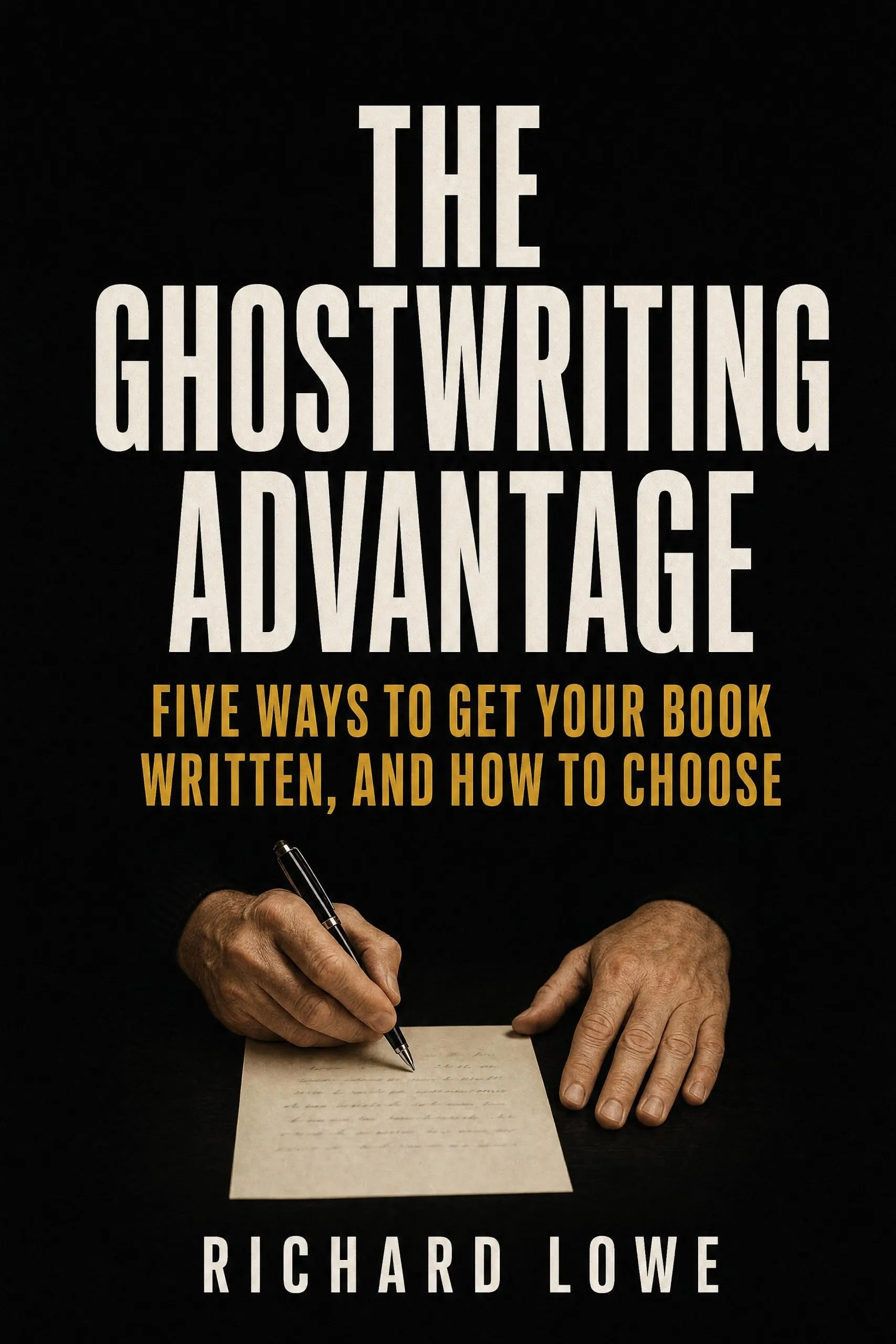
Recordings are the raw material of every book I ghostwrite. The Ghostwriting Advantage explains how the process works when someone else writes your book, so you know what to ask before you sign.
