
TL;DR: Ghostwriting mills are secretly generating client books with AI and charging professional rates. Protect yourself with four demands. A written AI policy in the contract. Recorded interviews as the raw material. Chapters delivered as written. And a writer with a verifiable public identity. My own AI policy is in writing: your book is written by me, AI is a checking tool only, and your material never trains anything.
Clients have started asking me a question in the last two years. It comes in the second half of the first call, usually with a small apology attached. “How do I know you’re not just going to run my interviews through ChatGPT and send me the output?” Stop apologizing for the question. It’s the most reasonable thing you can ask a ghostwriter in 2026. The way a writer answers it tells you almost everything you need to know about who you’re hiring.
Why Do Authors Fear Ghostwriters Using AI?
Because it’s happening. A lot.
The economics are obvious. A ghostwriting mill charging you $25,000 for a manuscript can pay a subcontractor $2,000 to produce it. That subcontractor can produce it in a weekend, by feeding your questionnaire into a language model and lightly editing what comes out. The mill pockets the difference. You get a book that reads like every other book produced the same way, because it was.
That arrangement makes me furious. The client believes they bought months of a writer’s attention, and what they got was a weekend of prompting with their name on the cover. The people who know the author best are the ones who’ll notice first, because they can’t hear the author anywhere in it.
A written AI policy in the contract. A professional who writes will sign it without blinking. A mill will get vague, because the clause destroys their business model.Share on X
I’ve been hired more than once to fix these books. The clients paid full professional rates. What they received was competent, grammatical, structured, and completely dead. The tells are consistent. Every chapter the same length. Every section opening with the same rhythm. Transitions that connect nothing to nothing. And a voice that belongs to no living person. One client described reading his own “memoir” as feeling like a stranger had summarized his life from his LinkedIn profile. That’s what had happened, mechanically speaking.
The ghostwriting industry was already full of scams and mills before AI arrived. AI didn’t corrupt an honest industry. It handed the already-corrupt part of the industry a machine that manufactures plausible-looking product at near-zero cost. The dishonest operators did what dishonest operators do.
How does Richard Lowe use AI in his ghostwriting?
Now the part where most ghostwriters get cagey, because the answer isn’t “I never touch AI.”
I use AI tools. I wrote an entire book about using them, and I’ve published more than forty handbooks teaching writers to use them without wrecking their work.
Pretending the technology doesn’t exist would be a strange position for someone with my catalog. So instead of a denial, you get a policy, and the policy goes in writing:
- ► Your book is written by me. The prose that carries your name comes out of my judgment, my craft, and our recorded conversations. Not out of a generation prompt.
- ► AI is a research and checking tool, not an author. Verifying a date, testing whether a chapter summary holds together, hunting for repetitive phrasing in my own drafts. The same category of work a spellchecker does, at a higher level.
- ► Your material is never used to train anything. Your interviews, your drafts, and your business information don’t go into tools that retain or learn from them. Confidentiality doesn’t have an AI exception.
- ► You can ask me at any point what was done and how. The process isn’t a black box. It’s your book.
That policy exists because I believe what I wrote in AI never writes in your voice: the model produces the average of everyone, and the entire value of a ghostwritten book is that it sounds like exactly one person. A book that could have been generated is a book that didn’t need you, and a book that didn’t need you won’t do anything for you.
What Should You Demand From a Ghostwriter About AI?
Not just from me. From anyone you’re considering. Four things, and none of them are unreasonable:
A book that could have been generated is a book that didn’t need you, and a book that didn’t need you won’t do anything for you.Share on X
1. A written AI policy in the contract. Not a verbal assurance. A clause stating what AI tools may and may not be used for, and stating that the manuscript is the writer’s original work. A professional who writes will sign this without blinking. A mill will get vague, because the clause destroys their business model.
2. Recorded interviews as the raw material. A model can’t fake a book built from ten hours of real conversation, because the model wasn’t in the conversation. If a “ghostwriter” wants to work from a written questionnaire instead of live interviews, ask why. Questionnaires are how you feed a prompt.
3. Chapters delivered as they’re written. Generated books arrive all at once because they’re produced all at once. Real collaboration produces chapters in sequence, shaped by your corrections. The delivery pattern is itself evidence.
A model can’t fake a book built from ten hours of real conversation, because the model wasn’t in the conversation.
I’d walk away from any writer who won’t show you a single chapter until the whole book is finished. That silence protects the writer, and you’re the one paying for it, with no chance to correct course while corrections are still cheap.
4. The writer on video, talking about your project. This one sounds trivial, but it’s worth more than it looks. The mills hide their writers because the writers are interchangeable or fictional. A real professional has a face, a history, a public record you can check. Mine includes a hundred-plus podcast appearances where you can hear me think in real time. Nobody generates that.
One client talked to more than a dozen ghostwriters before he hired me, and he told me he chose me because I was the first one who acted like a person and treated him like one. That’s a low bar, and far too many people selling ghostwriting never clear it.
My take
Ask the question out loud and get the answer in the contract. A ghostwriter who won’t put an AI policy in writing has already told you something. Mine is written down. I write your book, AI is a checking tool only, and your material never trains anything. Demand recorded interviews, chapters as they’re written, and a writer with a public record you can check. If you can’t see their face or hear them think, walk away.
What are you asking underneath the question about AI?
When a client asks whether I’ll secretly use AI, the question underneath is older than the technology: am I going to pay professional money and get something less than professional work? AI just gave that fear a new face.
The answer hasn’t changed either. You protect yourself the way clients have always protected themselves: verifiable identity, contractual specifics, work delivered in the open, and a track record you can check independently. I publish a Code of Ethics for Ghostwriters and my AI policy sits inside it, because the AI question is the current version of the ethics question.
If you want to test all of this before committing to a full engagement, that’s what the Book Discovery Intensive exists for: ten hours of real interviews, a strategy report, and a 2,000-word sample chapter in your voice. Read the chapter. You’ll know within a page whether a human being wrote it, and whether that human being was listening to you.
That’s the standard. Don’t accept less from me or from anyone.
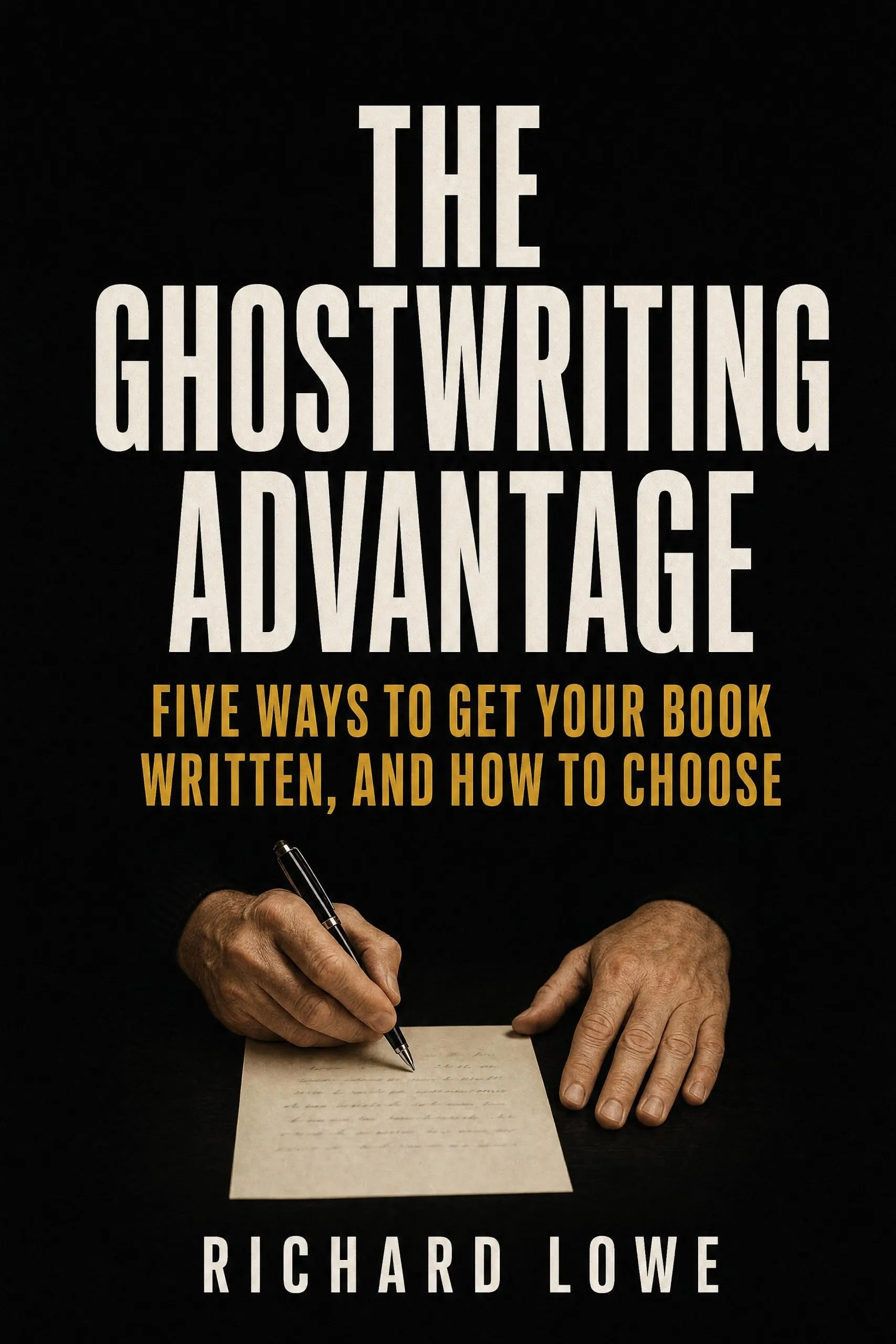
Ask hard questions before you hire anyone to write your book. The Ghostwriting Advantage explains how to get your book written for you by a professional, and what to expect from one.
