
Taking over a book that’s already had one, two or even three ghostwriters is common in my practice. By the time those clients reach me, they’re pretty upset. They’ve been burned, sometimes twice, and they’re not sure they want to try again.
Part of my first call with them is calming things down.
I explain how I work and how my pricing works, and I make it clear they can walk away if they need to and still own everything. Every takeover I’ve accepted has worked out, and they’ve all been good clients. Twice I declined, for a reason I explain below.
Can I switch ghostwriters in the middle of my book?
Yes. Your contract with the first ghostwriter should allow you to end the engagement, and a new ghostwriter can pick up the project from wherever it stands. Get everything from the first writer, and give the second a clear picture of the project.
If you’re unsure whether to switch, give the first ghostwriter clear, specific feedback and one more chance to fix the problem. If that doesn’t work, make the change. Staying with the wrong fit tends to cost more in time and money than switching. My article on firing a ghostwriter mid-project covers how to end the first relationship well.
What happens to my drafts when I change ghostwriters?
They should come with you. Before you end the first contract, request every draft chapter, outline, note, interview recording and transcript, along with anything else created for your book. A properly written contract assigns you ownership of all of it as it’s created and paid for.
Get the files in editable formats, with the recordings in full. Confirm in writing that the first ghostwriter has delivered everything and won’t use your material for anything else. If the contract is unclear or the writer won’t release your files, talk to a lawyer before you move on.
A writer who won’t release your files has told you everything you need to know about them. You paid for those interviews and drafts, and I have no respect for anyone who treats a client’s own material as a bargaining chip on the way out.
Will a new ghostwriter keep my book’s voice?
They’ll establish it. Establishing it can mean changing it. If you’re switching because the voice wasn’t right, the new writer’s first job is to find your real voice, often through a few new interviews and a close listen to the original recordings. Expect them to revise the existing chapters so the whole book sounds consistently like you.
A writer who won’t release your files has told you everything you need to know about them.
If the voice was fine and you’re switching for other reasons, such as scheduling or the first writer leaving, tell the new ghostwriter which chapters you’re happy with. A good writer can match an existing voice closely. A new writer who insists on rewriting chapters you already love is putting their own ego ahead of your book, and you’re within your rights to say no.
Do I have to pay twice if I change ghostwriters?
Some of it, yes. You’ll pay the new ghostwriter for the work they do, and some of it may overlap with work already paid for. How much depends on what can be kept. Paying twice for the same chapter stings, and I understand the anger. I’d still take that over a finished book in a voice that isn’t yours, sitting on your shelf with your name on it for the rest of your life.
Recordings and interview material carry over, and they’re the most valuable part of the first writer’s work, since they save the new writer from starting interviews from scratch. Drafts that work can be kept or lightly revised. Drafts that don’t will need rewriting. The new ghostwriter will quote based on what’s usable, and a good one will tell you straight how much of the existing work they can build on.
On the other side, your contract with the first writer should settle what you owe for work completed and what’s refunded for work not done. My article on what happens when a ghostwriting contract ends covers those terms.
How do I hand off a book to a new ghostwriter?
Give them everything, and the whole story:
- ► The original contract and statement of work, so they know the scope.
- ► All drafts, outlines, notes, recordings and transcripts.
- ► Your feedback on each chapter, and what you liked and didn’t.
- ► An honest account of why you’re switching.
- ► Any deadlines, publishing plans or commitments that affect the schedule.
Honesty about why the first relationship ended helps the new writer avoid repeating it. If the problem was voice, they’ll prioritize it. If it was communication, they’ll set up a clearer rhythm. If it was the scope, you’ll settle that up front.
Will a new ghostwriter start my book over?
Rarely from zero. They’ll read and listen to everything first, then recommend what to keep, what to revise and what to rewrite. The structure may be sound with only the prose needing work, or the structure may need rethinking while they reuse much of the prose in a new order.
Be open to their assessment, even if it means more change than you hoped. A fresh reader can see what the book needs more clearly than someone who’s been inside it for months.
Be wary of a takeover writer who says everything is fine and only needs a polish before they’ve read the whole manuscript. That pitch comes from someone who wants the job more than they want your book to work.
How do I find a ghostwriter to finish a book someone else started?
Look for a ghostwriter who’s comfortable taking over projects in progress, and ask about it directly. Some prefer to start fresh. Others do takeovers regularly. Share a summary of the project and the reason for the switch on the first call, and ask how they’d approach it.
Be ready for a careful question about why the last ghostwriter left. Clients who fired or left a ghostwriter are one thing. When the ghostwriter walked away from the client, I’m cautious. That’s happened twice, and I declined both, because the first conversation made it obvious why the last ghostwriter had walked.
Vet them as carefully as you would for a new project, and more carefully on whatever went wrong last time. My article on how to vet a ghostwriter covers what to check.
My take
Swap writers if it isn’t working, and don’t treat the money you already spent as lost. Get every draft, note and recording before you close the old contract. Tell the new writer the truth about what went wrong. If a takeover writer calls it a quick polish before reading your manuscript, find someone else, because that person wants the job more than a working book. Expect new interviews and some rework, and budget for it.
What should you gather before calling a new ghostwriter?
Every draft, outline, recording and transcript from the previous ghostwriter, in editable form. The original contract and statement of work. Your notes on what went wrong, written while you still remember it clearly. And a short, honest answer to the question a careful ghostwriter will ask: who ended the last project, and why?
Switching writers mid-book feels like admitting a mistake, and I think too many authors stay with the wrong writer for months because of that feeling. I’d much rather a client make the change early, while they’re still angry, than wait until they’ve given up on the book entirely.
If you’re looking for someone to take over a book in progress, the Book Discovery Intensive is a way to find out whether we’re a fit before committing, and my ghostwriting services explain how a takeover is priced.
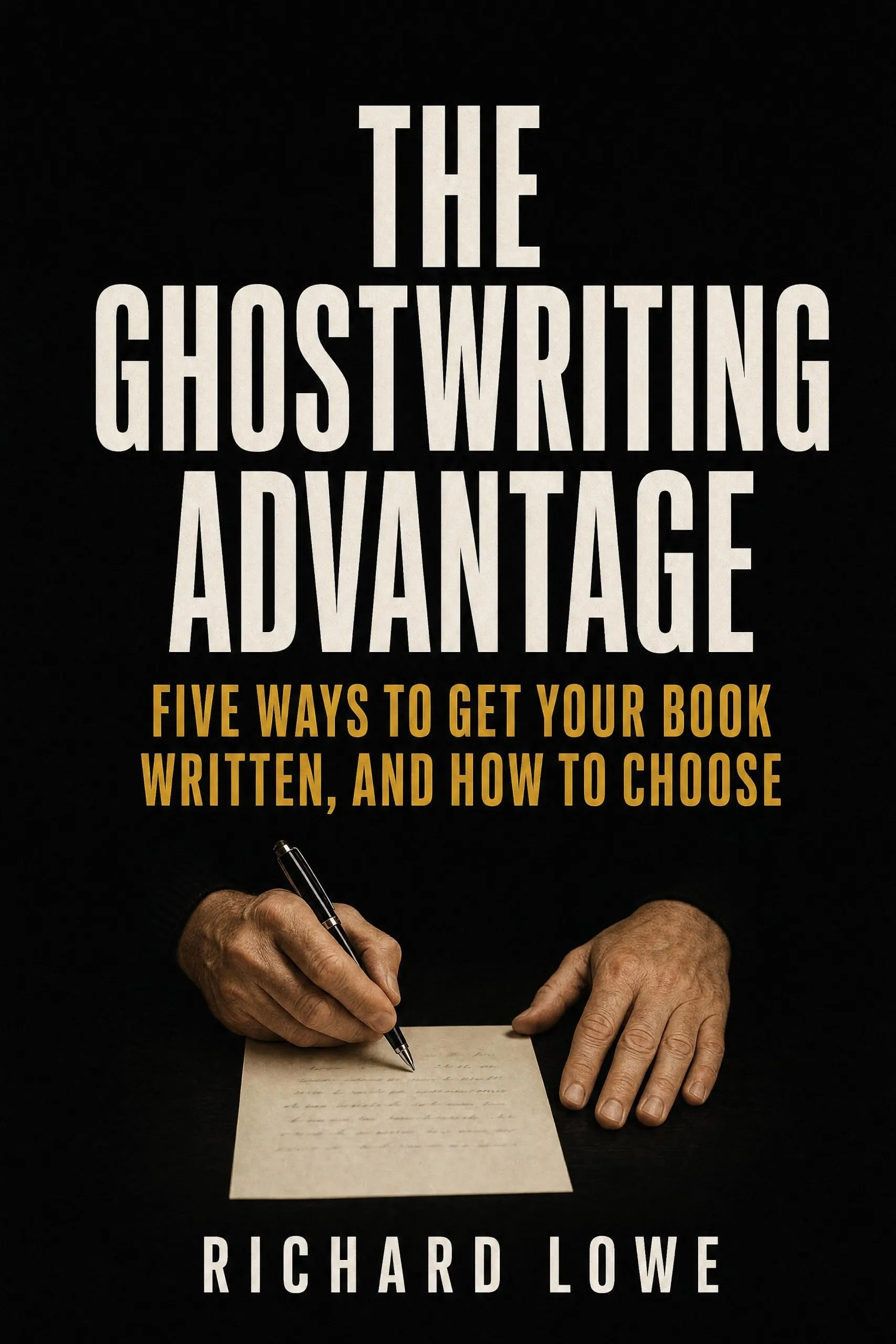
New writers take over more smoothly when you know what a healthy project looks like. The Ghostwriting Advantage explains how to get your book written for you, from the first call to the finished manuscript.
