
Readers don’t want a smooth book where everything went fine. They want the ups and downs. You lost your business: how did you recover? A competitor nearly sank you: what did you do about it? You had to close the office for six months during COVID: how did you get through it?
I tell every business client that, and I probe for the failures on purpose. Most of them are relieved, and a few are horrified.
The founder whose company raised money, hired ninety people and collapsed in eleven weeks believes the collapse is the part to hide. (He’s a composite, but I’ve met many versions of him.) It’s the part readers came for.
I have a lot of respect for founders who’ll write this book. Most people who lose a company spend years explaining it away over dinner, and the ones who sit down and put the real sequence on paper give other founders something no business school hands out. Given the choice, I’ll take that book over another victory lap every time.
Should I hire a ghostwriter to write about my business failing?
If you have something to teach from it, yes. A book about failure is really a book about what failure teaches: the warning signs you missed, the decisions you’d make differently, what it felt like from the inside, and how you rebuilt. That’s valuable to other founders and executives, and it’s rare, because most people won’t write it.
A ghostwriter helps you get distance from the story. You lived it as a series of crises. A ghostwriter can help you see the shape of it, find the lessons, and tell it in a way that’s honest without being self-punishing.
Will a ghostwritten book about my failed business hurt my career?
Handled well, it helps. Readers, employers, investors and clients respect a founder who can explain clearly what went wrong and what they learned. It signals self-awareness, honesty and resilience. People look for exactly those qualities in someone they’re about to trust with money or responsibility.
Investors have seen plenty of failures, and I think they trust the founder who can walk them through one far more than the founder whose résumé has an unexplained gap. What hurts is a book that blames everyone else, reads as bitter, or reveals confidential information you had no right to share. The difference is in the telling, and a good ghostwriter will help you strike the right tone.
The blame book is the one I’d talk any founder out of. It feels good to write and reads like a deposition, and every reader who might have hired you finishes it wondering what you’ll say about them someday.
How does a ghostwriter write about my mistakes without self-pity?
Own them in simple terms, and move on to what you learned. Readers want the specifics of what went wrong: the hire you should have let go, the market signal you ignored, the loan you shouldn’t have taken. They don’t need you to beat yourself up over each one. State the mistake, show its consequences, and explain what you’d do differently. Then keep the story moving.
Show the emotion, too. The fear, the sleepless nights, the moment you knew it was over. Leaving those out makes the book cold. Dwelling on them for chapters makes it heavy. A ghostwriter can help you find the balance.
What can a ghostwritten book say about investors, partners and employees?
They’re part of the story, and they deserve care. Check every agreement first: shareholder agreements, investor documents, settlement terms, confidentiality agreements and anything signed when the company closed or was sold. Some include confidentiality or non-disparagement terms that limit what you can say. My article on writing about your old company without getting sued covers those limits.
Former employees trusted you with their livelihoods and lost them.
Be generous toward them in the book, protect their privacy, and think hard before naming anyone who didn’t choose to be public. Investors and partners can be described fairly, even when you disagree with what they did. Have a lawyer review anything that makes factual claims about real people or discloses business information.
Former employees are the people I’d protect hardest. They didn’t get a vote on the strategy and they lost their paychecks anyway. A founder who uses them as props in a comeback story loses my sympathy fast, and loses the reader’s along with it.
When is the right time for a ghostwritten book about a business failure?
When you can tell the story without shame or anger running it. For some founders that takes a year. For others it takes longer. Writing too soon produces a book that’s either defensive or raw, and neither serves you well.
Readers don’t want a smooth book where everything went fine.
If you’re still furious, I’d tell you to wait. Writing in that state produces pages you’ll want to burn a year later, and nobody should pay for a book they can’t stand to hand out. Legal matters also affect timing. If there’s ongoing litigation, a bankruptcy proceeding or an investor dispute, talk to your lawyer before you start interviews. Conversations with a ghostwriter aren’t legally privileged, and you don’t want your book notes becoming evidence.
What should a ghostwritten book about business failure include?
The strongest ones share a shape:
- ► What you were building and why it mattered to you.
- ► The early signs, including the ones you saw and explained away.
- ► The decisions that sealed it, told with your reasoning at the time.
- ► The collapse itself, including the hardest moments with employees, investors and family.
- ► What it cost you personally.
- ► What you learned, stated as lessons another founder could use.
- ► How you rebuilt.
The lessons section turns a sad story into a book people recommend. Make it concrete and practical, with no platitudes.
Can a ghostwritten book about failure help me land my next role?
Yes, in most cases. A book gives a prospective employer, investor or client a deep, honest look at how you think under pressure. It answers the question they’d ask anyway, what happened with your last company, in a way no interview can. It also positions you as someone who has studied failure seriously. Anyone building something risky values that.
I tell clients they’re very unlikely to earn back what they spent through book sales. The return comes from using the book as the foundation of their marketing, and for my clients that’s meant consulting contracts, speaking, courses and a promotion. A founder who lost a company is well placed to use a book that way, because people pay attention to someone who survived what they’re afraid of.
Some founders use a failure book to launch a second act as advisors, speakers or turnaround specialists. My article on turning your book into talks and courses covers how.
My take
Founders who can explain their failure are worth more than founders who hide it. A book that owns your part, walks through your decisions and turns them into lessons another founder can use will open doors an interview can’t. Don’t expect it to pay for itself in sales. It pays through consulting, speaking and the next job. Check your investor and acquirer agreements first, and wait until shame has stopped writing the story.
What should a founder do before writing about a failure?
Wait until the shame isn’t holding the pen.
Check every agreement you signed with investors, partners and any buyer. Make a list of the former employees you’ll mention and decide how to protect them. Then write down, in plain terms, the three decisions you’d make differently. Those three decisions become the spine of the book.
My executive ghostwriting page covers books for founders and leaders, the Book Discovery Intensive is a confidential way to test whether the story is ready, and my ghostwriting services cover the full book. I think a founder who hides the failure wastes the most expensive education they’ll ever get. You paid for those lessons with your company and your people’s jobs, and leaving them out of print means somebody else will pay for the same lessons all over again.
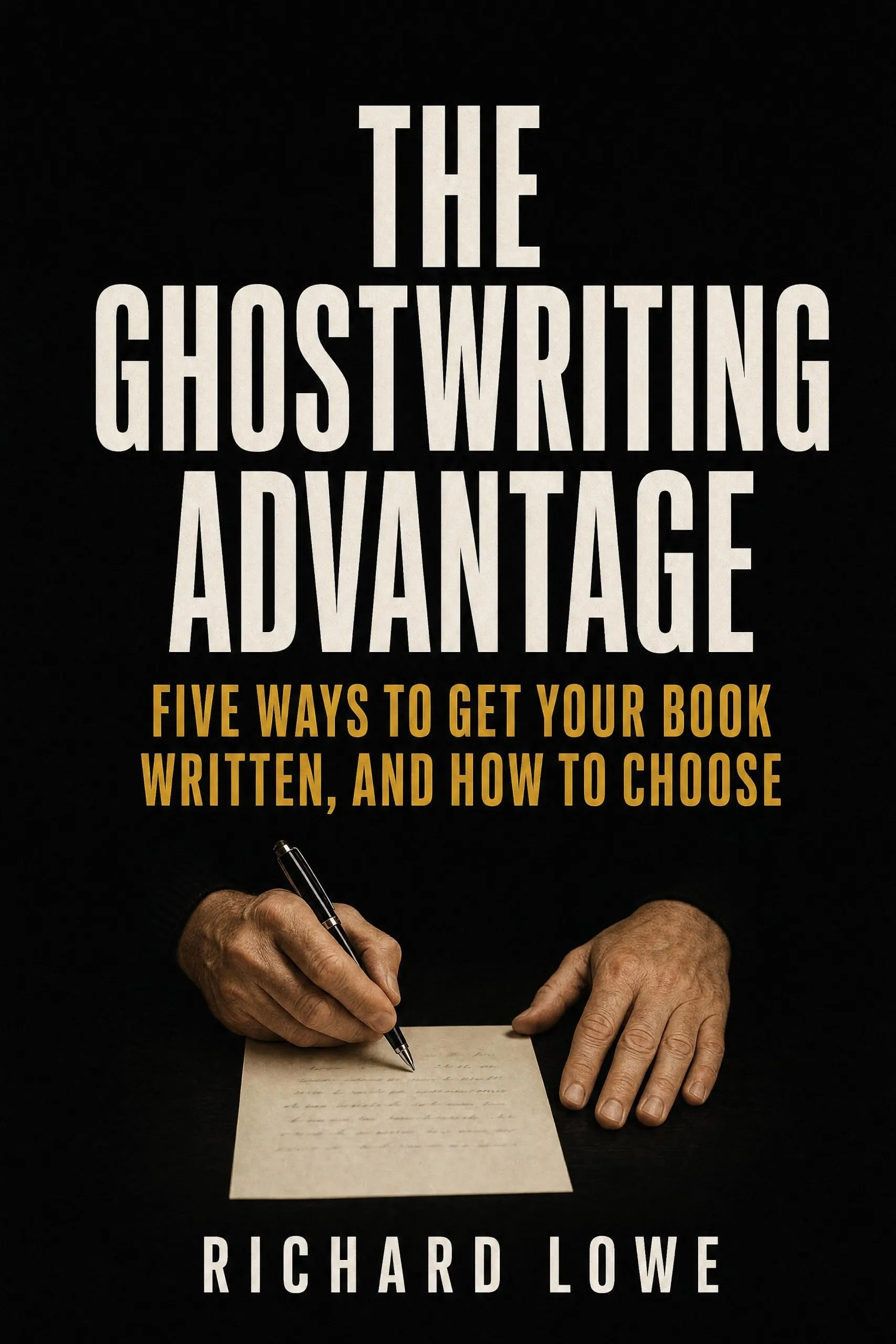
Failure makes a strong book when it is told straight. The Ghostwriting Advantage explains how a ghostwriter gets your story written for you, including the parts you’d rather skip.
