
The phone call came from a man who said he’d been a confidential FBI informant inside the Mafia. He was retired now, and he wanted a ghostwriter to tell the story of his adventures, names included. He offered what would have been the biggest book of my career.
I said no. I like breathing, and the people he wanted to name would come looking for everyone involved. He promised to keep my name out of it. I asked him why I should trust a man who wanted to write a book exposing the people who had trusted him. He kept pushing, and I kept saying no.
Most tell-alls are nowhere near that dramatic. They’re about an ex, a former boss or an old company, and the risks are legal instead of lethal. They’re still real, and most authors find out about them far too late.
I’d hate to see anyone lose their severance over one angry chapter.
I’m on the side of the person with a hard story to tell. Bad bosses, cruel exes and companies that chew people up deserve to be written about, and a book is one of the few places an ordinary person gets to answer back at full length. The danger is how many authors start that book blind, with a severance agreement sitting in a drawer they haven’t opened in years.
Can a ghostwriter write a book about my former employer?
Yes, within the limits of the agreements you signed and the law. Writing about your career, including the parts where your employer behaved badly, is legal. Plenty of excellent business books and memoirs tell hard truths about the companies their authors worked for.
The limits come from three places. Your employment agreement may cover confidential information and trade secrets you can never disclose. Your severance or settlement agreement may include non-disparagement and confidentiality clauses. And defamation law applies to anything you say about real, identifiable people and companies. A ghostwriter can help you tell the story powerfully within those limits, but can’t make them disappear.
Does a non-disparagement agreement stop me from hiring a ghostwriter for a book?
It doesn’t stop you from writing a book. It can stop you from saying negative things about the people or company it covers, and a book is exactly where that clause gets tested.
Non-disparagement clauses show up in severance packages, settlement agreements and business sales.
They vary a great deal. Some cover only the company, some name individual executives, some last a few years, and some last forever. Some carve out truthful statements or legally protected activity, and many don’t. If you break one, the other side can sue for breach of contract, claw back your severance, or both.
I’d hate to see anyone lose their severance over one angry chapter. The company already paid for that silence, and a book that breaks the deal can hand the money right back to them with a legal bill on top. No chapter is worth that, however good it felt to write.
Find every agreement you signed when you left: severance, settlement, separation, release. Give them to an employment lawyer before a single interview happens. The lawyer can tell you what the clauses cover, whether they’re enforceable where you live, and how to tell your story without breaching them. Sometimes the answer is that you can write almost everything. Sometimes the answer is that you need to wait, or leave certain people out. Either way, you need to know before you’ve paid a ghostwriter to write chapters you can’t publish.
Can my ghostwriter write about my ex in my memoir?
Yes, with care, and with a look at your divorce paperwork first.
A marriage is part of your life story, and you’re allowed to tell your side of it. The people you were married to show up in memoirs all the time.
But divorce settlements sometimes include confidentiality or non-disparagement terms, and custody arrangements sometimes limit what parents can say publicly about each other. Check those before you write.
Then there’s the harder question: the children. Your kids will read this book someday, or their friends will.
A memoir that tears their other parent apart can do damage that no amount of truth justifies. The best divorce memoirs I know tell the truth about what happened and what it did to the author, and they leave the other person’s worst moments mostly offstage. My article on writing about family without a lawsuit covers how to handle the people closest to you.
Is it defamation if my ghostwritten book tells the truth?
Truth is the core defense. Defamation, as Cornell’s Legal Information Institute summarizes it, generally requires a false statement presented as fact, communicated to others, with the required level of fault, that damages someone’s reputation. The same summary notes that statements of pure opinion, the kind that can’t be proven true or false, are generally protected.
Truth doesn’t have to be perfect in every detail.
Courts generally look at whether the statement is substantially true, meaning the gist of it holds up. But “it’s true” is only a defense if you can prove it. If your former boss sues, the question becomes what evidence you have: documents, emails, records, witnesses. A true story you can’t back up is still a risky story.
Opinion is protected, up to a point. “I thought he was the worst manager I ever had” is an opinion. “He falsified the third-quarter numbers” is a factual claim, and you need proof. Calling something an opinion doesn’t protect a statement that implies facts you can’t prove. Defamation law also varies from state to state, so a lawyer needs to read the manuscript.
Authors hate this part, and I understand why. They lived through it, they know what happened, and now somebody wants proof. Get the proof anyway, because only what you can prove in court protects your savings.
Can I get sued for a ghostwritten book about my old company?
Anyone can file a lawsuit, so yes. Whether it succeeds depends on what you wrote, what you can prove and what you agreed to.
The common claims are breach of contract, if you violated a non-disparagement or confidentiality clause, and defamation, if you stated something false as fact.
Others include disclosure of trade secrets or confidential business information, and invasion of privacy for revealing private facts that aren’t a matter of public concern. Even a lawsuit you win costs money, time and sleep. Companies with deep pockets sometimes sue because they know the author can’t afford a long fight.
Protect yourself twice: before the book is written, with an employment lawyer reviewing your agreements, and before publication, with a media or publishing lawyer reviewing the manuscript. Both together cost a fraction of what a lawsuit would.
Will a ghostwriter write a tell-all book?
A professional will write a truthful book that happens to expose bad behavior. Most won’t write a book whose main purpose is to hurt someone. The difference shows up in the first conversation. An author who wants to tell what happened, what it cost them, and what readers can learn from it has a book. An author whose goal is to humiliate an ex or ruin a former boss has a weapon, and weapons make bad books and worse lawsuits.
I turn down revenge memoirs outright. Every prospect who wanted one walked away, and I don’t miss the work. Readers can feel score-settling on the page, and it makes them trust the author less. Revenge memoirs backfire for exactly that reason, and the author almost always ends up looking worse than the target.
A good ghostwriter will also insist on the safeguards: your agreements reviewed, your evidence gathered, the manuscript read by a lawyer, and names changed or left out where the story doesn’t need them. A ghostwriter who’s happy to write whatever you want about whoever you want, with no review at all, knows they won’t be the one getting sued.
How does a ghostwriter tell the truth about someone without getting you sued?
By writing about what happened and what it did to you, with evidence behind every factual claim.
That means focusing on your experience: what you saw, what you did, what it cost you. It means stating facts you can prove and labeling your opinions as opinions.
That also means cutting people who don’t need to be named and describing some by role instead of by name. Let the facts carry the judgment instead, because a reader who sees what someone did doesn’t need you to call them a monster, and a lawyer reading your manuscript will thank you for the restraint.
It also means keeping your records. Before the interviews start, gather the documents that support the story: emails, performance reviews, memos, texts, court filings, anything with a date on it. Your ghostwriter builds the story on that foundation, and your lawyer checks it against the same file. Start that file before the interviews, while you’re still angry enough to go looking. Once the book is out and a letter arrives from somebody’s lawyer, you don’t want to be digging through an old inbox hoping the email you remember still exists.
My take
Truth protects you only if you can prove it. Pull out your severance, employment agreement and divorce decree before you write a word, and read what you signed. Build a file of emails, reviews and texts while you’re still angry enough to look. Describe what happened and what it cost you, and let the reader judge. A ghostwriter who’ll write anything about anyone with no legal review won’t be the one getting sued.
What should you gather before writing about a former employer or ex?
Every agreement you signed: employment, severance, settlement, separation, divorce. Every document that supports your account: emails, reviews, memos, texts, filings, anything with a date. Take the agreements to the right lawyer before the first interview and the manuscript to a publishing lawyer before it goes anywhere. Then write the truth, label your opinions as opinions, and let the evidence do the judging.
If you want help deciding whether the book you have in mind is the one you should write, the Book Discovery Intensive is the place to work it out. My ghostwriting services cover the full book, with legal review built into the plan.
The authors I worry about are the ones so sure they’re right that they skip the lawyer. Being right won’t pay a legal bill, and an author who can’t prove the story ends up defending the book in court when they meant to be selling it.
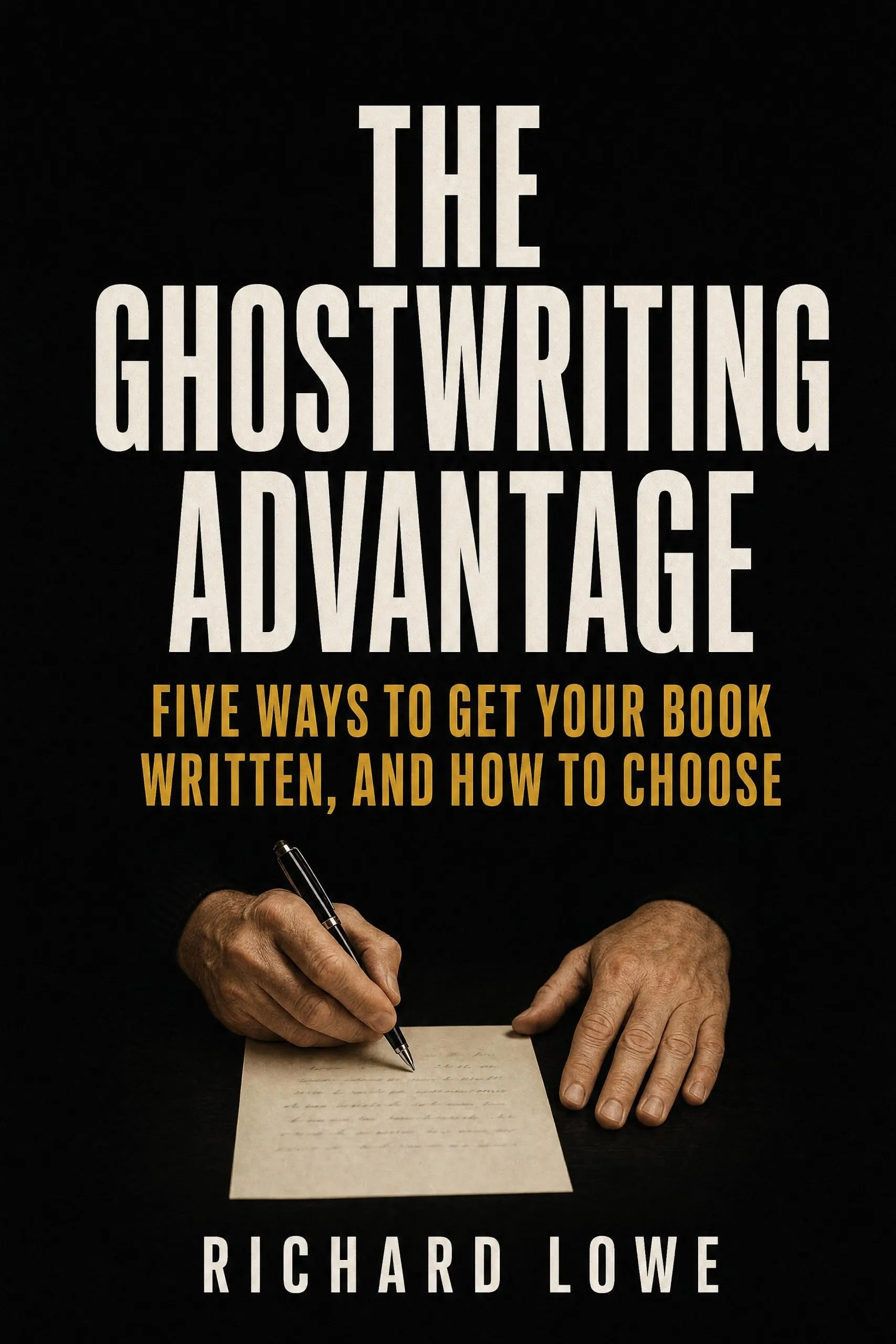
Books about real people need care from the first interview. The Ghostwriting Advantage covers how to get your book written for you by a professional who knows where the lines sit.
