Latest
Profiles in CourageAmerican SoldierI, RobotA World at Arms: A Global History of World War IICampus BattlefieldTime for a Turning Point21 Days to Success with LinkedIn: Business Social Networking the Gnik Rowten WayLifeOpen: An AutobiographyDid I Ever Tell You This?: A MemoirBeneath a Scarlet SkyLove’s Executioner and Other Tales of PsychotherapyStranger in a Strange LandShattered Sword: The Untold Story of the Battle of MidwayThe Bell JarThe Phone Book: The Curious History of the Book That Everyone Uses But No One ReadsDesigning Casinos to Dominate the CompetitionTrump: The Art of the DealMasters of NetworkingNetworking Your Way to SuccessSoldier for Life: Leader Lessons from the 12th Sergeant Major of the ArmyThe Library BookFlorida Roadkill21 Days to Success Through Networking: The Life and Times of Gnik RowtenPodkayne of MarsRight Wing RevolutionThe MAGA DoctrineThe College ScamStop, in the Name of GodPa’anRadioThe Sage of SagittariusDoes Explicit Sex Sell Books? An Answer to The Absolute Degeneracy of Modern WritingThe Mary Sue: How a 1973 Star Trek Parody Became a Writing TermWhat the AI Writing Survey Says About Jobs, Freelancers and Fiction AuthorsHow Long Does Google Take? Crawling, Indexing and Recovery TimesLife of Pi50 Years of Duty: One Police Officer’s Compelling Journey from State Trooper to County SheriffBreaking Rank: A Top Cop’s Exposé of the Dark Side of American PolicingBlack in Blue: Lessons on Leadership, Breaking Barriers, and Racial ReconciliationCalled to Rise: A Life in Faithful Service to the Community That Made MeVigilance: My Life Serving America and Protecting Its Empire CityTurnaround: How America’s Top Cop Reversed the Crime EpidemicCollaborate or Perish! Reaching Across Boundaries in a Networked WorldThe Profession: A Memoir of Community, Race, and the Arc of Policing in AmericaSTEP-UP and LEAD: A Guide for Dynamic, Innovative Leadership in Law EnforcementStriving for Justice: A Black Sheriff in the Deep SouthThe Diagram GalleryGar Travis: A Tribute to One of the Best Faire PhotographersReverse Tropes: Six Ways to Turn a Tired Trope Inside Out
The Writing King Your Ethical Ghostwriter. Your Story, Done Right.

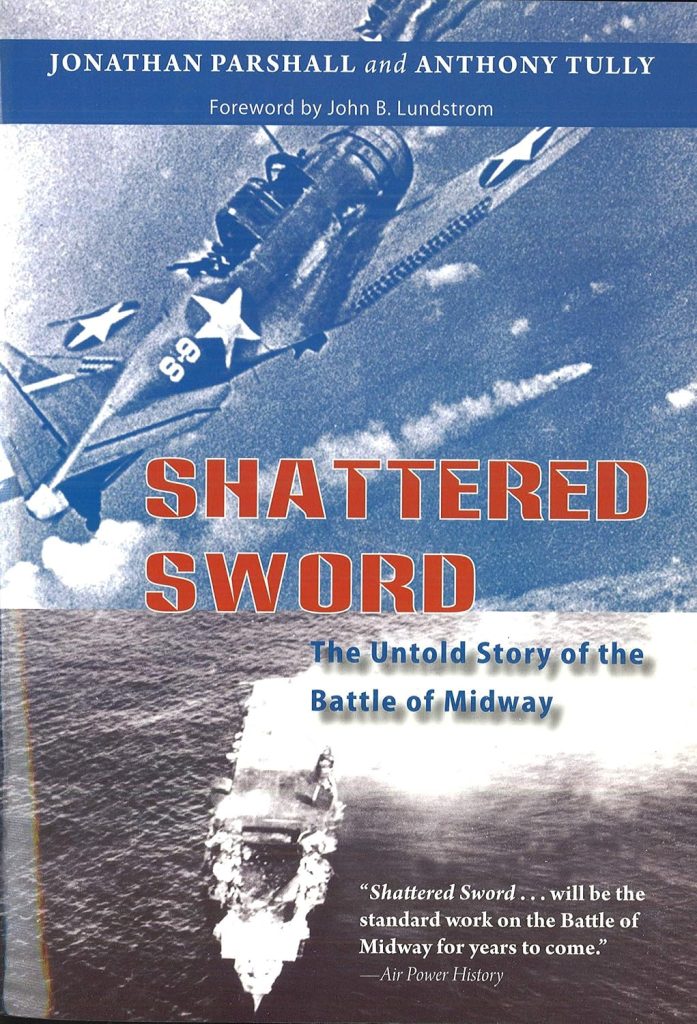
Shattered Sword: The Untold Story of the Battle of Midway

Shattered Sword: The Untold Story of the Battle of Midway

The Untold Story of the Battle of Midway

Category:History
Publisher:Potomac Books
ISBN:1574889230
Pages:640
ISBN:9781574889239
Language:English
Share:

Buy Now

Description:

TL;DR

Jonathan Parshall and Anthony Tully retell the Battle of Midway from the Japanese side, using Japanese records to overturn decades of accepted history. It’s one of the two nonfiction books I keep rereading.

Most Americans learned the Battle of Midway as a miracle. American dive bombers arrive at the perfect moment, just as the Japanese carriers are about to launch their planes, and three carriers burn within minutes.

Shattered Sword argues that the story everybody repeats is wrong in important ways, and it shows why.

What is Shattered Sword about?

The June 1942 Battle of Midway, told largely from the Japanese side. Jonathan Parshall and Anthony Tully went back to Japanese primary and secondary sources and rebuilt the battle from them. What went wrong for Japan, and why they lost, is the subject.

Their central argument is about the sources.

Western histories leaned heavily on Admiral Nagumo’s after-action report, on postwar American interrogations and above all on the memoir of Mitsuo Fuchida, a Japanese participant whose account was self-serving and, the authors show, wrong in places. Strip those away and work from the operational records, and the familiar picture changes.

The Japanese carriers weren’t seconds from launching a counterstrike. The odds weren’t as lopsided as legend says. The authors explain how Japanese carrier doctrine shaped the choices Nagumo had in front of him, and why decisions that look foolish in the old story made sense at the time.

Then there’s the back matter. Eleven appendices cover everything from flight operations to carrier casualties, including an essay arguing that a Japanese landing on Midway itself would probably have failed.

Why did I find Shattered Sword hard going?

It’s dense. Back in 2024 I was trying to read a book a week, and this was one of the tougher ones. It runs 640 pages and assumes you’re willing to follow carrier deck cycles in detail.

I found what went wrong interesting enough to keep going, and it’s become one of the books I return to.

Why a battle turned out the way it did is endlessly interesting to me.

How was Shattered Sword received?

Very well among naval historians. It won the North American Society for Oceanic History’s John Lyman Book Award in 2005 and was reviewed in the Naval War College Review and other journals. Potomac Books published the first edition, and the University of Nebraska Press later reissued it. Neither author was an academic historian. Parshall had founded combinedfleet.com, a website devoted to research on the Imperial Japanese Navy, and Tully was one of its leading researchers. Two independent researchers rewrote the standard account of a heavily studied battle, and the professionals agreed.

What should writers take from Shattered Sword?

Check the source behind the source.

A whole generation of histories repeated one participant’s memory because it was available and dramatic. Writers of military fiction, and of memoir, fall into the same trap when they trust one account. Parshall and Tully went to the records, and the records told a different story.

For a novelist, the lesson is practical. The famous version of an event is usually the one somebody had a reason to tell, and the details that make a scene feel true, the time it took to spot a deck, arm the planes and get them aloft, live in the dull operational paperwork nobody quotes.

Keep reading

Writing military fiction: research that matters, and why primary sources beat the version everybody repeats.

Frequently Asked Questions

Which battle does Shattered Sword cover?
The Battle of Midway in June 1942, retold mainly from the Japanese side using Japanese sources. It challenges several long-accepted parts of the American version of the battle.
Who are the authors of Shattered Sword?
Jonathan Parshall and Anthony Tully wrote it, and Potomac Books published it in 2005.
What does Shattered Sword say about Mitsuo Fuchida?
It argues that Fuchida’s memoir, a source Western historians relied on for decades, was self-serving and wrong on key points. One of them was the claim that Japanese carriers were moments from launching when they were hit.
Did Shattered Sword win an award?
Yes. It won the John Lyman Book Award from the North American Society for Oceanic History in 2005.
How long is Shattered Sword?
About 640 pages, with 24 chapters and 11 appendices.
Is Shattered Sword good for writers of military fiction?
Yes. It shows how operational detail and doctrine shaped real decisions, and how a widely repeated account can be wrong.
Categories and tags

About the author

Jonathan Parshall and Anthony Tully

Anthony Tully

Anthony Tully is an independent naval historian and one of the leading researchers behind combinedfleet.com. He co-wrote Shattered Sword with Jonathan Parshall, rebuilding the Battle of Midway from Japanese records.

More about Anthony Tully

Jonathan Parshall

Jonathan Parshall is an independent naval historian who founded combinedfleet.com, a website devoted to research on the Imperial Japanese Navy. With Anthony Tully he wrote Shattered Sword, a retelling of the Battle of Midway from Japanese sources that won the John Lyman Book Award.

More about Jonathan Parshall

Back