TL;DR
6/10. A Writer’s Digest weapons reference for crime and thriller writers, sound on how firearms work and which common mistakes betray a lack of research. Its 1990 vintage means the specific detail is dated and must be checked against current sources. Useful on fundamentals, unreliable on particulars.
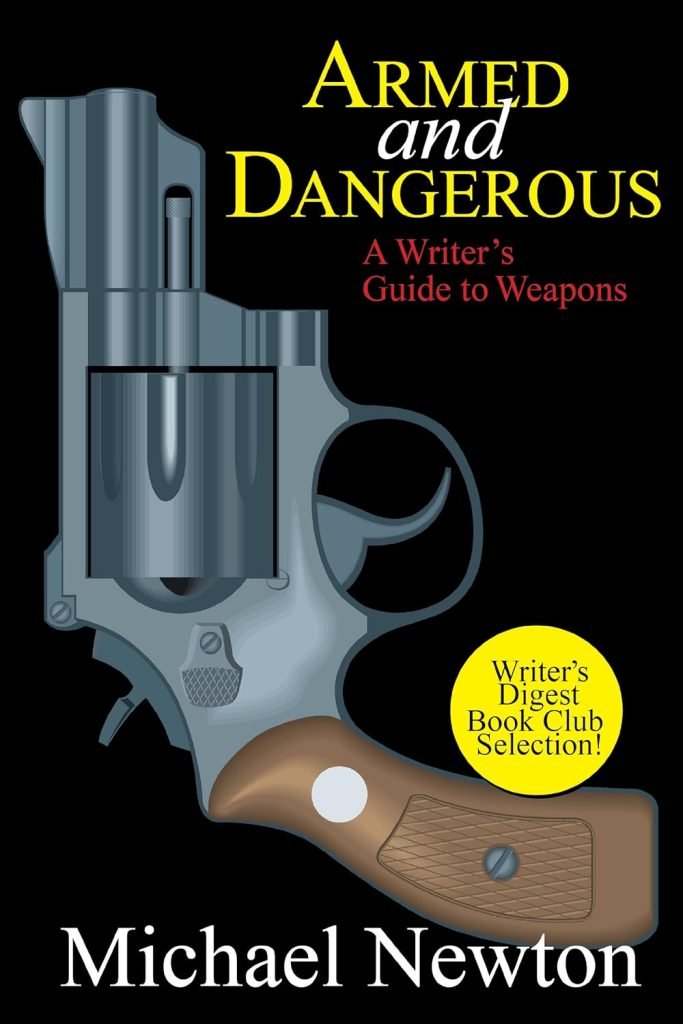
Get a gun wrong in a thriller and you lose the knowledgeable half of your readership on the spot. That’s the problem Armed and Dangerous by Michael Newton sets out to solve: it’s a Writer’s Digest reference book on weapons, written so that crime, action, and thriller writers can describe firearms and other weapons accurately enough that the experts in their audience keep reading. Judged as the specialized genre reference it is, it does a real job, with the heavy caveat that the job has a shelf life.
The need is real. Few subjects expose a writer’s ignorance faster than weapons. A revolver that ejects shell casings. A silencer that makes a gun whisper. Mistakes like these are inexcusable, and Newton built a whole reference around stamping them out.
What does Armed and Dangerous cover?
The book is a working writer’s guide to weaponry.
The types and mechanics of firearms. How they function and sound and behave. The correct terminology, and the practical realities of how weapons are used, carried, and wounded with. Newton aims to give a writer enough accurate grounding to write convincing scenes without the howlers that betray a lack of research.
As a reference to consult while drafting a scene involving a weapon, to check a detail or find the right term, it serves its purpose, and the focus on what writers get wrong is its smartest feature.
Keep reading
Research for fiction: how much, and how to hide it: Newton supplies the weapons facts; the article shows how to deploy research without info-dumping.
The errors it exists to prevent
It helps to be concrete about the mistakes this book is built to catch. They’re everywhere in fiction, and they’re exactly the things a writer with no firearms background would never think to question. Revolvers don’t eject spent cartridges with each shot the way semiautomatics do, yet fiction is full of detectives finding revolver brass at a scene. Suppressors don’t reduce a gunshot to a polite cough; they make it merely less deafening.
Safeties, magazine capacities, the difference between a clip and a magazine, the recoil and report of different calibers, the simple question of whether a given gun even exists in the configuration described, these are the details that, gotten wrong, pull a knowledgeable reader straight out of the story. Newton’s value is in flagging the assumptions a writer doesn’t know are wrong, the ones absorbed from other fiction and from film, and replacing them with how the weapon behaves.
The models have dated. The corrective function hasn’t, and it’s the best reason to open the book today.
Is Armed and Dangerous still current?
Here’s the caveat that drops it down the scale, and it’s significant. The book dates from 1990, and few fields move faster in the relevant details than firearms: models, technology, and the specifics of what is current have changed enormously in over three decades. A writer relying on it for a contemporary thriller risks describing weapons that are dated or obsolete. That creates the very inaccuracy the book exists to prevent.
The fundamentals, how a firearm works, the broad categories, the common myths to avoid, age well. The specifics don’t, and a book meant to prevent gun mistakes now causes a few. A careful writer must verify every current detail against up-to-date sources.
Keep reading
Writing action scenes that keep readers’ pulses up: accurate weapons are one piece; here’s the craft of the action scene around them.
Is Armed and Dangerous worth reading?
It’s a useful but dated specialized reference. For grounding in how weapons work and which common mistakes to avoid, it still has value, and its writer-focused approach targets exactly the gaps fiction writers have. But its 1990 vintage means you can’t trust the specific detail for contemporary accuracy, and a modern writer must treat it as a foundation to check instead of a current authority.
It has a modest place on the crime writer’s shelf. I’d trust it to keep a writer from the revolver-brass blunder. I wouldn’t trust it to name the gun a modern cop carries.
Explore the hub
The Writing Hub: research, action, and the rest of the craft, gathered in one place.
Frequently Asked Questions
Other Books in the Howdunit Series





Other Books From – Adventure Fiction
About the author