TL;DR
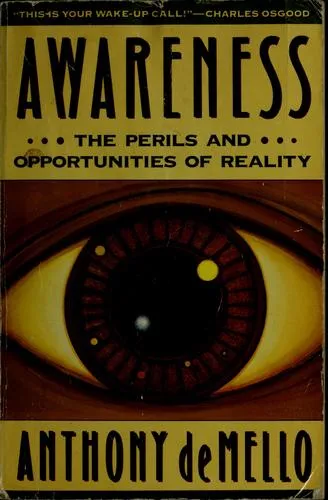
9/10. A Jesuit priest, drawing on Buddhism and psychology as freely as on Christianity, telling you that you’re asleep and that you don’t want to wake up. Assembled from recorded talks after his death. That’s why it reads like being argued with instead of instructed.
De Mello was an Indian Jesuit, born in Bombay, who ran retreats and spiritual direction and didn’t write this book. It was put together from tapes of his talks after he died suddenly in 1987, and the transcription is the reason it works.
He interrupts himself. He repeats. He loses patience with the audience and tells them so. He tells a joke, waits for the laugh, and then uses it against the people laughing. Occasionally he says something so blunt that you can hear the room go quiet on the page.
I didn’t expect a priest to make me laugh this hard at myself. De Mello has no interest in comforting anyone, and next to the cooing tone most spiritual books take, his impatience feels like fresh air.
A written book would have smoothed all of that away, and the smoothing would have removed the argument, because tone partly conducts the argument.
What does Awareness mean by saying we are asleep?
That almost everyone is running on programming they never chose and have never examined.
The values you hold, the things you want, the standards you measure yourself against, the people whose approval matters. His position is that you selected almost none of it. Family, culture, and accident installed it, and you’ve spent your life defending choices you didn’t make.
Waking up means seeing the programming as programming. Not replacing it with better programming. That’s what most self-help offers, but noticing that it’s there and isn’t you.
This idea affected me more than any other. Most self-improvement sells you better programming and calls it growth, and de Mello waves the whole industry away. A nicer set of installed values leaves you just as asleep as the old set, and he’s the only writer I know who says so this bluntly. He’s clear that almost nobody wants this. People come to him wanting to be happier inside the existing arrangement, and what he’s offering dismantles the arrangement, so they leave. He tells that story repeatedly and with visible amusement.
Watch: Anthony DeMello - Awareness/Wake Up To Life (Full Talk 1986), Justin Gauthier
What does Awareness mean by attachment?
Any belief that you need a particular thing or person before you can be all right.
He doesn’t exempt the attachments people are proudest of. That makes him uncomfortable to read. Love, in his usage, is frequently attachment wearing better clothes: a need for a certain person to behave a certain way so that you can feel a certain thing. He’s explicit that this isn’t love, and he doesn’t soften it.
The same goes for career, reputation, and the desire to be useful. Nothing gets a pass for being noble.
This chapter made me uncomfortable, and I think it’s meant to. The claim that a lot of love is attachment in better clothes sounds cold until you test it against the times you needed someone to act a certain way so you could feel all right, and then it sounds uncomfortably accurate.
The line that stays with me is that you don’t have to do anything to be happy, you have to drop something, and the dropping is harder because you’ve been told your whole life to acquire. Every other instruction you’ve received has been additive. This one is subtractive and there’s no market for it.
Why is Awareness funny?
Because it would be unbearable otherwise, and because he was a retreat leader who knew his audience.
Half the book is stories told against people who came to him wanting to be fixed without being changed. The woman who wanted a technique. The priest who wanted a formula. The man who wanted to be told he was right. The jokes are usually the same shape: somebody asks for something, and the request itself shows the problem. That’s a teaching device with a long history in several traditions, and de Mello uses it constantly.
It also protects the book from the tone that ruins most spiritual writing. Nobody is being solemn at you. He’s not above the audience, he’s amused at everybody including himself, and that makes the hard material go down. The humor is what I’d miss most if someone rewrote this as a polished book. Solemn spiritual writing bores me, and de Mello would enjoy the irony of that. He keeps the room laughing, and the hard ideas slip in while your guard is down.
What does Awareness refuse to give you?
A method, and this is deliberate and stated.
There are no exercises, no steps, and no program. He says explicitly that he can’t give you awareness, and that anybody selling a technique for it is selling you another attachment, meaning a new thing you believe you need before you can be all right.
That’s why some readers finish it frustrated. There’s nothing to do afterward. That’s the argument. It also means the book resists summary, and a summary of it is worth nothing, because the value is in being argued with for two hundred pages by somebody who doesn’t care whether you like him. Anybody who has been handed a bullet-point version of this book has been handed nothing.
Those summaries infuriate me, because they strip out the only thing that works. A condensed version turns an argument into a list of slogans, and a slogan is exactly the kind of thing he spent his talks telling people to stop clinging to.
What happened to Anthony de Mello’s work after his death?
That history matters, because it tells you these weren’t comfortable talks. De Mello died of a heart attack in 1987 at fifty-five, and his work became enormously popular afterward. In 1998 the Vatican’s Congregation for the Doctrine of the Faith issued a notification warning that some of his positions were incompatible with Catholic teaching, especially on the person of Christ and on the nature of revelation.
Whatever you make of that, it confirms that a Jesuit priest drawing this freely on Buddhist and Hindu material, and speaking about God in the terms he uses here, was doing something his own institution found difficult.
The books remain in print and remain widely read inside Catholic retreat circles. That’s its own quiet answer.
Verdict
The most useful spiritual book I’ve read, and the one that gives you the least to hold onto afterward. Read it slowly, in short pieces, and expect to disagree in places where you’ll later suspect he had you figured out. I’ll take that kind of discomfort over a hundred gentle books that change nothing.
His own church restricted some of his work after his death. That tells you what kind of talks these were.
Explore further
The Psychology of Writing Hub: what drives creative work and what stops it.