Latest
Billions for AI, Pennies for the Plumbing: AI Companies Should Pay to Keep PHP AlivePHP2Shell: AI Found a 22-Year-Old Crack Under Your Website in Two DaysPetrov Day: The Officer Who Didn’t Believe the ComputerKindle Unlimited Is Now Kindle+. AI Audiobooks Just Joined the BuffetMo Gawdat Says the AI Dystopia Starts in 2027. Read the List, Skip the DatesThe Society of Authors Signed an Ethical AI Charter, Then Ran From It in Eight DaysChina Is Using Bots to Fan the Data Center Backlash. The Backlash Is Still Real.When to Quit Writing a Book: I’ve Abandoned Dozens, and I’d Do It AgainGetty Images Filed for Bankruptcy. Can You Prove You Licensed Your Book’s Images?Fluff Words: Cut Them From Your Prose, Keep Them in Your DialogueWhere Can Writers Learn Storytelling From Movies? Richard Lowe Publishes 1,226 Film and TV Reviews With Writing Craft NotesWhere Are the Independent Bookstores and Public Libraries Worth Visiting in Tampa Bay? Author Richard Lowe Profiles 44 of ThemWhat Should You Know Before Hiring a Ghostwriter? The Writing King Publishes 57 New Answers, Including What to Do When It Goes WrongWhere Can You Hear Founders and Executives Tell Their Own Stories? Richard Lowe’s Leaders and Their Stories Publishes Every Unscripted Interview With a Full TranscriptAuthor Richard Lowe Publishes Eight Volumes of Enemies of You, a Researched Series on the Forces Working Against Ordinary AmericansThe Jackal (1997) ReviewThe Day of the Jackal (2024) ReviewYour First Novel Is an Apprentice Piece: What Beta Readers and Editors Can’t FixWhen the Cloud Gets Bombed: What the AWS Data Center Strikes Teach About BackupsHuman-Written Book Labels Are Gatekeeping With a FeeThe Enshittification of Microsoft Office: Why I Switched to a Free CloneGlobal Encryption Day: The Padlock Every Writer Depends OnWriting Your Worst Moments in a Memoir: Show the Evidence, Skip the VerdictHow to Register a Copyright for Your Book (and What Doesn’t Count)Your AI Chats Aren’t Private: Deleted ChatGPT Logs in CourtThe Board Seat Scam: A 419 Letter in a Business SuitI Joined the Science Fiction Book Club 30 TimesCitations in a Memoir: Endnotes, Footnotes and Fair UseThe Stores That Still Care: Publix, Walmart, Aldi, Best Buy and the RestThe Grocery Store Plan: Why Every Store Starts With FlowersWinnie-the-Pooh’s 100th Birthday: A Century in the Hundred Acre WoodFree With a Fill-Up: How America Stopped Giving Things AwayAI’s Black Box Is Getting a Window. Somebody Still Has to Look Through It“It Stars C. Thomas Howell. No.” Why AI Gets Stuck in a LoopShould You Query or Self-Publish Your Memoir If You’re Not Famous?Judge the Writing, Not the Tool: What the AI Pile-Ons Get WrongThiago Ferreira: Thinkers, Not DoersYana Semova: Let AI Do the AdminLisa Hamilton-Smith: Unstoppable, AI AssistedRobert E. Howard Day: The Texan Who Built ConanElmore Leonard Day: Leave Out the Part Readers SkipRoald Dahl Day: Six Pencils and a Grudge Against Grown-UpsEncourage a Young Writer Day: The Adult Who Read the PagesStephen King Day: The Daily Two ThousandZora Neale Hurston Day: The Ear She TrainedTell a Fairy Tale Day: The Stories Everybody EditedAlice’s Day: The Story Told on a Rowing BoatSuperman Day: The $130 Contract Behind the CapeNational Podcast Day: The Interview Is the Raw MaterialRaymond Chandler Day: The Novelist Who Started at Fifty

Anthony de Mello

Anthony de Mello

Anthony de Mello was born in Bombay in 1931 to a Goan Catholic family and entered the Society of Jesus at eighteen. He studied philosophy in Spain, theology in India, and psychology at Loyola University Chicago, and was ordained a Jesuit priest in 1961.

He directed the Sadhana Institute of Pastoral Counselling near Poona, where he ran retreats that drew participants from around the world, and his work fused Ignatian spiritual exercises with Buddhist and Hindu practice, Sufi teaching stories, and clinical psychology. He was not shy about the fusion, and it is the reason both for his reach and for the trouble that followed.

His method was conversational and confrontational in roughly equal measure. He told stories, let them land, and then turned them against the people laughing. His central claim was that most people are functionally asleep, running on values and wants installed by family and culture and never examined, and that what they call love is frequently attachment, meaning the belief that they need a particular thing or person before they can be all right.

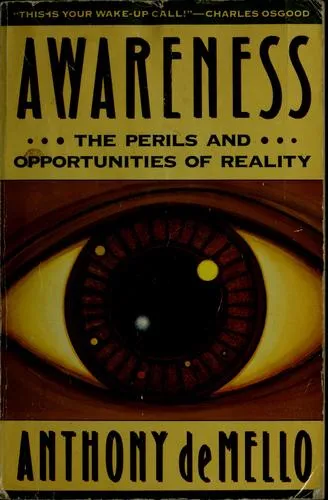
He published Sadhana: A Way to God, The Song of the Bird, and Wellsprings during his lifetime. Awareness, assembled from recordings of his talks and published in 1990, is the best known and the least like a book. He interrupts himself, repeats, and loses patience with the audience, and the transcription preserves all of it.

He died suddenly of a heart attack in New York in 1987, at fifty-five, shortly before a scheduled speaking engagement.

In 1998 the Congregation for the Doctrine of the Faith issued a notification warning that some positions in his later writing were incompatible with Catholic teaching, particularly regarding the person of Christ and the nature of revelation. His books remain in print and remain widely read within Catholic retreat circles.