
You should find a ghostwriter the way you’d find a good surgeon. You ask people who’ve had the operation how it went, you get a name from someone you trust, you check the credentials, and you sit across from the surgeon before anyone schedules anything. Unfortunately, most people start with a search engine, and typing “ghostwriter” into one returns a wall of agencies, marketplaces and paid ads, each one designed to get your card number before you’ve spoken to a writer.
I hate what that does to first-time authors. Somebody has carried a story for twenty years, finally decides to get it written, and the first person they meet is a salesperson with a script. Plenty of them sign that week because the salesperson made it easy.
Each of the usual places has its use. Some are good for finding names and some for checking them. Treat every channel as a way to build a shortlist of three, because the hiring decision gets made later, on the phone.
Where can I find a ghostwriter?
Start with people you know. A referral from somebody who hired a ghostwriter and got a finished book beats every other source, because one conversation gives you a name, a book you can hold and a reference who has nothing to sell you.
Ask widely. Tell your accountant, your business coach, the people in your professional association and the friend who published a memoir three years ago. Look in the acknowledgments of books you admired, since some authors thank their writer by name. If a book in your field reads like a human being wrote it, find out who helped.
When the people you know come up empty, move outward to the directories, the screened marketplaces and LinkedIn, in roughly that order. Gig sites come last for a full book. A referral works like a friend telling you which surgeon fixed her knee and how she walks now, and no ad on any platform can tell you that.
How do I ask someone to recommend a ghostwriter?
Ask the person who hired one whether they’d hire the writer again, whether the book sounds like them, and whether the writer kept the schedule. A yes on all of those beats any profile on the internet.
Then ask what went wrong. Every book hits a rough patch, and a reference who can’t name one is being polite or wasn’t paying attention. You want to hear how the writer handled a missed interview, a chapter the client hated, or a relative who objected to a story.
Don’t be shy about asking. People who finished a book with a good ghostwriter like talking about it, and anyone who went through a bad experience will tell you exactly what to avoid before you pay to learn it yourself.
Is it safe to find a ghostwriter through a Google search?
Yes, if you know what you’re looking at. The ads at the top of the page belong to whoever paid the most for the click, and in this business that’s mostly agencies and marketplaces with sales teams to feed. Scroll past them.
Under the ads you’ll find individual writers’ websites, and some of those are exactly who you want. Look for a real name, a real photograph, finished books you can look up, and a way to reach the writer directly.
A site that hides the writer behind a “team” page and a quote form is a storefront for somebody else’s labor. A writer’s own articles show you how they think, and one who explains the business in clear terms on their own site is a good bet to write a plain contract too. I’d rather you spend an evening reading three writers’ sites than five minutes filling in an agency’s quote form.
Are Reedsy ghostwriters any good?
Many of them are, and Reedsy screens harder than the open gig sites. The company says only some 3,400 professionals have been accepted out of more than 130,000 applicants, and its published selection criteria require at least three years of professional experience. Most categories also require at least five recent, well-reviewed published books, though ghostwriters may submit published short-form work instead.
That filter weeds out beginners and the people bidding from a phone at the airport. It can’t tell you whether a particular writer suits your book, and it can’t show you work hidden behind nondisclosure agreements. Plenty of good ghostwriters can’t name their best books. That’s the reason vetting a ghostwriter when NDAs hide the portfolio takes more than a glance at a profile.
Read the platform rules before you start. Reedsy’s project protection offers mediation and possible refunds when a collaboration goes wrong, and it says that moving communication or payments off Reedsy voids that protection. If you and the writer decide to work directly, you’re giving up the safety net, and you should do it with your eyes open.
Reedsy screens the writers it lists, so it works as a starting shortlist, as long as you talk to every candidate live before you hire.
Should I hire a ghostwriter on Upwork?
For a full book, I wouldn’t. Upwork suits short, well-defined jobs, and a book is a months-long working relationship that doesn’t fit the bidding format.
Anybody can type “bestselling ghostwriter” into a headline field, and nobody at LinkedIn checks it.
Would you pick a surgeon because he answered your post first and quoted lowest? Gig platforms reward exactly that. The writer with twenty years in memoir and a waiting list isn’t refreshing the job feed at midnight. The writers who are refreshing it include beginners, content mills and resellers who take your project and pass it to someone cheaper. I’ve written about the same problem on why Fiverr sucks for ghostwriting, and it’s an ugly pattern, because the buyer pays for the platform’s race to the bottom.
If you do go this route, learn the payment mechanics first. Upwork’s help page on fixed-price contracts says clients fund each milestone up front, and if there’s no response within 14 days after work is submitted, the funds release automatically. Go on vacation during a milestone review and you’ve paid for a chapter you never read.
Break the book into small milestones, read every submission the day it arrives, and get on a video call before the first one is funded. A cheap bid on a full book is a warning, and cheap ghostwriting turns into the expensive mistake once you’re paying a second writer to fix it.
Can I find a ghostwriter on LinkedIn?
Yes, and LinkedIn is even better for checking a writer you’ve already found. Search for “ghostwriter” along with your genre or industry, and look at the people who come back.
A profile tells you how long someone has done this work, what kinds of books they take, and what they sound like when they write for themselves. Read their posts. A ghostwriter whose own writing reads like a brochure will write your book like a brochure. Look for recommendations from former clients, and remember that plenty of clients never say anything publicly, so a thin recommendations section proves nothing on its own.
Check that the person is real. The job history should hang together, the website should match the profile, and the books they claim should exist. Anybody can type “bestselling ghostwriter” into a headline field, and nobody at LinkedIn checks it.
Then message them and ask for a call. How they handle that request tells you plenty. A writer who answers with a price before asking a single question about your book is quoting a product sold to everyone, and your story will get the same treatment.
Is there a directory or association of professional ghostwriters?
There is. The Association of Ghostwriters runs a Find a Ghostwriter page that points you to its member directory, where you can look for writers by location, subject expertise or track record with a particular publisher. The Editorial Freelancers Association has a member directory and a job list that circulates your posting to its members.
A directory listing tells you someone joined a professional group, and that’s worth something, since hobbyists and fly-by-night resellers rarely bother. Neither directory is a certification, though, and nobody at either one reads the writer’s books for you or promises the writer will show up for interviews in month four.
Use a directory the way you’d use a hospital’s list of staff surgeons. It narrows the field and tells you who takes the profession seriously. You still have to see the writer’s finished work.
Filter for your kind of book, open the profiles of writers who’ve done memoirs or business books like yours, and write to three of them asking for a call. Anyone who replies within a few days with a thoughtful note goes on the shortlist.
Can my literary agent or publisher recommend a ghostwriter?
Yes, and if you already have an agent or a publishing deal, ask them first. Agents and editors who handle memoir and business books know which writers deliver on time and which ones vanish.
An agent’s recommendation serves the deal, and the deal’s needs and yours overlap without matching exactly. A publisher wants a manuscript on schedule, and what you need is a book that sounds like you and says what you mean. Interview the recommended writer as hard as you’d interview a stranger.
Most people looking for a ghostwriter don’t have an agent, and you don’t need one to hire a writer. Whether to tell an agent or publisher that you worked with a ghostwriter is your call, and I’ve covered that decision in do I have to tell my agent or publisher that I used a ghostwriter.
Should I use a ghostwriting agency to find a writer?
I’d hire an experienced solo ghostwriter over an agency. At an agency, a salesperson sells you the book, and then you’re handed to a writer you never met and didn’t choose.
That handoff is a bait and switch dressed up as a business model. The polished person on the sales call won’t be doing your interviews, and nobody can promise you the samples came from the writer you’ll get. Ask any agency, in writing, who will write your book, then insist on talking to that person before you pay anything. If they refuse, walk. Would you let a surgeon consult with you and then send a stranger into the operating room once you’re under?
Some agencies do good work. The structure still puts a middle layer between you and the person who has to become you on the page, and I don’t see what the author gets from that layer except a larger bill.
How do I check a ghostwriter I found online?
Get on a live call, by phone or video. I treat a writer who’ll only negotiate by email as a scam risk, and you should too, since a book depends on two people talking for months.
On the call, pay attention to how they treat you. One client talked to more than a dozen ghostwriters and chose me because I was the first to treat him like a person. My guide to reading the consultation call covers what to listen for.
Ask for books they can discuss, even if they can’t name the author. Get two or three references, and call them yourself. A call to the references sounds old-fashioned, and it catches problems no profile will show you.
Find out what they deliver at the end and who owns it. A professional answers both in a sentence and puts the answers in the contract. If a writer turns vague about ownership, or can’t say whether editing is included, how do you expect the next six months to go?
My take
Referrals beat every directory and marketplace. Ask somebody who finished a book with a writer they’d hire again. Use LinkedIn to check a writer’s history, and keep a full book off Upwork. I treat a writer who’ll only negotiate by email as a scam risk. Get on a live call, phone the references yourself, and talk to the person who’ll write your book before you pay a dime.
What to do before you pay a deposit
Build a shortlist of three from the best sources you have, starting with referrals. Book a call with each. Ask each one who will write the book, how they interview, and what they deliver at the end, then pick the one you’d trust with the story you haven’t told anybody.
Places that sell you a writer before you’ve talked to one make me furious, because the people they hurt are the ones who finally worked up the nerve to tell their story. You deserve better than a sales funnel. The Ghostwriting Hub collects everything I’ve written on hiring, and my ghostwriting service page explains how I work. If you want a first step before you commit to a full book, start with the Book Discovery Intensive.
Whatever route you take, don’t let anyone pick up the scalpel until you’ve shaken the hand that will hold it and talked to a few people who walked out of that room on their own two feet.
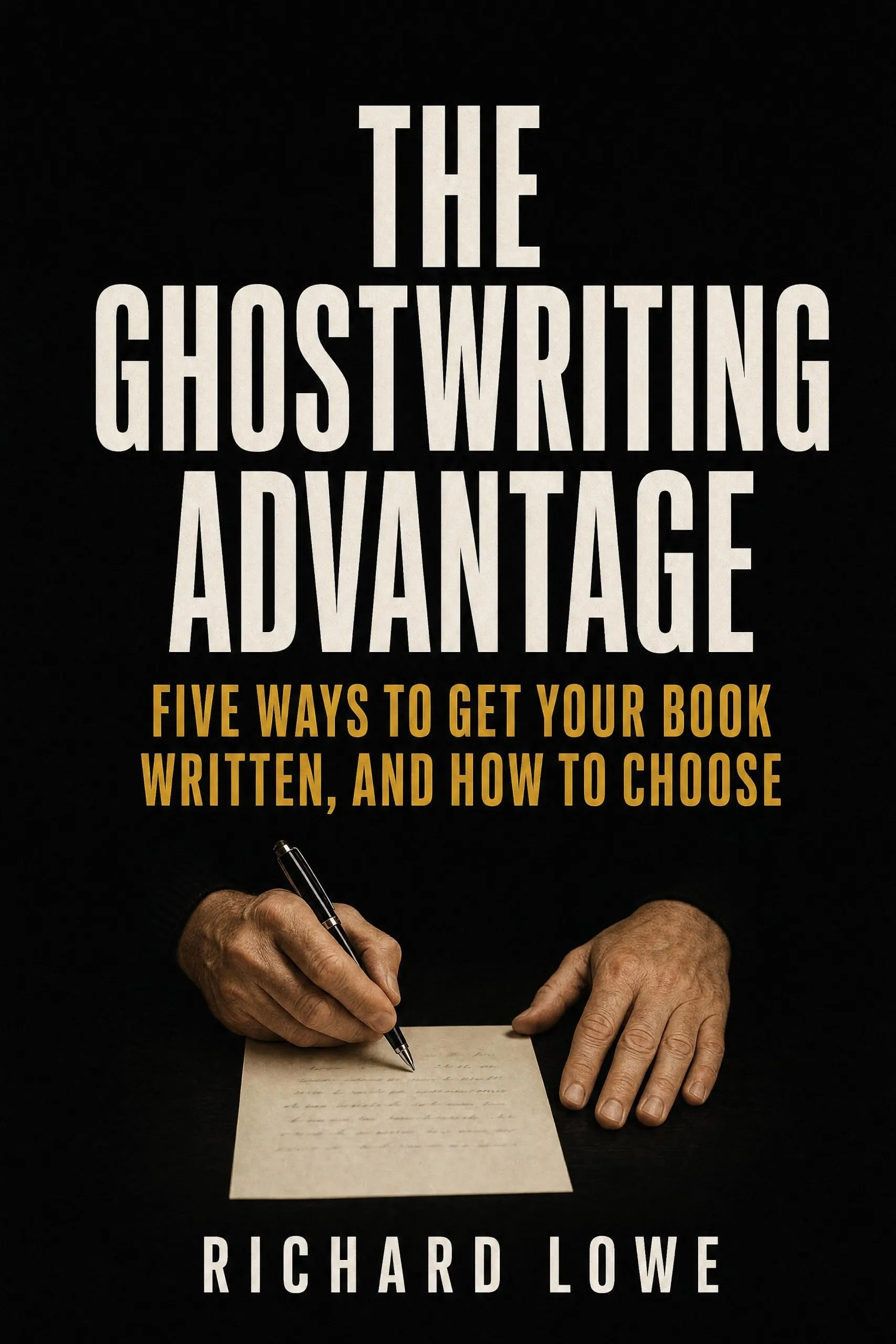
Good ghostwriters are easier to find when you know what good work looks like. The Ghostwriting Advantage explains how to get your book written for you, so you can judge the people you find.
