
TL;DR: The peer-judgment fear runs on a scenario that requires you to have told people, because confidentiality makes disclosure entirely your choice. When clients do disclose, the dominant reaction among professionals is a request for the writer’s number, since 50 to 80 percent of professional nonfiction is professionally assisted. The only reputation risk that reliably materializes is a weak book.
There are two different objections that sound alike, and the difference between them matters.
The first is “is using a ghostwriter cheating?” That’s an ethics question and I’ve answered it at length. The short version is no, provided the ideas, stories, and judgment in the book are yours, and I publish a Code of Ethics that draws those lines precisely.
The second objection is the one this article is for, and it survives even after the ethics question is settled: “Fine, it’s legitimate. But what will people think? What happens at the conference when a colleague finds out? What does my co-founder say? Do the people whose respect I’ve spent twenty years earning quietly downgrade me?”
That’s a social-risk question, and it deserves a social-risk answer built on how disclosure plays out in the real world. I take it seriously, because this fear keeps capable people from writing books they need, and I think that costs them far more than any raised eyebrow at a conference ever could.
Nobody’s reputation was ever damaged by their book being too well written.Share on X
Who Finds Out You Used a Ghostwriter?
Under a standard engagement, the answer is: the people you tell, and nobody else.
Confidentiality binds me contractually and permanently. I don’t name clients without written permission. Most of my 54-plus ghostwritten books have no public link to me. And “how did you write the book?” has a truthful answer that discloses nothing: “with a lot of help” or “it took a team.” Traditionally published authors say the same things, because that’s how all books get made.
So the scenario the fear runs, the involuntary exposure, the colleague who discovers it, requires you to have told someone.
The secret is structurally yours to keep. Which reframes the question: what happens if you choose to tell them? And on that, I’ve watched a lot of clients make the choice, in both directions, so let me report what happens.
What Happens When People Find Out You Used a Ghostwriter?
Mostly: nothing, followed by a request for my phone number.
I’m not being cute. Among executives, founders, and professionals, the most common reaction when a peer mentions having worked with a ghostwriter is practical interest. Who did you use?
What did it cost? How much of your time did it take? The judgment the fear predicts fails to materialize, because the audience the fear imagines, people who believe the name on the cover typed every business book, thins out fast above a certain level of professional sophistication.
Here are the numbers behind that. Industry estimates put professionally assisted nonfiction at 50 to 80 percent of what is published, higher for books by executives and public figures. Literary agents say it openly. Publishers staff for it. When Andre Agassi’s Open credited its collaborator, the book’s reputation went up, not down, and it’s now routinely called one of the finest memoirs of its era.
A weak book you wrote alone will cost you more standing than a strong book you built with a professional ever could.
The most likely audience for your book, professionally speaking, is people who either already assume assistance or have used it themselves and told no one, exactly as you’re considering doing.
Three of my clients’ books went to traditional publishers, and none of those clients disclosed the ghostwriting. That was their call to make, and it’s yours too. The worst case is the professional who lets this fear kill the book outright, because that’s the one outcome where an imagined colleague’s opinion costs something real.
The judgment you’re bracing for belongs to a group that barely overlaps with the people whose respect matters to your career. And that group’s respect responds to one thing: whether the book is good. A weak book you wrote alone will cost you more standing than a strong book you built with a professional ever could. Nobody’s reputation was ever damaged by their book being too well written.
The most common reaction when a peer learns you worked with a ghostwriter is a request for the phone number.Share on X
Don’t you already delegate everything else with your name on it?
There’s also a consistency test worth running on this fear. You didn’t design your own website. Your attorney drafts contracts you sign; your CPA prepares statements you attest to; your comms team writes announcements that go out under your name every quarter, and none of it feels like a secret you’re keeping. It’s understood as how competent professionals work: judgment stays with you, execution goes to specialists.
The book is the same delegation, with one difference: it’s the delegation where the specialist’s craft matters most, because the book will be judged as writing. The executives who insist on typing every word themselves are holding an inconsistent standard, and their unfinished manuscripts, the ones stalled for five years in a drawer, are the usual result.
My take
Nobody finds out unless you tell them. Confidentiality makes disclosure your call, and when clients do share it, the usual reaction is a request for the writer’s number. You already hand your contracts to an attorney and your statements to a CPA. The book is the same delegation. The reputation risk that shows up is a weak book. Worry about that, and hire someone who can write.
How do you credit a ghostwriter if you want to be open about it?
Some clients decide the fear isn’t worth carrying and simply disclose: a collaborator credit on the title page, a thank-you in the acknowledgments, or a plain sentence when asked. In my experience their outcomes are indistinguishable from the confidential clients’ outcomes, except they report enjoying the question at parties more. “I worked with a professional writer, best money I ever spent” turns out to be a status-neutral sentence, or slightly status-positive, since it signals both the means to do it and the judgment to know when.
The book on this: The Ghostwriting Advantage is 48 chapters on hiring one, including who tells people, when, and why it plays differently than authors expect.
Both paths work. Full confidentiality works, and so does open acknowledgment. The path that reliably fails is the third one: no book, indefinitely, because a hypothetical colleague at a hypothetical conference might raise an eyebrow that almost never gets raised. I find that maddening, and I’ll tell any prospect who’s stuck there that the people who matter to their career will judge the book on its merits and can’t judge one that never got written.
If you want to talk through how the confidentiality works on a real engagement, that’s first-call material: book the conversation, or start with the Book Discovery Intensive. The call is confidential too. Everything is. That’s rather the point of the profession.
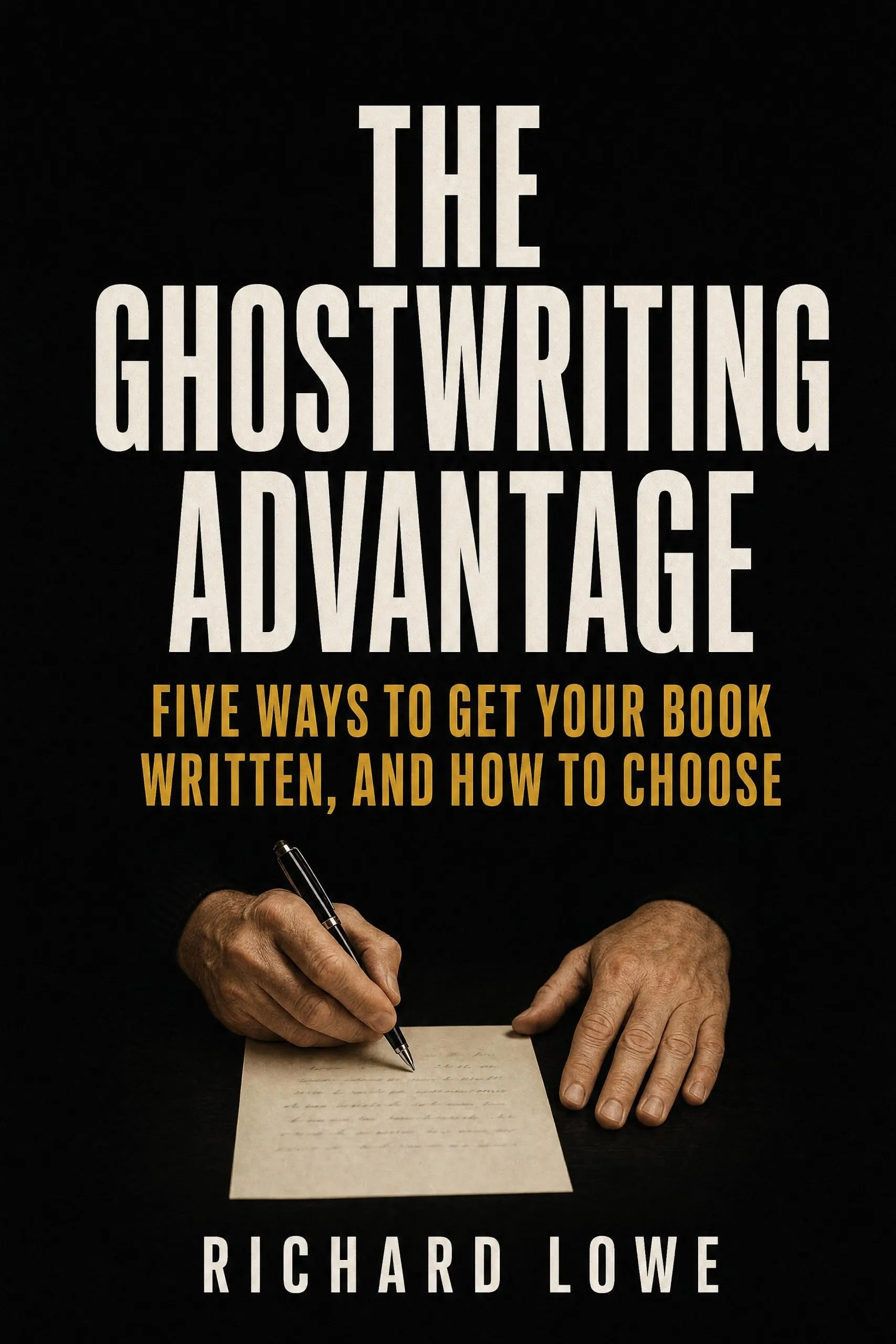
Confidentiality keeps the choice to tell anyone in your hands. The Ghostwriting Advantage explains how to get your book written for you and what the arrangement looks like.
