
Hurricane Helene didn’t hit Clearwater head on. It came close enough. Close enough that lightning found my house. One strike turned two UPS units, two televisions, and a few other pieces of electronics into expensive paperweights. I stood there the next morning looking at a shelf of dead equipment, doing the math on what it would cost to replace. Then I stopped. A few hundred miles north, people had lost a great deal more than a television.
That’s the first thing a storm does. It resets your sense of proportion.
My gear was gone and my week was disrupted, and both of those things were survivable. The people in western North Carolina who watched entire towns go under water were living a different disaster. The distance between their week and mine was mostly luck. So before anything else, this is a piece written from the lucky side of a storm, and it holds that in view the whole way through.
What does a hurricane near miss really cost?
The visible cost was the electronics. Two UPS units died protecting the equipment plugged into them, their job, so I can’t complain that they did it. Two televisions went with them, along with a scattering of smaller devices that happened to be on the wrong circuit at the wrong moment. Lightning doesn’t negotiate. It finds a path to ground and it takes whatever is in the way.
The invisible cost was worse, and it lasted longer. My internet, after the storm, moved like a Monday morning before coffee. For a business that runs on cloud storage, video calls, and a stack of internet-based tools, a slow connection is a closed door. I couldn’t upload files at any reasonable speed. Video calls stuttered and dropped. The ordinary rhythm of a working day fell apart, because the one utility everything else depends on had been knocked sideways.
My power was out for about 8 hours. The internet was worse. It went up and down like a frigging yo-yo for days, and I escalated it with my provider, probably to the third level, until they gave me a week free because I’d been down so much. I lost a week of work. Still, we dodged a bullet in my area. Clearwater Beach was devastated.
People underestimate that. The dramatic damage, the dead televisions and the snapped branches, gets the attention. The quiet damage, the days of degraded service that keep you from doing your actual work, is what really costs you. And it’s the part a good plan can do something about.
Why does a backup plan only matter before the storm?
I didn’t panic when the connection died, because I had somewhere to go. I turned my mobile account into a hotspot and had my laptop and tablet back online within minutes. It was fast enough to keep working, and the gap between fast enough and nothing at all is the gap between a bad day and a lost week.
That hotspot only helped because I already knew it would work. I’d used it before. I knew my account supported it. I knew roughly what speed to expect. And I knew how to switch my devices over without hunting through settings menus in the dark. A backup plan you’ve never tested is a hope.
The storm is the worst possible time to discover that your emergency internet doesn’t work. That the flashlight batteries died two years ago. That the generator you’ve never started won’t start.
A backup plan you’ve never tested is a hope.
I’ve written about this at length in Real World Survival, and the single idea underneath all of it is this: preparation is something you do on a calm day for a bad one. The bad day gives you no time to prepare. It only tests what you already did. Every backup I leaned on during Helene was set up weeks or months earlier. No storm on the radar. No reason to think about it except the discipline of thinking about it anyway.
How do you keep working when the power and internet fail?
The tactical answer is redundancy, and the strategic answer is treating your work as something that has to survive independent of any single point of failure. For me that meant a few concrete things, none of them complicated.
My data lives in more than one place. There’s a saying in technology that if your data doesn’t exist in three places, it doesn’t exist at all, and I take that literally. A storm that fries the machine in front of me doesn’t touch the copies in the cloud. The worst a lightning strike can do is cost me hardware, never the work. Replacing a computer is a purchase.
The worst a lightning strike can do is cost me hardware, never the work.Share on X
Losing years of files is a catastrophe, and the line between the two is nothing more than a backup you set up before you needed it.
The book on this: Real World Survival is my field guide to disaster preparedness, written from living through hurricanes, wildfires, and earthquakes.
My connection has a fallback. The hotspot is the obvious one, but the deeper principle is never to depend on a single utility for something your livelihood requires. If the wired line goes, the mobile line carries me. If both go, I have work staged and scheduled ahead so that my presence online doesn’t collapse the moment I go dark. In the days after Helene, content I’d prepared earlier kept going out on schedule while I dealt with the mess. The storm disrupted my week without disrupting my business.
My priorities were set in advance. When the power flickers and the forecast turns ugly, that’s not the moment to decide what matters. I already knew: protect the data, keep the connection alive if possible, keep the essential work moving, and let everything non-essential wait. Decisions made calmly, ahead of time, are worth ten times as much as decisions made in the middle of a crisis with adrenaline running.
My take
Backup plans made during a storm are guesses. Helene fried two UPS units and two televisions with one lightning strike, and it cost me hardware and nothing else. If your data doesn’t exist in three places, it doesn’t exist. Set up the cloud copies, get a second connection and stage your content ahead of time. Do it this week, while the sky is clear.
What the storm reminded me about running a business
The same logic that keeps you operational through a hurricane keeps you operational through any disruption. A key client leaves, a piece of software you depend on shuts down, a health scare pulls you away from your desk for a month. The specifics differ, but the structure is identical.
The businesses that survive a shock built their redundancy before it arrived. The ones that fold assumed the good conditions would hold.
I’ve run into enough disruptions over the years to stop treating stability as the default.
Stability is the pleasant exception. The storm is always somewhere out over the water, and the only question is whether you’ve done the quiet work that lets you keep going when it comes ashore. Helene was a reminder, delivered by lightning, that the quiet work is the game.
For the fuller version of everything above, the whole philosophy of getting ready without living in fear, that’s what Real World Survival is about, and you can find it and the rest of the preparedness writing gathered on the Prepared, Not Paranoid hub. My thoughts remain with everyone north of here who took the full weight of this storm. From the lucky side of it, the least I can do is pass along what the near miss taught me.
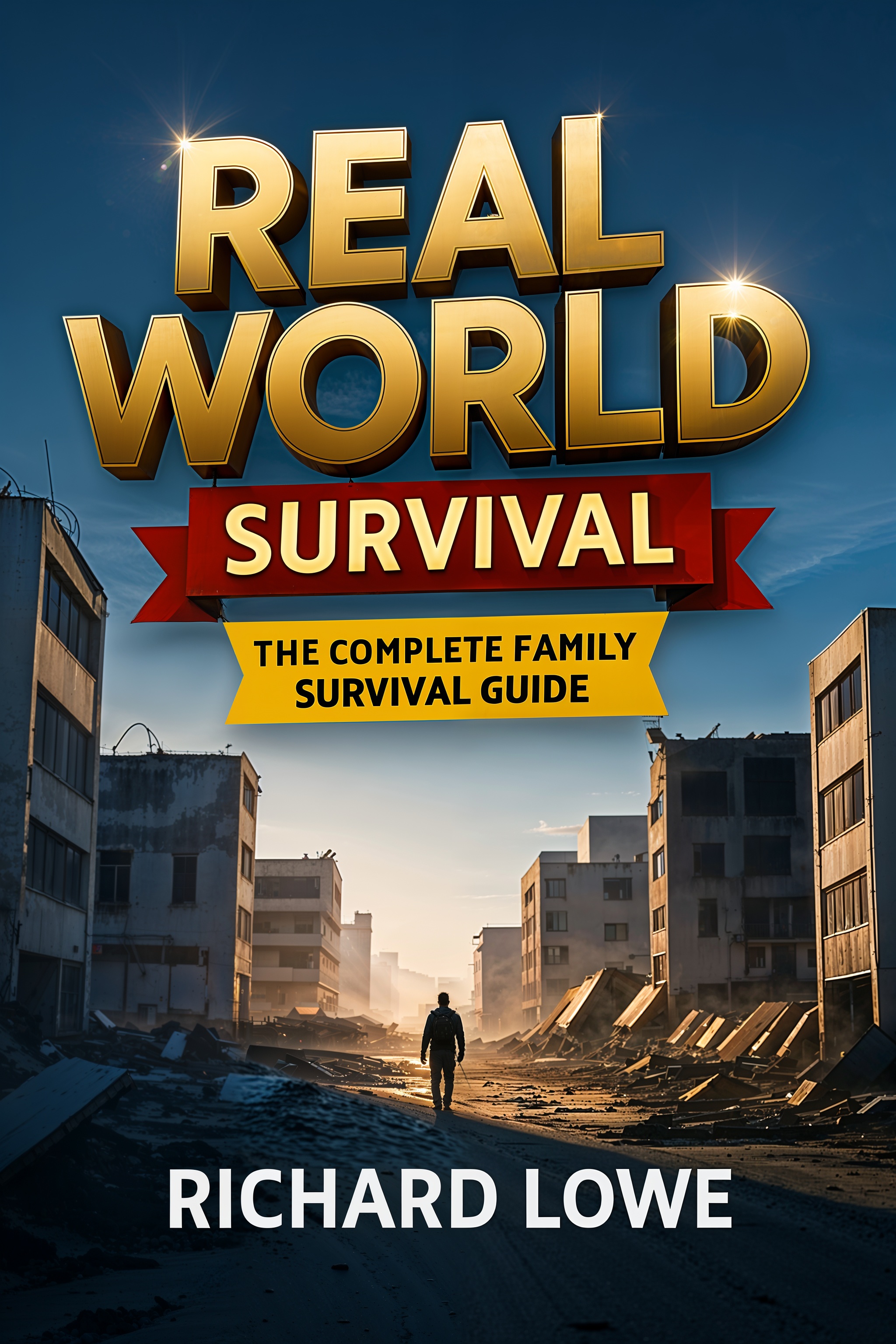
Real World Survival is my book on preparing without becoming a prepper. It starts with a Christmas hike in 1986 that went wrong and covers sensible readiness for ordinary households.
