
There’s a feeling that comes from bracing for one hurricane while you’re still cleaning up after the last one.
Helene knocked my power out for eight hours and my internet out for twelve. She’d barely finished when Milton started spinning up in the Gulf with Pinellas County in its sights. The debris from the first storm was still in the yard. The forecast for the second was already grim.
Two storms inside two weeks does something useful, even if it’s unpleasant.
It strips away any illusion that preparation is a one-time chore you finish and forget. Helene had just shown me exactly where my gaps were, and Milton was going to test whether I’d closed them. So I ran the whole checklist again, tighter this time, with the lessons of the first storm fresh enough to sting.
What did the first storm teach me before the second one arrived?
Helene was a wake-up call, not a catastrophe, and a wake-up call is the most valuable kind of disaster because it corrects you at low cost. The outage was survivable. It also disrupted my workflow badly enough to show me which backup systems held and which ones I’d only assumed would hold.
The mobile hotspot held. When the wired connection died, I turned my mobile account into a hotspot. It carried my laptop and tablet through, faster than I expected and steady enough to keep working.
That system saved the first storm, so it went straight to the top of the Milton list. I had proof it worked instead of a hope that it would.
What Helene exposed was how much a modern working life depends on a single fragile utility. Lose the internet and you lose cloud storage, video calls, scheduling, communication, and most of the tools a business runs on, all at once. The fix is to build a second path to them, so that when the first path floods out, the work keeps moving.
How do you prepare for a Category 3 hurricane?
Milton was forecast to reach Category 3, and worse if it held its track. That meant preparing for the serious end of the scale instead of the nuisance end. My preparation came down to a handful of categories, each one a lesson paid for in an earlier storm.
Food and water first. I stocked enough non-perishable food for several weeks, in case stores closed or supply chains broke down. I laid in bottled water for drinking, and large containers for cleaning and everything else water is needed for. A storm can cut a region off for longer than anyone expects, so buy your supplies while the shelves are still full.
Cold storage next. My freezer went packed full of ice, both to keep food safe if the power dropped again and to have a reserve of cold on hand. I picked up an ice chest for anything that needed to stay extra cold. After Helene’s eight-hour outage, I knew a longer one from a stronger storm was entirely possible, and a freezer full of ice buys you time.
Fuel and a go-bag after that. The car got a full tank of gas, because gas stations without power can’t pump and the lines at the ones that can stretch for hours. The go-bag stayed ready by the door. Important documents. Medication. A first-aid kit. The things you grab in ninety seconds if you have to leave and can’t come back.
Hurricane Irma taught me that in 2017. Being able to move fast, without stopping to think about what to bring, is worth more than almost any single supply.
The through-line in all of it is that being proactive instead of reactive makes the difference. Peace of mind during a storm doesn’t come from the storm being gentle. It comes from knowing you did everything you could before it arrived. That knowledge lets you sleep, or at least rest, while the wind is screaming outside.
Why should you protect your work before the storm hits?
The physical preparation is only half of it. The other half is protecting the work itself, and that has to happen before the power goes, because once it’s gone you have nothing left to work with. Stock the water and the canned goods, then spend an hour on your files. Most of what a storm takes can be replaced after it passes, and a client’s half-finished manuscript can’t.
I backed up my entire computer system to the cloud twice. Whatever Milton did to the hardware, the data would survive untouched somewhere safe. The rule I live by is simple. If your data doesn’t exist in three places, it doesn’t exist. A storm is when that rule matters most. Hardware can be replaced with a purchase. Years of files can’t be replaced at any price, so I protect them first.
The book on this: Real World Survival is my field guide to disaster preparedness, written from living through hurricanes, wildfires, and earthquakes.
Most of what a storm takes can be replaced after it passes, and a client’s half-finished manuscript can’t.
I also front-loaded the work. I might lose power and internet for days, so I put in extra hours before landfall to get ahead on client projects. I also wrote and scheduled a month of content, so my presence online wouldn’t vanish the moment I went dark. That way the storm could take my electricity without taking my business with it.
When a hurricane is bearing down, the goal is to make going offline cost as little as possible. The only way to manage that is to do the work before the lights go out.
My take
Proactive beats reactive, and a second storm on the heels of the first proves it fast. Water and canned goods come first, then your files. I backed up my whole system to the cloud twice and wrote a month of content ahead. That let Milton take my electricity without taking my business. Do the work before the lights go out. After that it’s too late.
How do you help people who can’t prepare for a hurricane themselves?
In all the checklist-running, it’s easy to overlook the members of the household who can’t prepare for a disaster on their own. My cat can’t pack a go-bag or fill a water container. That responsibility falls entirely to me, and it belongs on the list right alongside the food and the fuel.
So I set up a crate by the door with enough food, water, and litter for weeks. Then I made a small space in the closet with bedding and a few familiar things, to keep him calm. I kept a list of pet-friendly shelters and hotels in case we had to evacuate, because finding out where you can take an animal in the middle of an evacuation is far too late.
Anyone who depends on you, two-legged or four, has to be part of the plan from the start, long before the wind picks up.
All of this, the storm history and the hard-won checklist and the philosophy underneath it, is what I put into Real World Survival, a book about getting ready for the bad day without letting the fear of it run your life. You can find it and the rest of the preparedness writing on the Prepared, Not Paranoid hub. Milton was still out over the water when I finished getting ready. Whatever it brought, I’d done the work, and that’s the only part of a storm you control.
Whatever it brought, I had done the work, and that’s the only part of a storm you control.Share on X
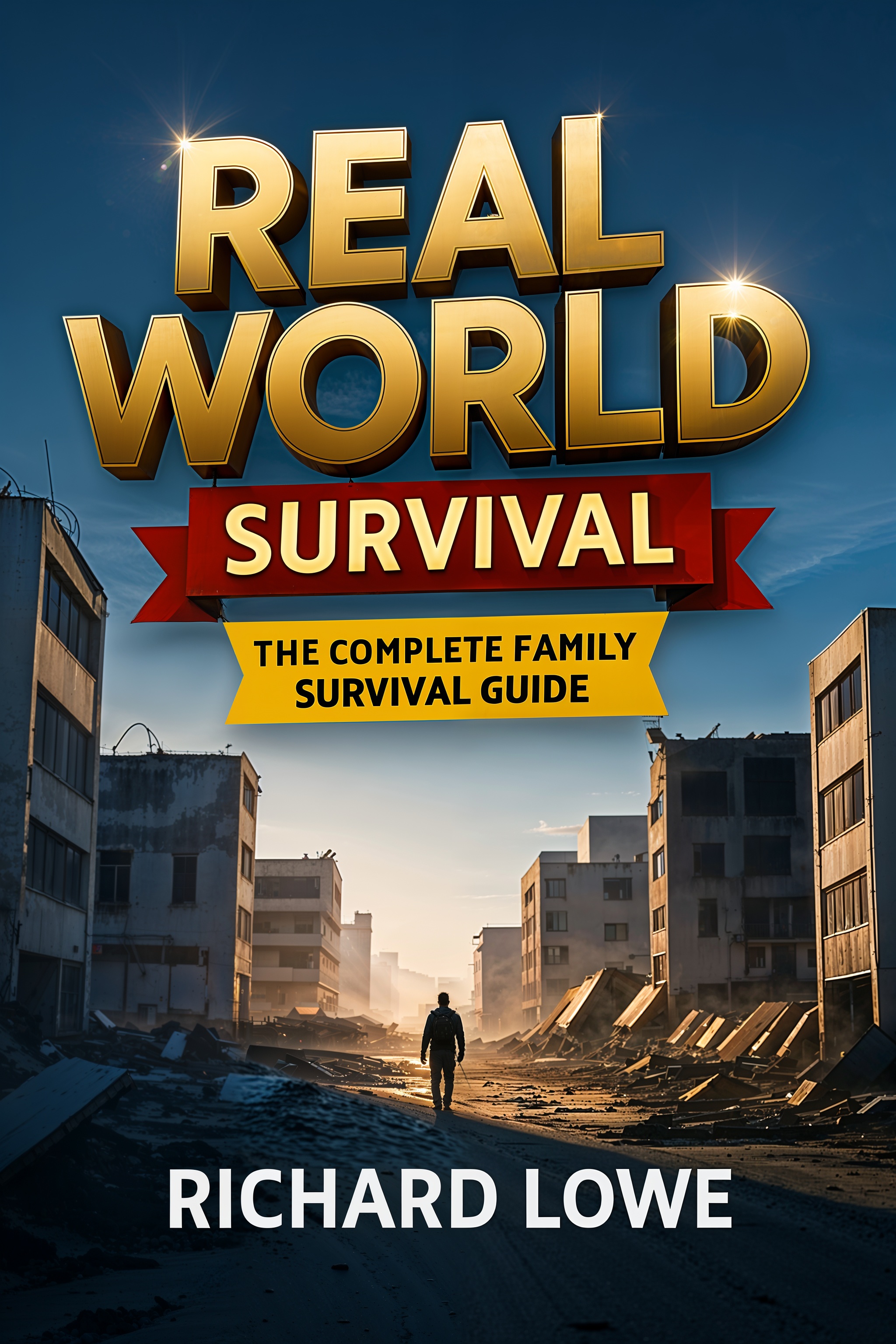
Back-to-back storms test any plan. I wrote Real World Survival to help ordinary people prepare without becoming preppers, starting from my own close call in 1986.
