
By eight in the morning on October 9th, Hurricane Milton had grown into a Category 5 monster, packing winds up to 155 miles per hour. The forecast had it coming ashore as a Category 3 or 4, somewhere between Tampa Bay and Fort Myers. A storm of that size means planning for at least a day without power and several days without internet, and probably worse. So I stopped watching the forecast obsessively and started working the plan.
This wasn’t my first serious storm, and that outweighs any single supply on a checklist.
I’ve been through Hurricane Irma, lived through major forest fires, and survived three earthquakes above magnitude seven, including the infamous Northridge quake that shook Hollywood in 1994. Disaster preparedness stopped being theoretical for me a long time ago. Milton was one more test of habits I built over decades, and I intended to pass it.
What should you do to your house before a hurricane hits?
The preparation started with the building itself. I taped up the windows and secured everything loose outside. In a Category 5 wind, anything not tied down becomes a projectile.
A lawn chair moving at highway speed will go through glass without slowing down. Anything you leave loose in the yard becomes a weapon aimed at your own windows or your neighbor’s, and leaving it there is a choice you’re making for them too.
Inside, I moved valuable books and documents into plastic bags and stowed them in a safe interior closet, away from windows and off the floor in case of flooding. Paper is one of the things a storm destroys permanently. A few dollars of plastic bags is cheap insurance against losing something irreplaceable to water you never saw coming.
Then came supplies. I stocked food and water for at least a month instead of a few days. A Category 5 can knock a region offline long enough that short-term thinking fails you. I bought extra batteries for every device that needed them. The goal at this stage is simple: assume the outside world will be unavailable for weeks and make sure the household can function without it.
Why back up your data twice before a storm?
Physical preparation protects the household. Digital preparation protects the work, and for anyone who makes a living on a computer, that’s just as urgent. I backed up my entire system to the cloud twice, to be certain the data was secure and reachable no matter what happened to the machines.
There’s a saying in the technology world that if your data doesn’t exist in three places, it doesn’t exist at all, and I take it literally.
A single copy is a single point of failure, and a hurricane is exactly the event that turns a single point of failure into a catastrophe. With multiple backups in the cloud, the worst Milton could do to my files was nothing. It could take my hardware. It couldn’t touch the work.
Computers taught me the same rule. Running computer operations for a national retailer, I went through four major crashes, and one of them started with nothing more than a power blip. The generator, the UPS, the cache battery, the disk backups, the DR site, and the tapes all failed. After a day like that, backing up twice before a hurricane looks like the bare minimum to me.
The book on this: Real World Survival is my field guide to disaster preparedness, written from living through hurricanes, wildfires, and earthquakes.
I wrote and scheduled a month of articles and posts in advance, so my marketing would keep running while I was offline. My assistant took over communications and kept things moving. And because I expected to lose power entirely, I set up a mobile hotspot for emergencies. That had already proven itself during Helene a week earlier. The pattern in all of it is the same: build every important function a second path, so that going dark doesn’t mean going silent.
What have decades of disasters taught about staying ready?
My history with natural disasters is long enough to have shaped how I think about all of it. Each one taught a lesson that I still apply.
Hurricane Irma, back in 2017, was a terrifying experience of massive power outages, flooded streets, and raw anxiety, and it taught me the value of a solid evacuation plan and of community support in the aftermath. You don’t get through a storm like that alone, and knowing your neighbors before the emergency is part of being prepared.
The people who come through disasters intact are almost always the ones who were ready before there was anything to be ready for.
Hurricane Helene, just days before Milton, struck close enough that lightning knocked out two UPS systems, two televisions, and a scattering of other electronics. I was fortunate compared to the people in North Carolina who were hit far harder, and that proximity to a worse outcome is its own lesson in gratitude and perspective.
The major forest fires I lived through showed me fire engulfing trees, devouring landscapes, and driving wildlife out ahead of it. The evacuations were chaotic, and my go-bag and my habit of preparedness were what let me act quickly instead of freezing. And the earthquakes, three of them above magnitude seven including Northridge, taught me that some disasters give no warning at all. There’s no forecast for an earthquake. You’re ready or you’re not, and that lesson bleeds into how I approach the disasters that do announce themselves.
All of it fed into a single conviction: preparedness is a standing condition, never a scramble. The people who come through disasters intact are almost always the ones who were ready before there was anything to be ready for.
My take
Preparedness is a standing condition, and if you treat it as a scramble you’ll lose. Earthquakes taught me that some disasters give no warning at all. Hurricanes give you days, and people still waste them. Secure the house, back up your data twice and build the plan around your pets, because they can’t prepare themselves. Know your neighbors before the storm. You won’t get through a bad one alone.
Why do your pets belong at the center of the plan?
In all the taping and stocking and backing up, the easiest thing to overlook is the family member who can’t prepare for any of it alone. Pets have no way to ready themselves for a disaster. Keeping them safe falls entirely to us, and it belongs on the main list from the first day you plan.
For my cat, I had a crate ready by the door and enough food, water, and litter to last for weeks. I set aside a small area in the closet with his bedding and a few comforting things, and I kept a list of pet-friendly shelters and hotels in case we had to leave. Sorting out where an animal can go during an evacuation is something you do beforehand, because the middle of an evacuation is far too late to start calling around.
The essentials for any pet come down to a few things. A sturdy crate or carrier gives them a secure space, for safety as much as for travel. Weeks of sealed, fresh food and water keep them fed if supplies run short. A pet emergency kit should hold food, water, bowls, spare leashes or collars, medical records, medications, and a familiar toy or blanket to cut the anxiety.
Know in advance where you can take them, keep their identification and microchip details current, and treat their safety with the same seriousness as your own. In the chaos of a disaster, animals get lost easily, and a current ID tag is sometimes the only thing that brings them home.
Leaving a pet chained in the yard or shut in the house when you evacuate is abandonment, whatever people tell themselves afterward, and it’s inexcusable. A dog on a chain can’t climb when the water rises, so if you leave, the animal leaves with you.
Everything here, the checklist and the disaster history and the belief underneath it all, is drawn from the same well as my book Real World Survival, a book about getting ready for the bad day without letting the fear of it run your life. You can find it alongside the rest of the preparedness writing on the Prepared, Not Paranoid hub. Milton was still strengthening in the Gulf when I finished.
I’d done everything I could, and when a storm that size is coming, doing everything you can is the only thing that quiets the fear.
Milton blew up fast in the Gulf, and it hit my area hard when it came ashore. I sheltered in place, the way I always do. I’ve never done otherwise. The house is brick and sits in a little cove, so not as much wind hits it. That’s my choice for my own situation, and I’m not recommending it to anyone else.
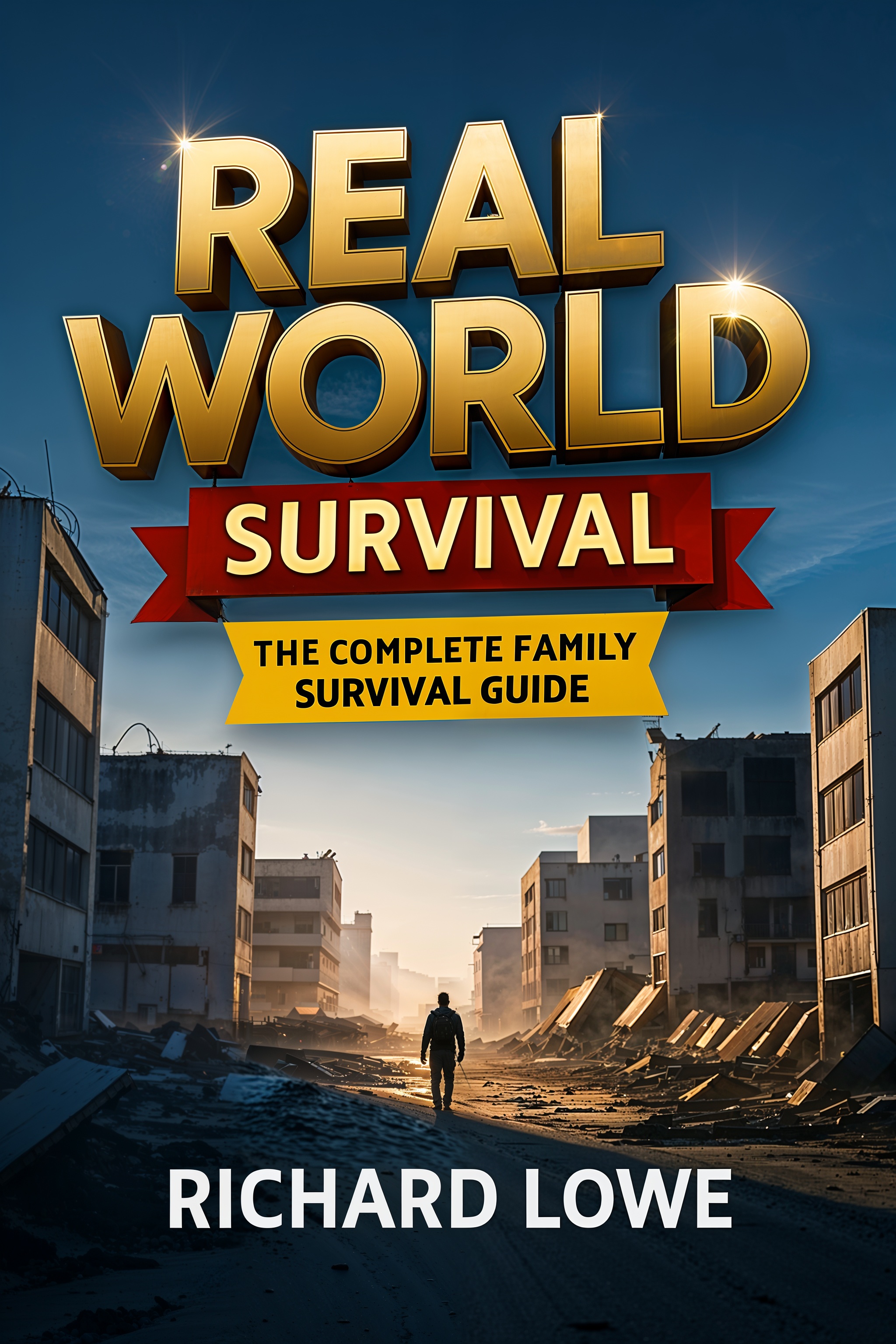
Decades of disasters taught me to prepare without panic. Real World Survival is my book on preparing without becoming a prepper, and it opens with a Christmas hike in 1986.
