
Hurricane Milton struck on Thursday, and it was devastating to the local area.
I came through in good shape, with only moderate damage to my neighborhood. Let me back up, though. I was fine, but the storm wasn’t gentle. It was terrifying. The evening it hit was a nightmare, running from about two hours before landfall until the next morning, relentless the whole time. I stayed awake on pure adrenaline until I collapsed into sleep from exhaustion.
Morning showed the aftermath. Trees snapped in half. Cars in the neighborhood crushed under fallen branches. Houses with trees lying across their roofs. The lake behind my house had risen to an alarming level and nearly spilled its banks. There were reports of alligators moving through the flooded streets, though I never saw one. What I did see were swarms of vicious mosquitoes breeding in the standing water. The streets flooded badly enough that getting out was impossible for a couple of days.

The rainfall was staggering. Milton dropped a record-breaking 14.5 inches on my area in just a few hours. The news that mattered most was good. Power came back twelve hours after the storm passed, far sooner than anyone expected, and the internet followed shortly after. I came out of it well.
No damage to my place. It was also a hard reminder that the difference between a survivable storm and a ruinous one is often nothing more than which side of a track you were standing on.
Why were the tornadoes worse than the hurricane?
As bad as Milton was, the tornadoes it spawned were worse. The news reported more than two dozen tornadoes across Florida, many of them significant.
Entire communities on the eastern side of the state were destroyed. The hurricane brought heavy rain and punishing wind across a wide area. The tornadoes concentrated that violence into narrow paths and ripped straight through homes, businesses, and infrastructure, leaving total devastation behind.
The worst of them missed my area. Other parts of Florida weren’t, and I found the footage coming out of those places hard to watch. A hurricane is a broad, grinding force you can prepare for with supplies and a solid structure. A tornado is sudden and concentrated, and it can flatten a well-built house in seconds with almost no warning. The communities they hit were facing a recovery measured in months and years.
That distinction is worth holding onto. Preparation greatly improves your odds against the broad threat of the hurricane itself.
Against the concentrated randomness of a tornado it buys you less, and that makes offsite backups and a packed go-bag matter more. I get impatient with anyone in Florida who says a storm won’t hit them, because the weather doesn’t take requests. Some disasters you ride out. Others you survive and rebuild from, and the rebuilding depends on readiness you did in advance.
How do you get through the long night of a hurricane?
The storm itself is an endurance event. From two hours before landfall until the following morning there was no lull. Wind and noise, and the constant awareness that any one of the trees around the house could come down in the wrong direction. You don’t sleep through that. You wait it out, and waiting is its own kind of hard.
My cat, Zeya, had a rough time of it.
She stayed pressed against me the entire night. I got the distinct sense she was pleading with me to make the storm stop, as though I had any say in it. The howling wind, the crashing trees, the sudden shifts in air pressure all made it a frightening experience for her, the same as it was for me.
She’s fine now that things have calmed. It was tough on her, and it showed me that the animals who depend on us feel these events every bit as sharply as we do.
I get impatient with anyone in Florida who says a storm won’t hit them, because the weather doesn’t take requests.
I kept writing to stay busy and keep my mind occupied on something productive until the power finally went out. When it did, I went next door. My neighbor is a prepper, well-equipped, and that night all the talk about community during a disaster stopped being abstract. I brought eggs. He fired up his camping stove. We added some potatoes, and a few neighbors drifted over until we had a real meal going in the middle of a blackout.
People like to make fun of preppers until the power goes out. After a storm, a neighbor with a camping stove and the know-how to use it is the most useful person on the street, and I’d take one of those over a garage full of supplies nobody knows how to use.
Just as we sat down, the power came back on, right in the middle of the food. The air conditioning kicking in was the sweetest relief imaginable. The humidity gets you in Florida, not the heat, and it’s miserable without air conditioning.
My take
Preppers get mocked until the power goes out. The night Milton hit, my neighbor’s camping stove turned my eggs and his potatoes into a meal for a few of us on the street. I’d take one neighbor who knows his gear over a garage full of supplies nobody can work. Learn your equipment before the storm. Meet the people next door. The tornadoes were worse than the hurricane, and you’ll want them close.
The humidity gets you in Florida, not the heat, and it’s miserable without air conditioning.Share on X
What does recovery really take after a hurricane?
The storm exits and the recovery begins, and the recovery is longer than people expect. Between the anxiety leading up to Milton, the stress of the night itself, and the flooded days that followed, I more or less lost two weeks. Client work stalled, marketing efforts paused, the ordinary momentum of a working life simply stopped while the immediate crisis consumed everything.
That lost time is a real cost, and it’s one worth planning for. The reason I scheduled a month of work ahead before the storm was so that this stretch of recovery wouldn’t leave me invisible or behind. The preparation you do before a storm does more than get you through the storm. It protects the weeks on the far side of it, when you’re exhausted, catching up, and trying to rebuild your normal rhythm out of the disruption.
The mistake I’d warn any self-employed person about is planning for the storm and forgetting the two weeks after it. Clients don’t stop needing things because your street is underwater, and a one-person business that goes silent for two weeks can lose momentum that takes months to rebuild. Work banked ahead of time keeps you visible while you’re still hauling branches to the curb.
The through-line from the first raindrop to the last day of cleanup is the same. Readiness before the event determines how hard the recovery is after. Everything I leaned on during and after Milton, the backups, the scheduled work, the go-bag, the supplies, the relationship with a well-prepared neighbor, was set in place before the storm had a name pointed at us.
The book on this: Real World Survival is my field guide to disaster preparedness, written from living through hurricanes, wildfires, and earthquakes.
That’s the argument of my book Real World Survival: get ready for the bad day, without letting fear of it run your life the rest of the time.
You can find it and the rest of the preparedness writing on the Prepared, Not Paranoid hub. Milton is gone. The lessons it left, and the two weeks it cost, are worth passing along to anyone who has a storm still out there over the water with their name on it.
What frustrates me every season is how many people wait until the cone points at them before they buy water, fill the gas tank or copy their files somewhere safe. By then the shelves are empty and the lines are long, and they’re making every decision tired and scared. Do it in June, while the Gulf is still quiet.
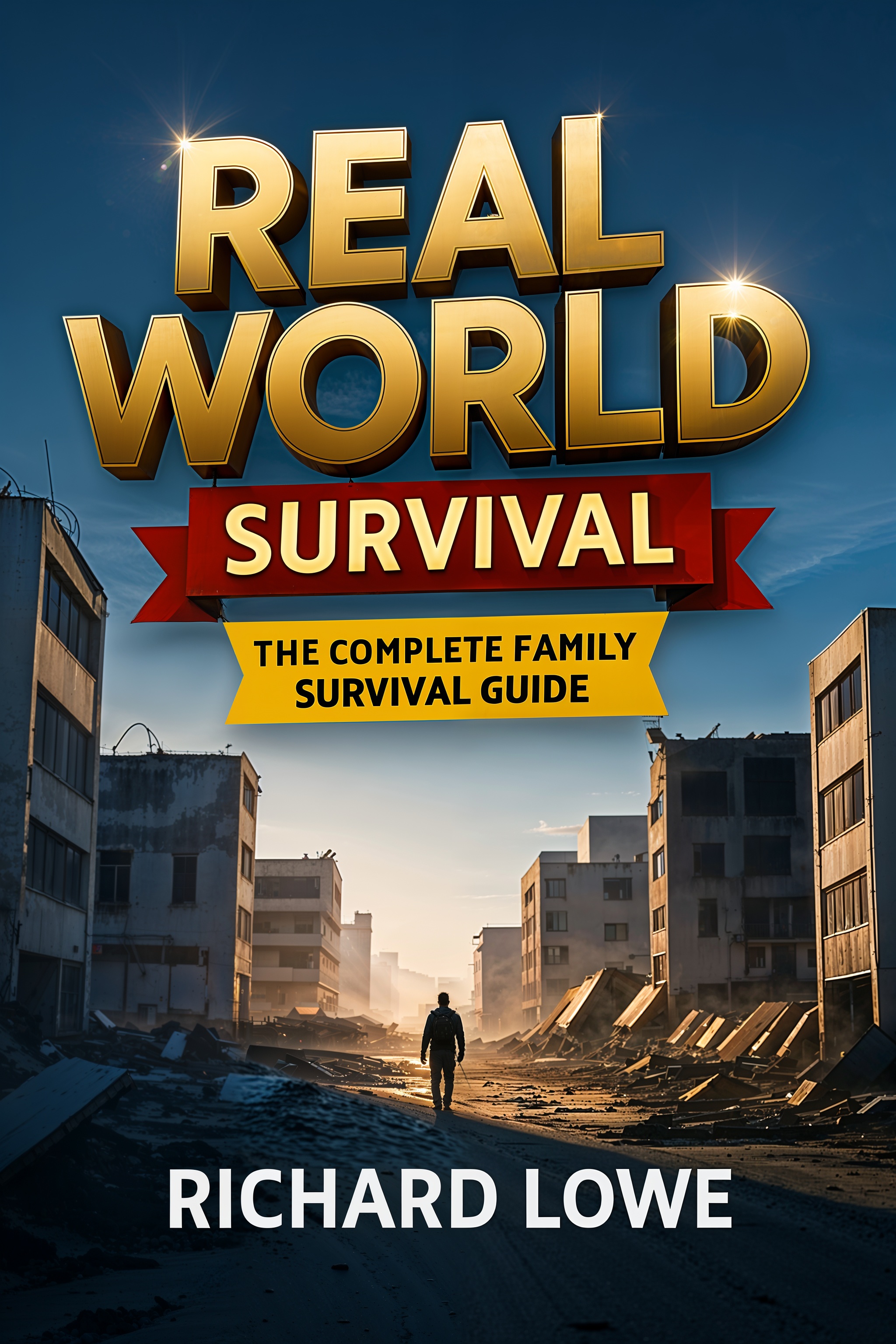
After a night like Milton, the next step is readiness. Real World Survival is my book on preparing without becoming a prepper, starting from a close call of my own in 1986.
