
A father hired me recently to write about his daughter. She died suddenly in an accident about forty years ago, and he’s still devastated. It changed his life, and he wanted it written down before he runs out of time to do it.
I understood more of that than I said.
I lost my wife, Claudia, after twelve and a half years of marriage. She died of sepsis, and I spent most of the next eight years traveling and photographing, trying to find a way to live in a world without her. I wrote about one piece of that in When Grief Sent Me to the Desert. When someone tells me about the person they lost, I’m listening as more than a writer.
The book is about a person, and the death is only one moment in their life.
I put these books near the top of everything I write. A business book can move a career forward, and I’m proud of those too, but a grief memoir keeps a person from disappearing once the last people who remember them are gone. That’s a heavy thing to be trusted with, and I think any writer who takes it on owes the family patience and a pace they set themselves.
Can a ghostwriter help me write about losing my spouse or my child?
Yes. A ghostwriter can do the writing that grief makes almost impossible: holding the structure of a book together, turning scattered memories into scenes, and finding the words when you can’t. Your job is to remember and to talk, as much as you’re able, when you’re able. The ghostwriter carries the rest.
Grief memoirs are some of the most important books a ghostwriter can work on, and some of the hardest. A good one will treat the person you lost with the same care you do, and will never let the project push you faster than you can go.
Why write a ghostwritten book about someone you’ve lost?
People come to it for different reasons, and most have more than one.
Some want grandchildren who’ll never meet the person, and a wider world that only saw the obituary, to remember that person as they really were.
Some need to make sense of what happened, and find that telling the whole story in order is how they finally understand it. Some want to help other people walking the same road, especially parents who’ve lost children or spouses widowed young, who often feel no one else could possibly understand. And some can’t stop the story from wanting to be told.
Any of those is a good enough reason. None of them requires you to be ready for anything more than the next conversation.
When is the right time to start a ghostwritten grief memoir?
There isn’t one right time. Some people start within months, because the memories are sharp and they’re afraid of losing them. Others wait years, until they can talk about the person without every conversation stopping at the death. Both produce good books.
What I’d warn against is letting anyone else set that clock. Relatives who say it’s too soon, or friends who think you should have moved on by now, don’t get a vote on when you tell this story.
If you’re early in your grief, you can start gently: record your memories now, while they’re vivid, without committing to a finished book. Those recordings keep.
When you’re ready to write, they’ll be waiting. If you’re further along, the distance can help you see the whole arc: the life, the loss, and the person you’ve become since.
Whenever you start, it’s fine to pause. A good ghostwriter builds that in. My article on putting a ghostwriting project on hold covers how.
What are ghostwriting interviews like for a grief memoir?
Slower than other books, and gentler. Sessions are shorter. Some days you’ll talk for an hour about a vacation twenty years ago and laugh the whole time. Some days you’ll get ten minutes in and need to stop. Both are progress.
With the father I mentioned at the start, we had to come back to his daughter’s death several times before he could get it all out, and the project went very well. Grief books tend to, in my experience.
The client has a strong reason for the book, memorializing a partner or a child, so it matters more to them. They show up to every session, prepared, and they stay on top of it.
Most grief memoir interviews spend far more time on the life than on the death: how you met, the ordinary Tuesdays, the fights, the inside jokes, what they were like at their best and their most exasperating.
The death usually comes late, in one or two sessions, when you’re ready. You’ll cry, and your ghostwriter will wait. My article on what happens if you cry during a session covers that part.
How does a ghostwriter bring the person I lost onto the page?
Through specifics. A grief memoir works when readers can see and hear the person: the way she laughed at her own jokes before the punch line, the song he always sang wrong, the handwriting on the grocery lists you can’t throw away.
Your ghostwriter will ask for anything that holds the person’s voice and presence: letters, cards, texts, voicemails, photos, recipes in their handwriting.
Don’t throw those out in the first hard months, even if you can’t look at them yet. I’d hate for anyone to lose the one voicemail with the person’s voice on it because clearing the house felt urgent. Put them in a box and let them wait.
- ► Letters, cards, emails and text messages.
- ► Photos, with the stories behind them.
- ► Voicemails and videos.
- ► Journals, notebooks and anything they wrote.
- ► The memories of other people who loved them.
Other family members and friends can be interviewed too, if you want. A sibling or a best friend often remembers stories you’ve never heard, and including their voices can make the book a gift to the whole family.
Does a ghostwritten grief memoir have to describe the death?
You decide how much. Some grief memoirs tell the death in full detail, because the author needs the truth of it on the record. Others describe it in a paragraph and move on to the life and the aftermath. Some leave the medical details out entirely.
If there are parts you can’t say out loud, you can write them privately, record them alone or leave them out. My article on what to do when a story is too painful to tell covers those options. The book is about a person, and the death is only one moment in their life.
Who is a ghostwritten grief memoir for?
You choose. Some people write grief memoirs for the family alone: a handful of printed copies for children and grandchildren, never sold. Others publish theirs for anyone who’s lost someone the same way. Both are worth writing, and the choice shapes the book.
A family book can include private stories, names and details that strangers wouldn’t need. A published book has to work for readers who never met the person, and it needs more care with the privacy of the living. You don’t have to decide before you start. Many authors begin writing for the family and realize partway through that the book could help strangers too.
I’d never push a grieving parent or spouse toward publishing just to make the project bigger. A book printed for a handful of grandchildren is a complete book, and a writer who treats it as a warm-up for something commercial has missed the point of the job.
Should a ghostwritten grief memoir include anger and guilt?
Put them in. Grief comes with rage at doctors, at God, at the drunk driver, at the person who died for leaving. It’s guilt about the last argument, the missed call, the relief after a long illness that you’re ashamed to feel. Readers who are grieving recognize all of it, and a book that leaves it out rings false to them.
I’d rather write a client’s anger as it really was than sand it down into something polite. A sanded-down grief memoir helps nobody, least of all the reader who picked it up because they’re furious too. Your ghostwriter will help you write the hard emotions without letting them swallow the book. And if anger at a specific person is part of the story, such as a hospital, a driver or a family member, have a lawyer read those passages before publication. If your grief is still overwhelming, have support in place while you write. A grief counselor or a support group for people who’ve lost a spouse or child can carry what a ghostwriter can’t.
My take
Write it when you’re ready, and not a day before. Keep the person you lost at the center, and keep the anger and guilt in. Readers in grief spot a polite version instantly, and it helps nobody. If the book is only for the grandchildren, that’s a complete book. Don’t let anyone talk you into making it bigger. Have a counselor or a group in place, because a ghostwriter can’t carry what they carry.
What’s a gentle first step toward a grief memoir?
Record a few memories on your own, with no plan for a book yet.
The ordinary ones count most: how they laughed, what they cooked, the thing they always said at the door. Gather the letters, texts and photos that hold their voice. Make a short list of the people who knew them best. When you’re ready to talk, a ghostwriter can take it from there, as slowly as you need.
If a grief memoir is on your mind, the Book Discovery Intensive is a quiet place to start, and my memoir ghostwriting page explains how I work with families.
Have grief support around you while you write. The book isn’t a substitute for it. The ghostwriting services page covers what a full memoir involves when you get there.
I hate the thought of anyone carrying the whole story of a lost child or spouse alone for decades because they believe they have to finish grieving first. You don’t. You need to be ready for one conversation, and the book gets built from there at whatever speed you can manage.
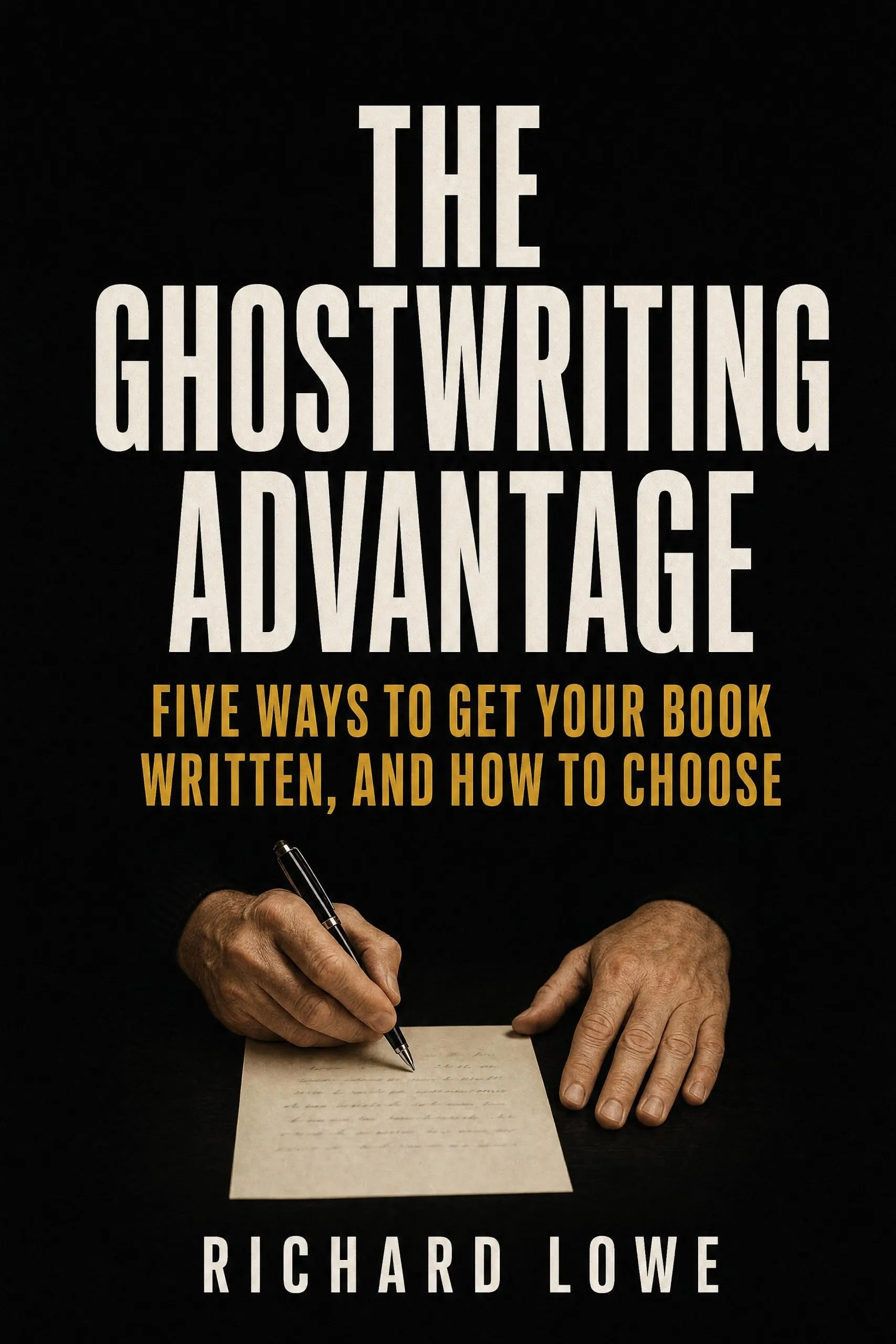
Grief is easier to put on the page with the right help. The Ghostwriting Advantage explains how working with a ghostwriter goes, so you know what to expect before the first conversation.
