
A comment on my Goodreads piece put the trap in one line.
They take your book, let the trolls trash it, and then won’t let you remove it. The author wrote the book, owns the book, and can’t get the book off the platform that’s hosting the damage. Every other complaint about Goodreads gets worse because of this one, because there’s no exit.
Think of a hotel you can check into but never check out of. The door swings inward freely. Anyone can walk your book through it. But the door has no handle on the far side, and the front desk has stopped answering. That’s the shape of the Goodreads lock-in, and once you see it, the helplessness in those comments makes sense.
The author wrote the book, owns the book, and can’t get the book off the platform that’s hosting the damage.
I think this is the most unfair thing Goodreads does to authors. A bad review comes with publishing, and every writer has to live with a few. Being chained to a page you can’t correct, can’t remove, and can’t get a human to look at is a different kind of harm, and it is an outrage for every author stuck there.
Can you remove your own book from Goodreads?
For practical purposes, no. Authors described trying and failing. One said plainly that they were trying to get away from the platform and it wouldn’t let them take the listing down. Another agreed that Goodreads should be shut down, and named the inability to remove your own books as the worst part of it. The book stays up, the ratings stay attached, and the author is a spectator to their own listing.
The asymmetry is the problem. Getting in is frictionless: anyone can add a book, rate it, review it, and push it into search. Getting out is a wall. The exits authors reached for, removing the book, getting a librarian to fix it, deleting the listing, came back blocked, ignored, or flatly impossible. The platform treats itself as the authority on a book it didn’t write and won’t release.
I don’t believe that one-way door is an accident. Somebody at that company decided a bigger catalog mattered more than the people who wrote the books in it, and authors have been paying for that decision ever since.
Why can’t authors control their own Goodreads listings?
Because on Goodreads the listing belongs to the catalog.
The site treats book records like community property, editable only by volunteer librarians, governed by rules the author never agreed to. One commenter described contacting the librarians six months earlier about a serious error and getting nothing done. Another said you can’t change anything without a librarian, and reaching one is its own ordeal. The author has less control over their book’s page than a stranger with librarian status does.
That design makes sense for a reader community cataloging what exists. It’s a disaster for the author whose livelihood is attached to the record. When the catalog and the creator disagree, the catalog wins, and the creator files a support ticket into a void. I don’t blame the volunteer librarians, who are mostly doing their best inside a broken system. I blame the company that built that system, put strangers in charge of an author’s page, and then stopped answering when the author asked for help.
Does the Goodreads listing hurt sales even if you ignore it?
Yes, because you can’t keep it contained. Google pulls the Goodreads rating into the box beside your book in search results, so the listing you can’t control is the first thing a buyer sees.
Ignoring Goodreads doesn’t make it stop displaying your worst ratings to shoppers. The listing works against you whether you log in or not, and you can’t switch it off.
That’s what turns a bad platform into a real business problem. A site you could quit would be an annoyance. A site you can’t quit, that feeds your ratings into the buyer’s first impression, is a liability bolted to your book. The author who gets hurt worst is the one with a book or two and no marketing budget, where a single ugly average can sink a launch. Big names shrug it off. Small authors can’t, and the platform doesn’t care which one it’s hurting.
My take
You can’t quit Goodreads, so it’s a liability. Your listing shows buyers your worst average whether you log in or not, and there’s no off switch. Big names shrug that off. Authors with a book or two can’t. Don’t waste weeks fighting a platform that won’t let you leave. Put your effort into the pages you own, so a shopper who searches your name finds you first.
What can an author do about Goodreads lock-in?
Manage the parts you can reach and stop pouring energy into the parts you cannot. You won’t win a removal fight, so the practical work is elsewhere: keep your own author platform strong so buyers find you on ground you control, and treat the Goodreads listing as weather and stop reading it as a verdict. When the ratings there are unfair, the move is to handle the bad reviews without letting them run your head.
It also helps to know what you’re looking at. Much of the damage is reception and not quality, and the same star means three different things depending on who is reading it. When the ratings arrive as a coordinated wave, that is review bombing and needs its own response. The full case against Goodreads lays out why the platform grinds the way it does, and the publishing and marketing hub has the rest.
I think an author should be able to pull their own book off any site that won’t let them correct it. Goodreads could fix this with a removal button and a support team that answers. Until it does, authors are stuck with a page they never asked for and can’t touch.
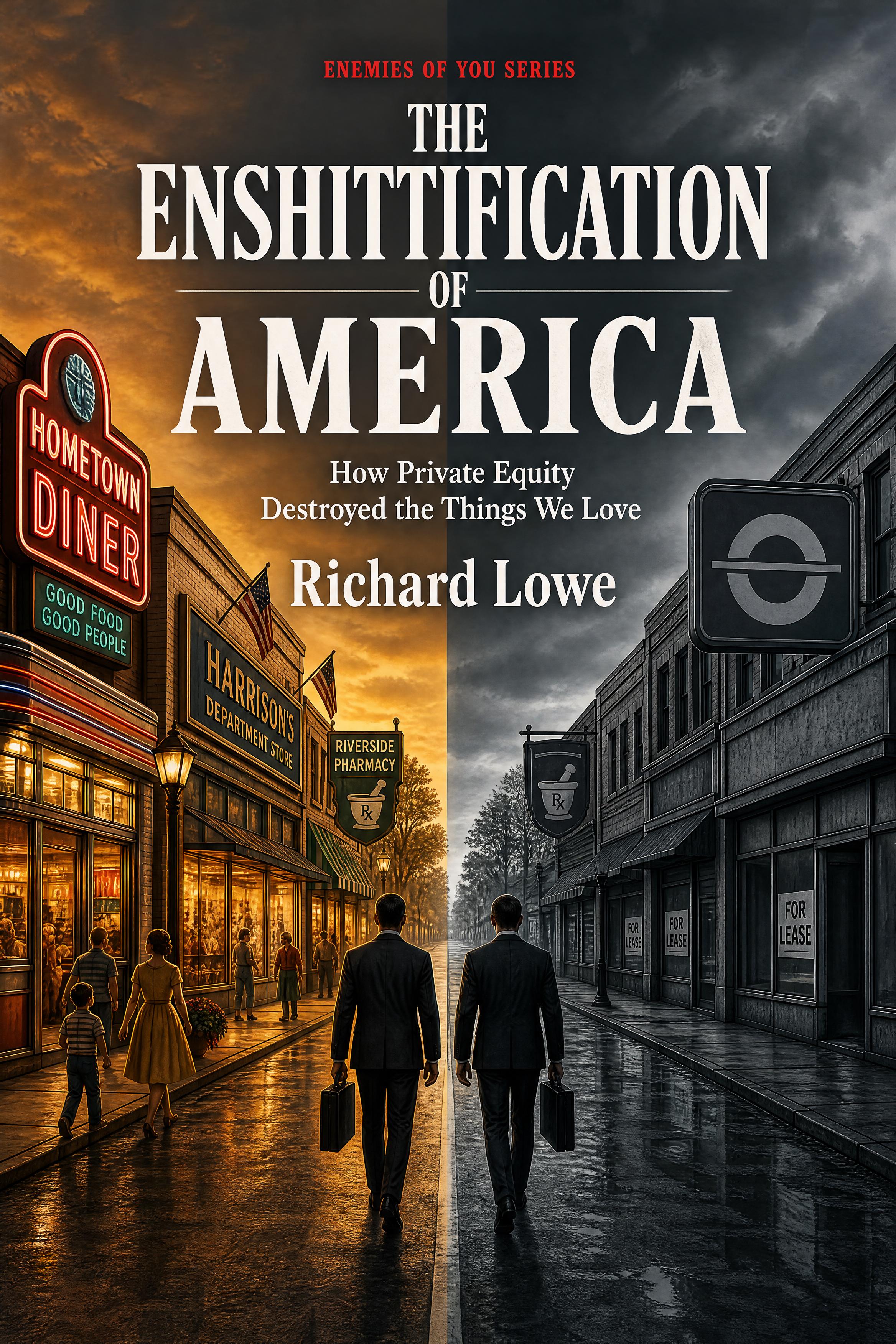
Platform lock-in is a pattern I trace in The Enshittification of America, across thirteen industries where good businesses were taken apart. Goodreads is one more place built to extract instead of serve.
