
I’ve written 42 documented case studies about my ghostwriting projects, and only a few of them name the client. The rest describe the role and the goal and leave the person out. Those clients paid me to write their books and to keep my mouth shut about it, and I take the second part as seriously as the first.
So can your ghostwriter list your book in a portfolio? My answer is short. Only if you acknowledge the ghostwriter in the book in some way, or you give permission. If you’ve thanked your ghostwriter by name in the acknowledgments, then of course they can use your cover.
You’ve already told the world.
What I can’t stand is a ghostwriter who treats your book as free advertising without asking you first.
You paid for the words and you paid for the silence. A writer who puts your cover on a sales page without your say-so has spent your secret to land his next client, and you should never hire that person for anything.
What I can’t stand is a ghostwriter who treats your book as free advertising without asking you first.
Ghostwriting is an odd trade in one respect. Every other creative profession sells itself on its body of work, so architects show buildings and photographers show their prints. A ghostwriter’s body of work sits on shelves under other people’s names, and the value of the service depends on readers never finding out. So every ghostwriter is stuck trying to prove he can write a book while promising never to point at one.
The client carries more risk in this than most people assume. An executive whose board believes she wrote her leadership book has a reputation riding on that belief. A retiree whose grandchildren think every word came from his own hand faces an awkward holiday dinner if the truth turns up on a website. Neither of them signed up to become marketing material. Plenty of ghostwriting contracts say nothing about portfolios, and a writer hungry for proof reads that silence as a yes.
Can a ghostwriter put my book in their portfolio?
Yes, once one of two conditions is met. Either you acknowledge the ghostwriter somewhere in the book, or you give permission, and permission belongs in writing.
Without one of those, your book stays out of the portfolio.
Acknowledgment covers a lot of ground. A “with” credit on the cover counts. So does a line in the acknowledgments thanking your ghostwriter for helping you tell the story. Either way, you made the collaboration public yourself, and a ghostwriter who shows a cover the public can already connect to them isn’t revealing anything you haven’t.
Permission is the other route. You can skip any mention in the book and still let your ghostwriter show the cover to prospects or list the title on a website. Doris is one of the clients I’m cleared to name, along with her book, Gators in the Soup, a legacy novel I wrote for her daughter.
Her book is open for discussion because she said so.
Everyone else stays anonymous, and that’s how it should work. It’s your book and your name, so the call is yours.
Does a ghostwriter need permission to show my book cover?
If your book doesn’t acknowledge the ghostwriter anywhere, yes.
The link between a cover and its ghostwriter is confidential information, and the client paid to keep it that way. A ghostwriter who shows that cover without asking is disclosing it, whether the audience is ten thousand website visitors or one prospect across a lunch table.
If the acknowledgment is in the book, you’ve already answered the question. Anyone who opens the book can read the ghostwriter’s name. A portfolio thumbnail adds nothing the book didn’t already say.
The cover art raises one more wrinkle. Cover designers and publishers hold rights in the artwork, so a ghostwriter reproducing a client’s cover on a website is displaying somebody else’s design. A careful ghostwriter asks before posting it, even when the acknowledgment is right there on page two.
One email settles it. A writer who won’t send that email has told you what he thinks of your property.
What does acknowledging a ghostwriter in a book look like?
Whatever you want it to look like. You control the wording, the placement and the size of the mention, and a good ghostwriter will accept any of them without a fight. The heaviest form is a cover credit, the “with” or “as told to” line under your name. That tells every reader who sees the book on a shelf that the author had help. Plenty of celebrity memoirs carry one, and nobody thinks less of the author.
The lightest form is one sentence in the acknowledgments. A typical version thanks your ghostwriter by name for helping you get the story onto the page. Plenty of readers skip acknowledgments entirely, so the mention is public without being prominent. Between those two you have a title page credit, a line in the author’s note, or a paragraph in the introduction explaining how the book came together.
You can also choose none of them, and I’m fine with that. Clients can thank me as a book coach or a consultant, however they like. As of early 2025, none had called me a ghostwriter.
The full range of credit options is covered in the article on how authorship and credit work in professional ghostwriting. If you’re weighing whether to hire a ghostwriter at all, my book The Ghostwriting Advantage walks through the hiring decision from your side of the table.
One warning. If you acknowledge your ghostwriter in the book, you’ve opened the door to the portfolio, and you can’t close it later by asking the writer to pretend the acknowledgment isn’t there. Decide how public you want to be before the book goes to print. The wording matters less than the fact of it. Once a named ghostwriter appears anywhere in the book, a reporter or a competitor can find that name, look the writer up and read the portfolio for themselves.
How does a ghostwriting NDA affect the ghostwriter’s portfolio?
It keeps your book out of it.
A nondisclosure agreement that forbids the ghostwriter from revealing the project also forbids listing the title, showing the cover or describing the book in a way anyone could trace back to you.
I tell prospects on the first call that they’re under nondisclosure from that moment, and my statement of work marks everything they tell me as proprietary. A few clients have wanted a signed NDA before we’d even had the first hour-long meeting, and they got one. None of that expires when the book comes out.
Confidentiality runs the other direction as well. At the hour-long kickoff I tell every client never to tell me anything they don’t want in the book, because months later I won’t remember which details were private. Whatever a client says ends up in the manuscript or stays with me.
Three of my clients took their books to traditional publishers. None of them disclosed the ghostwriting, and I’m sworn to secrecy on all three. Those titles will never appear anywhere I control.
Would you want them to, if you were one of those authors?
Your NDA doesn’t need a clause that mentions portfolios by name. If the agreement bars disclosure of the project, a portfolio listing is disclosure. The guide to ghostwriting confidentiality covers what the rest of that agreement should protect.
Can a ghostwriter show my book to prospects privately without naming me?
No, unless you’ve given permission. A private showing is still a disclosure.
Your book, handed across a table to a stranger, tells that stranger who wrote it, and that’s the one fact you hired a ghostwriter to keep quiet. Because of my NDA, I won’t show a prospect even a few pages of a client’s book unless that client says yes.
Ghostwriters who respect confidentiality find other ways to prove themselves. They describe projects by role and goal without naming anyone. They show their own books. They offer references from clients who’ve agreed to take calls. My ghostwriting case studies work that way, and a prospect reading them learns what I did without learning who I did it for.
A ghostwriter who emails you another client’s manuscript as a writing sample is showing you exactly how he’ll treat yours. Take the hint and walk away. The guide to vetting a ghostwriter when NDAs hide the portfolio explains how to judge a writer whose best work is locked up.
A ghostwriter who shows you somebody else’s secret book is showing you what he’ll do with yours. – Richard LoweShare on X
What should a ghostwriting contract say about portfolio rights?
It should say what the ghostwriter can do with your book once it’s published, and what’s off limits. A contract that skips the question invites a misunderstanding somebody discovers on a website two years from now.
Cover a few points in plain language. Can the ghostwriter list the title and show the cover on a website or in a sales meeting? Can they name you as a client or quote a passage as a writing sample? Can they describe the project anonymously, by role and goal, the way a case study does? You can say yes to some of those and no to the rest.
Put a date on it too. A ghostwriter showing your book before publication can blow your launch and take away your chance to tell people first. After publication, with your permission, it’s a different matter.
Decide whether you can withdraw your permission later. Circumstances change. You were proud to credit the book at 50, and at 55, after a career move, you’d rather nobody knew. A clause that lets you pull the listing on written notice protects you from your own future. Your ghostwriter should agree to it without argument, because a portfolio built on reluctant clients isn’t worth having.
Why do ghostwriters want to show client books in a portfolio?
Because every prospect asks for proof, and a ghostwriter under NDA has very little to hand over. A ghostwriter’s best work carries somebody else’s name, and he’s promised never to mention it. I get around that with my own books. I’ve written 113+ books under my own name, and I can show a prospect every one of them. They prove I can write, and my anonymous case studies prove I can finish a book for somebody else without telling the world whose book it was.
Agencies make this worse. An agency sells the book through a salesperson and hands the client to a writer the client never met, and the agency’s website is a sales tool first. Before you sign with one, ask in writing whether your cover will ever appear in their marketing, and get the answer into the contract. I don’t trust agencies with much of anything, and I wouldn’t trust one with a secret I paid to keep.
A ghostwriter asking to list your book isn’t doing anything wrong by asking. Newer ghostwriters need those covers more than experienced ones do, since they have fewer books of their own to point to. If you like your ghostwriter and don’t mind being public, saying yes helps a working professional build a business. If you’d rather stay private, say no and mean it. A decent ghostwriter will take the no without sulking.
What happens if a ghostwriter lists my book without permission?
Ask for it to come down, in writing, the day you find it. Quote the confidentiality clause from your contract in the email, and give a deadline.
A professional will apologize and pull it. Anyone who argues has told you what the rest of your relationship will look like.
Screenshot the listing before you send that email. Pages change, and a ghostwriter who knows he’s in trouble can delete the evidence in thirty seconds. A dated screenshot and the contract clause together make a clean record if a lawyer ever needs one.
If it doesn’t come down, you have a breach of contract on your hands. How much it costs you depends on your situation. An executive whose board didn’t know about the ghostwriter has more at stake than a retiree who wrote a family memoir and wouldn’t care who found out. Talk to a lawyer about damages if the disclosure hurt your reputation or your business.
And tell other people what happened, carefully and accurately. Stick to what the contract said and what the ghostwriter did, and leave the name-calling out. A ghostwriter who breaks confidentiality once will do it again, and the next client deserves the warning you never got. For the bigger worry behind all of this, the article on what to say when someone asks if you wrote your book covers the conversation you’d face if your ghostwriting becomes public.
My take
Decide the portfolio question in writing before you sign. If you thank your ghostwriter by name in the acknowledgments, showing the cover is fair. Without that or your permission, the confidentiality terms keep your book out of every portfolio and sales call. If a writer breaks that, take a dated screenshot, keep the contract clause, and talk to a lawyer. Then warn other people with the facts and leave the name calling out.
Should I let my ghostwriter use my book cover?
That’s your decision, and either answer is respectable.
If you’re comfortable with people knowing you had help, a mention in the book and a yes to the portfolio cost you nothing and help the person who wrote your book. If you’d rather keep it private, say so before you sign, and make the contract say it too.
Read your contract’s confidentiality clause tonight and add a portfolio line if it’s missing. If you’re still sorting out how hiring works, start with the Ghostwriting Hub. When you’re ready to talk about your own book, my ghostwriting services page explains how I handle confidentiality from the first call. Whatever you decide about the credit, your book will either be one of the few covers I can show a prospect or one of the many I never mention, and I’ll treat it the same way in both cases.
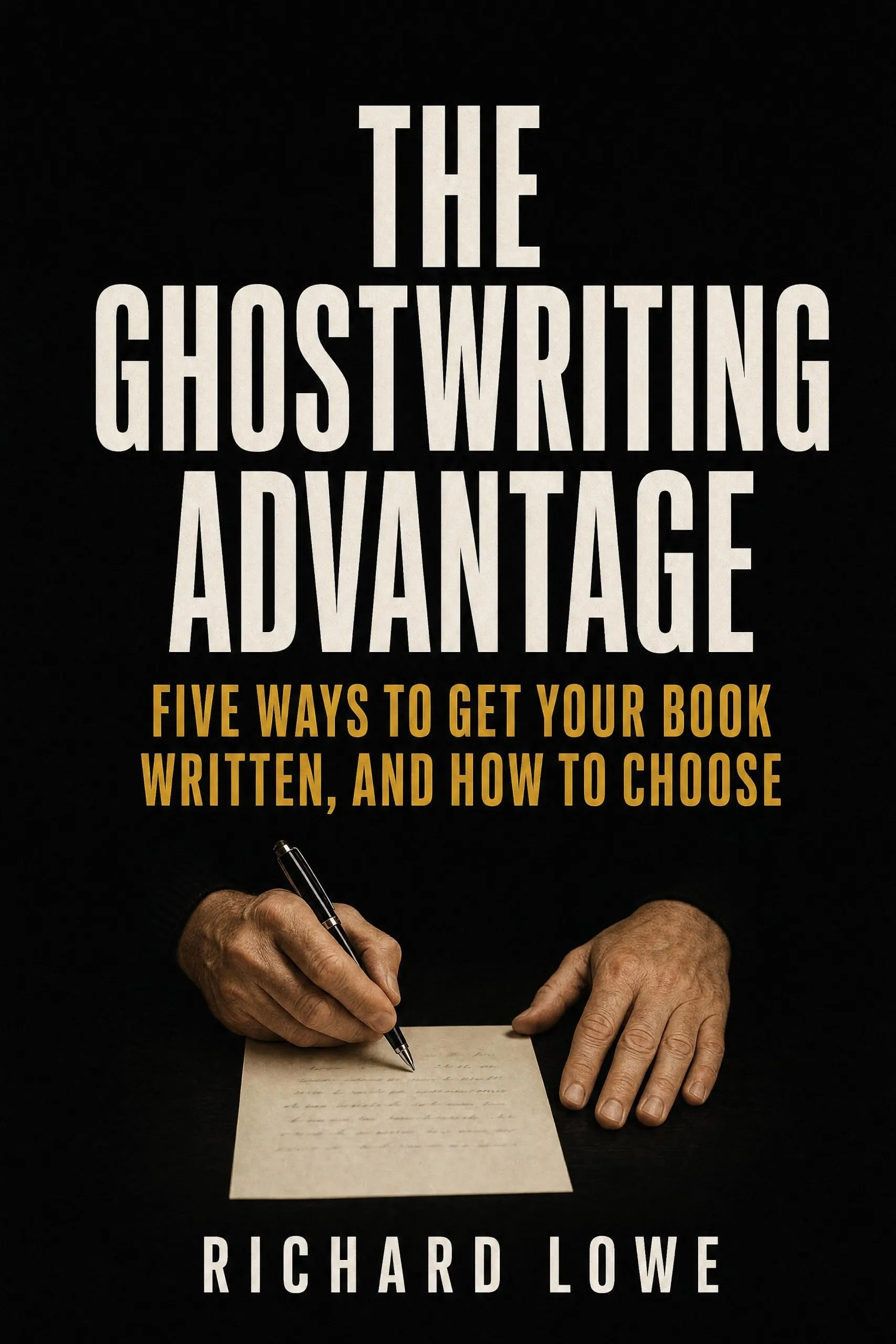
If you want to know what a ghostwriter does with your book and your name, I wrote The Ghostwriting Advantage from inside more than 54 ghostwritten books.
