TL;DR
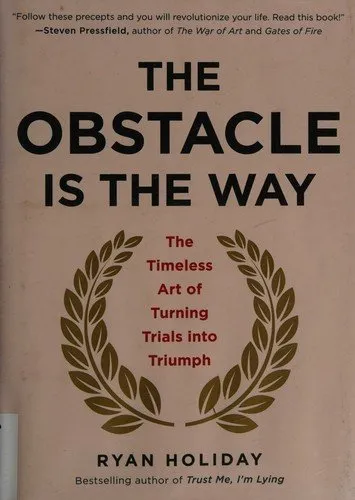
8/10. One line of Marcus Aurelius, that the impediment to action advances action and what stands in the way becomes the way, expanded into a method in three parts: perception, action, and will. The philosophy isn’t new. Getting it read by people who would never open the Meditations is the achievement.
The structure is the argument. Perception is what you decide the situation means. Action is what you do about the part you control. Will is what you do about the part you don’t.
Each is illustrated with short case studies. Rockefeller staying calm through the panic of 1857 while older men lost everything. Ulysses Grant. Amelia Earhart taking a job as a passenger because it was the only way into the air. Demosthenes, Lincoln, Edison, boxers, generals, entrepreneurs.
The chapters are brief and hit hard. That’s deliberate. It reads like something assembled to be read on a plane and remembered afterward, and that’s a design decision and not a failure of ambition. Holiday’s book sums up my mixed feelings about the Stoicism boom. He got Marcus Aurelius into airport bookstores, and more people thinking about perception and will is a good thing. A lot of what gets lost in that translation is the part that mattered most to Marcus, though, and I can’t stop noticing the gap.
What does the perception section of The Obstacle Is the Way argue?
That most of what makes an obstacle unbearable is the story attached to it, and that the story is optional in a way the obstacle isn’t.
This is authentic Stoicism and it’s useful. The Stoic position is that events are indifferent and judgments about events are where suffering lives, and Holiday translates that into a working instruction: separate what happened from what you decided it means, and notice that only the meaning belongs to you.
The practical version is a set of questions. Is this a disaster or an inconvenience. What would I advise somebody else in this position. What’s the objective description of the situation with the adjectives removed.
That last one does most of the work. A great deal of catastrophe lives in adjectives, and stripping them out frequently leaves a problem that’s difficult and not fatal.
The adjective test is the single best tool in the book. Strip the adjectives out of a crisis and a surprising number of them shrink into a to-do list, and that trick alone is worth the time it takes to read.
Watch: The Obstacle Is The Way | Summarized by the Author (Ryan Holiday), Daily Stoic
What does the will section of The Obstacle Is the Way cover?
People skip it, and it matters most, because it deals with what remains after you’ve done everything available and the situation is still bad.
Most books of this kind stop before that point. They’re about overcoming. That assumes the obstacle can be overcome. The Stoics were writing for people facing exile, illness, and execution, meaning situations with no action available, and the will section is where Holiday engages with that.
His treatment includes the premeditation of adversity, meaning deliberately imagining what could go wrong so that its arrival isn’t also a surprise, and the discipline of accepting what can’t be changed without pretending to like it. Acceptance in this frame isn’t approval, it’s the end of arguing with a fact.
It’s the shortest of the three sections and it should have been the longest.
That imbalance frustrates me. The will section is where Stoicism matters most, in the rooms where nothing can be fixed, and Holiday gives it the fewest pages of the three.
What is wrong with The Obstacle Is the Way?
Stoicism gets flattened into a performance tool, and this is a real objection and not a purist’s complaint.
Marcus Aurelius was working out how to be a decent person while holding absolute power over millions of people. Epictetus was a former slave. The philosophy is about virtue at its root, about what you owe other people, and about how to live rightly when the world doesn’t cooperate.
Here it’s frequently deployed as a technique for beating a competitor or hitting a target. The ethical content thins as the productivity content thickens, and a reader could finish this book with a working method and no sense that Stoicism has anything to say about how to treat people.
That’s the book’s low point. Marcus wrote about how to be decent to people, and seeing him recruited as a sales coach feels like watching somebody turn a library into a gym.
Holiday has addressed this in later work and the criticism stands for this one.
Do the case studies in The Obstacle Is the Way work?
Partly, and they have the flaw case studies always have: they’re selected because they worked out. Rockefeller stayed calm and became the richest man in the world. That’s a story about calm and it’s also a story about survivorship, because we don’t hear about the equally calm men who were wiped out anyway.
Survivorship is the oldest trick in the business book trade, and it disappoints me to see it here, because Stoicism is the one philosophy built to resist it. The Stoics were interested in how to face things that don’t work out. That’s exactly the material a book built on triumphant examples can’t carry. Every chapter ends in vindication, and the philosophy underneath says vindication isn’t the point and isn’t promised. That tension runs through the whole book and Holiday never resolves it.
Verdict
The best entry point to Stoicism for somebody who won’t start with the Meditations, and a book to be graduated from.
Read this, take the three-part frame, then read Marcus and Epictetus directly and notice what the modern version left out. What it left out is most of the ethics.
An eight from me, and a warm one. Start here if the Meditations scare you off, and then do yourself the favor of going to the source, because Marcus is kinder and harder than the version on the airport shelf.
Explore further
The Psychology of Writing Hub: what drives creative work and what stops it.