TL;DR
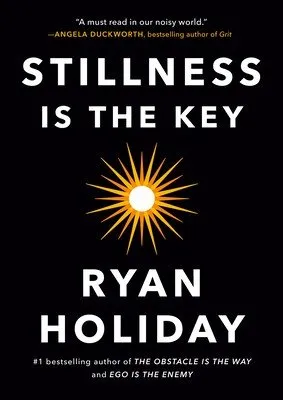
7/10. The third of the trilogy, built around mind, spirit, and body, and drawing on Buddhism, Christianity, and Confucianism as well as the Stoics. Gentler and more diffuse than the first two, and the least essential, though the section on the body is better than it’s any right to be.
The argument is that the ability to be still, meaning undistracted, unhurried, and clear, separates people who make good decisions under pressure from people who don’t.
I liked this book more than I expected to and less than I wanted to. I agree with the premise completely, because a hurried decision is usually a bad one. Holiday knows that, and then spends too much of the book gathering pleasant quotations about quiet when he should be arguing.
Holiday widens his sources considerably here, moving well beyond Stoicism into Buddhist practice, Christian contemplation, Confucian thought, and a general reading of what traditions have said about quiet. The three-part structure follows the earlier books: mind, spirit, body.
The framing case is Kennedy during the Cuban missile crisis. That’s a good choice, because it’s a documented instance of somebody slowing a decision down while everyone around him wanted speed.
What is the strongest section of Stillness Is the Key?
The body. That’s the surprise.
Sleep, walking, physical routine, and the argument that a mind can’t be still in a body that’s being neglected. That’s a concrete claim in a book otherwise reaching for atmosphere, and it’s the section with the clearest instructions. He’s good on walking, and on the long tradition of thinkers who did their thinking on foot. That’s a well-documented pattern, and the practical version is that a problem you can’t solve at a desk will frequently yield to forty minutes outside.
This is the chapter I’d tear out and hand to anyone who works at a keyboard all day. The idea that a stuck problem wants a walk is old and unglamorous, and it works. I wish more productivity books had the nerve to say something this plain.
The material on saying no, and on the accumulation of commitments as an enemy of stillness, also sits in this section and is the most immediately usable thing in the book.
Watch: Stillness Is The Key (Summarized By The Author) In 5 Minutes, Daily Stoic
Where does Stillness Is the Key thin out?
The spirit section, where widening from Stoicism to a general spirituality costs the book the specificity that made the first two useful. Several chapters read as a well-composed mood instead of a position. There are chapters on beauty, on virtue, on relationships, and on the acceptance of a higher power, and each gathers examples from several traditions without committing to what any of them claims.
This is where I stopped enjoying the book. A chapter that quotes four traditions and commits to none of them feels wise while you’re reading and leaves nothing in your hands afterward. I kept wanting Holiday to pick a fight with somebody.
That’s the cost of the broadening. Stoicism is a specific set of positions that can be argued with. A synthesis of everything that’s ever counselled quiet isn’t, and a reader can’t disagree with it. That means it can’t teach much either.
Is the trilogy structure of Stillness Is the Key a problem?
By the third book the method has become visible, and that’s worth naming. Three-part structure. Short chapters. Historical vignette followed by extraction of a lesson. A quotation to close. It worked twice and the machinery shows the third time, in the way a formula does once you can predict the shape of the next page.
That’s not a reason to skip it. It’s a reason to read it last, and it’s itself instructive for a writer. A structure that produced two good books produced a lesser one on the third pass, because the structure had stopped being a discovery and become a container.
It’s a warning every writer with a series should take to heart. Once a shape has worked twice, it’s very tempting to pour the third book into it without asking whether the material wants that shape at all.
Who is Stillness Is the Key for?
Somebody who has read the first two and wants the third, and somebody whose specific problem is speed.
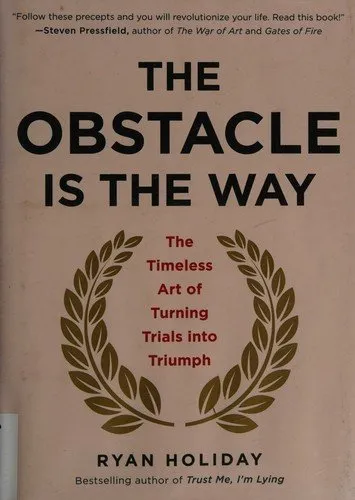
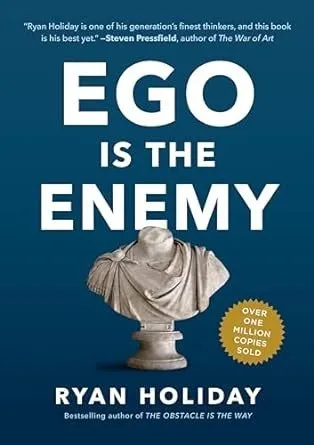
If you’re making decisions too fast, taking on too much, and can’t hear yourself think, the book is aimed at you and the body section will help. That reader deserves this book. Speed wrecks more judgment than stupidity does, and a lot of smart people are moving too fast to notice it happening to them. If you’re looking for the argumentative bite of Ego Is the Enemy, this isn’t that book, and going in expecting it produces disappointment that’s not the book’s fault.
Verdict
The weakest of the three and still worth an afternoon, mostly for the body section and for the observation that stillness is a precondition for judgment and not a reward for achieving it. Read The Obstacle first, Ego second, and this one when you’ve already got the argument. It deserves to exist, and I’d still trade the whole spirit section for another fifty pages on the body.
Explore further
The Psychology of Writing Hub: what drives creative work and what stops it.