
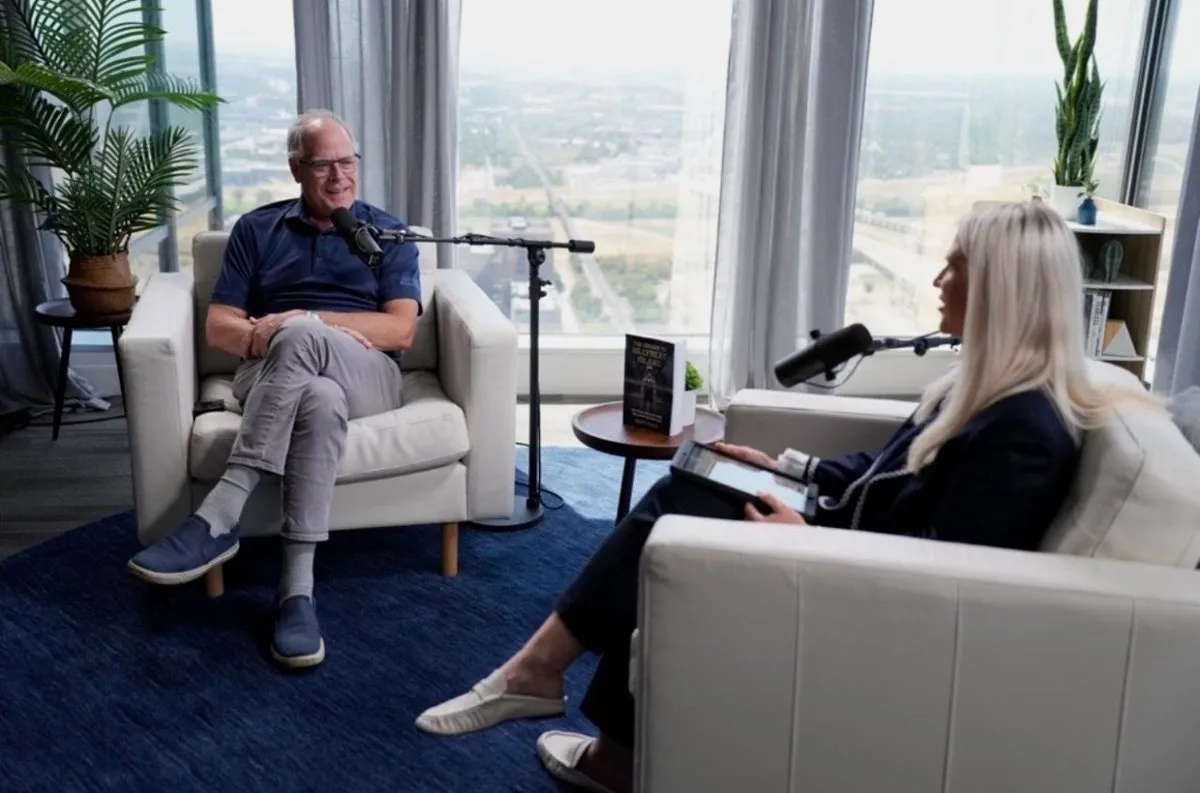
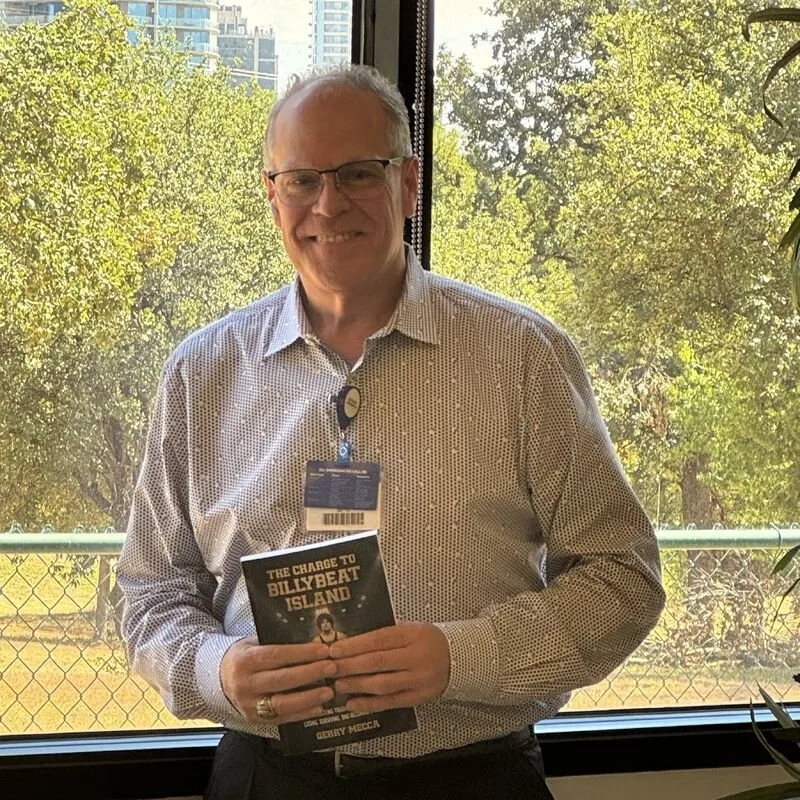
Why are these guys smiling?
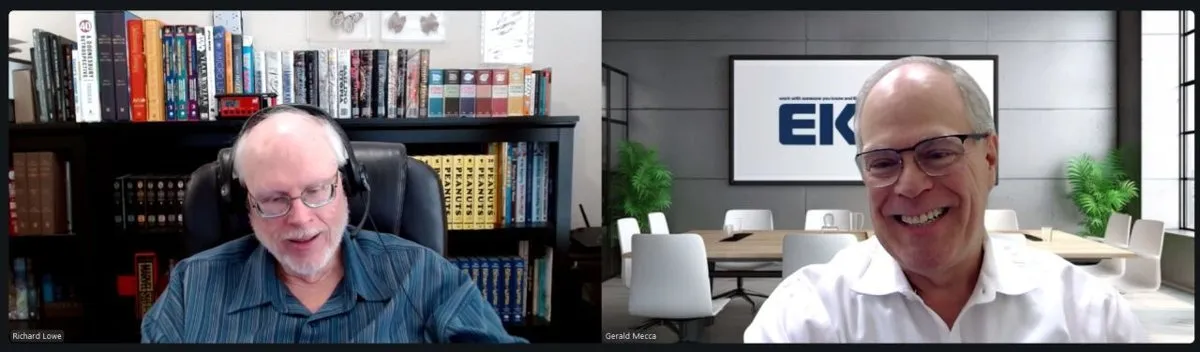
Gerry Mecca asked that question himself, in a LinkedIn post about the book we spent nearly three years making. His answer: the book is done. He also admitted we could just as easily have been crying. He’s right about both.
Gerry came to me on November 19, 2023, three days after a long, hard relationship with the mother of his children ended. He wanted to write a book, and he hired me as his coach. He had it all planned out. It was going to be a technology book about his career, from Ingram Micro to PepsiCo and Tropicana, his longest run at Dr Pepper Snapple Group, and his obsession with delivering excellent customer service.
That isn’t the book he wrote.
How does a business book turn into a memoir?
We started the way I start every book. Zoom after Zoom, and I recorded every one. Gerry later called it “a method to his madness,” and that’s fair. I ask about the same things in different ways, and I listen for the stories underneath the résumé.
Then something happened outside our calls. Mark A. Stone, the longtime CIO of the Texas A&M University System and a friend of Gerry’s, asked him to speak at the system’s annual Technology Summit. The subject was storytelling and influence, and how to use them in tech. Gerry did some TED-style training and opened his talk with a story.
A little boy and his girlfriend, a sweet girl really named Candy Baker, fell through the ice on a New Jersey lake. Hockey players pulled them out just in time. Paramedics wrapped them in blankets and carried them to a neighbor’s house to warm up by the fire while somebody called their parents.
Right when the room was hanging on every word, Gerry stopped.
“Now that’s how you get an audience’s attention,” he told them. “Get into their heads and hearts. Once you do that, influence is easy.” Then he told them the little boy was him. He still doesn’t know the names of the hockey players or the paramedics who saved him, and he’s grateful to them to this day.
After months of planning a business book, he told me that story, and I said that’s the book.
He brought that story to our next session, along with a flood of others that had suddenly filled his head. Five boys in one bedroom in Camden. Brothers who wrestled before any of them had ever seen a wrestling room. A father who drilled one rule into all of them: Meccas don’t quit.
I told him that was the book. Gerry remembers it with three exclamation points, and I won’t argue.
This happens more often than people think. A client walks in with the book they believe they’re supposed to write, usually a business book, because that’s what successful people write. The book they need to write is sitting underneath it, in the stories they tell when they forget they’re being interviewed. My job is to notice.
What is Gerry Mecca’s wrestling memoir about?

The Charge to Billybeat Island is a wrestling memoir. The subtitle says it plainly: what wrestling taught him about winning, losing, surviving, and becoming a Mecca.
The title comes from a bed in a crowded Camden bedroom that a young Gerry claimed as his own island, with a crayon map and the rest of the floor declared lava, and his brothers invading nightly. The book runs from there through a move to Texas, a high school program that won its first state title in any sport, the coaches who shaped him, and well past the mat into the man he became.
It’s a story about grit and family, and about quitting and not quitting. If you want to hear Gerry tell some of it himself, he talked about his father’s no-quit rule and his career in tech leadership on my podcast, in Why Leaders Who Quit Lose.
Can you write your own book with a ghostwriter’s help?
Yes, and Gerry is proof. He wanted to write most of the book himself, and he did. I coached him on story arcs, character development, descriptive imagery, and the surprising power of an anti-hero. I helped him through writer’s block. When a chapter needed it, I did a fair amount of the writing too, what Gerry calls “ghost work.”
That mix isn’t unusual. Some clients want me to write every word. Some want a coach who reads their pages and pushes. Gerry wanted both, depending on the week, and the book is better for it. He says he learned how to write along the way, and I watched it happen chapter by chapter.
Partway through the project, he wrote in a testimonial that when I step in on a chapter, I’m “writing with my heart.” That’s the nicest thing a client has said about my ghostwriting.
Some names got changed, because that’s what you do in a memoir when real people are involved. Then, in January, the manuscript went to Jennifer Jas, the nonfiction editor I send my clients to when the writing is done.
My take
Gerry hired me for a business book and wrote a memoir instead, and he was right to. The technology career is still in there, but the boy on the ice and the five brothers on Billybeat Island are what make people want to read it. Nearly three years is a long time to work on a book. It was worth every session, and I’m proud to call him a friend.
Why is writing a memoir therapeutic?
“Honestly, I needed to write this,” Gerry wrote. “It was therapy for me.”
I hear some version of that from almost every memoir client. When you write your life, you have to go back through the parts you’d rather leave alone, the ones Gerry calls his “often-suppressed memories.” You relive them, you put words to them, and somehow they weigh less afterward.
Gerry also wrote it for other people. He hopes it helps kids see what it takes to get through those early years. He hopes it reminds adults who still have time that making it takes harder work than most people want to believe.
That’s why they were smiling. It’s also why, as he says, they could easily have been crying.
What happens after a memoir is published?
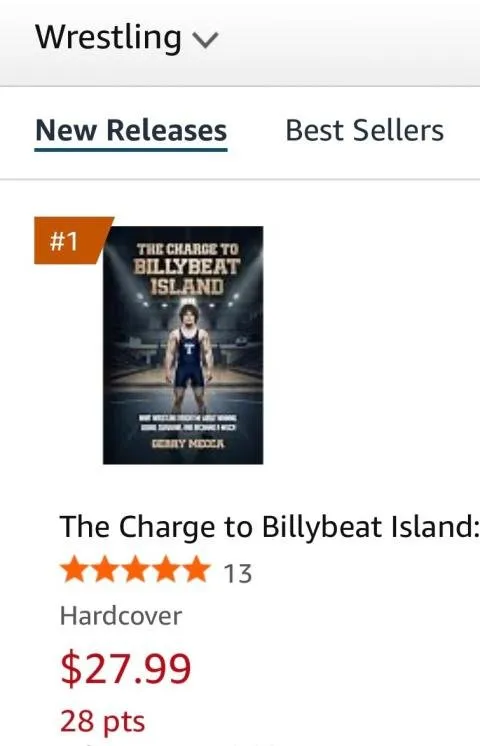
For Gerry, plenty. The Charge to Billybeat Island went to number one in Amazon’s new releases for wrestling, with a row of five-star ratings under it.
Then he took it on the road.
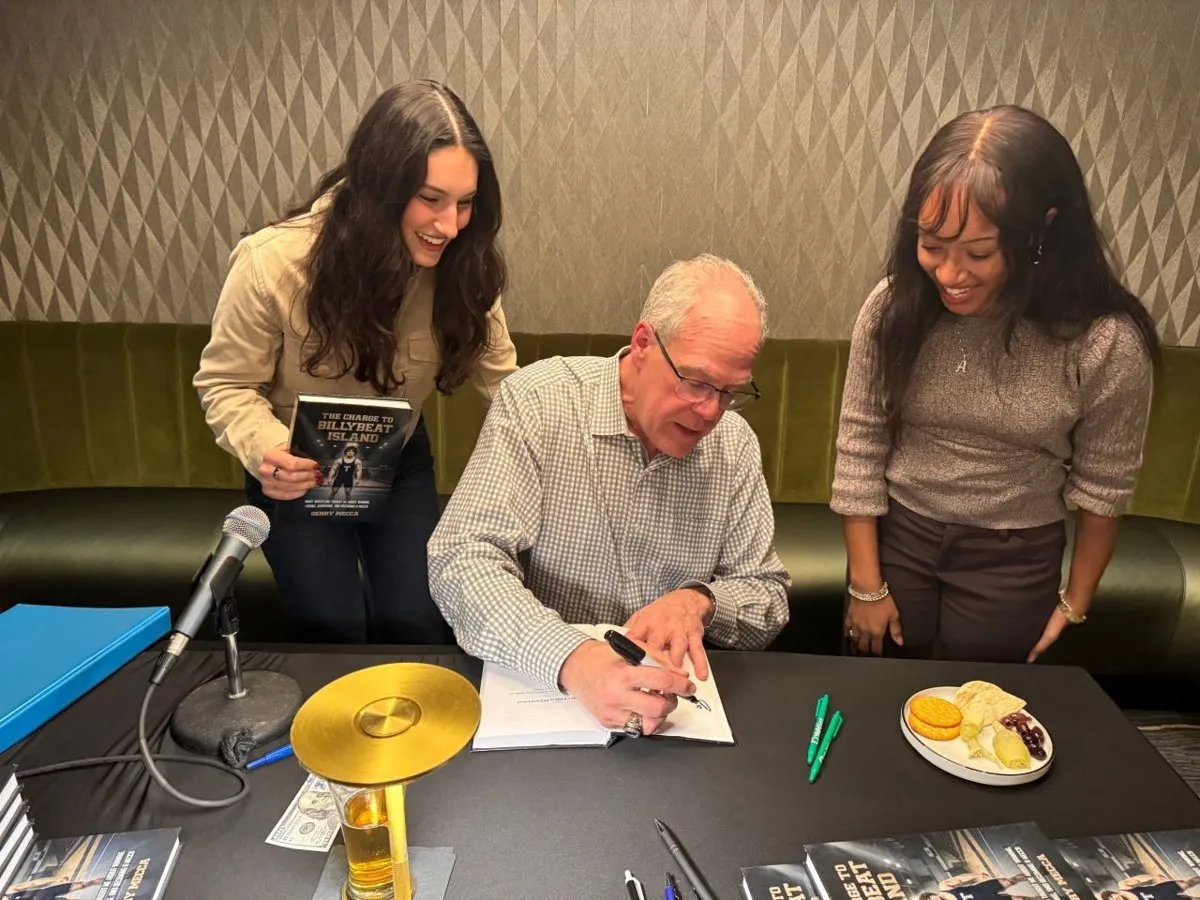
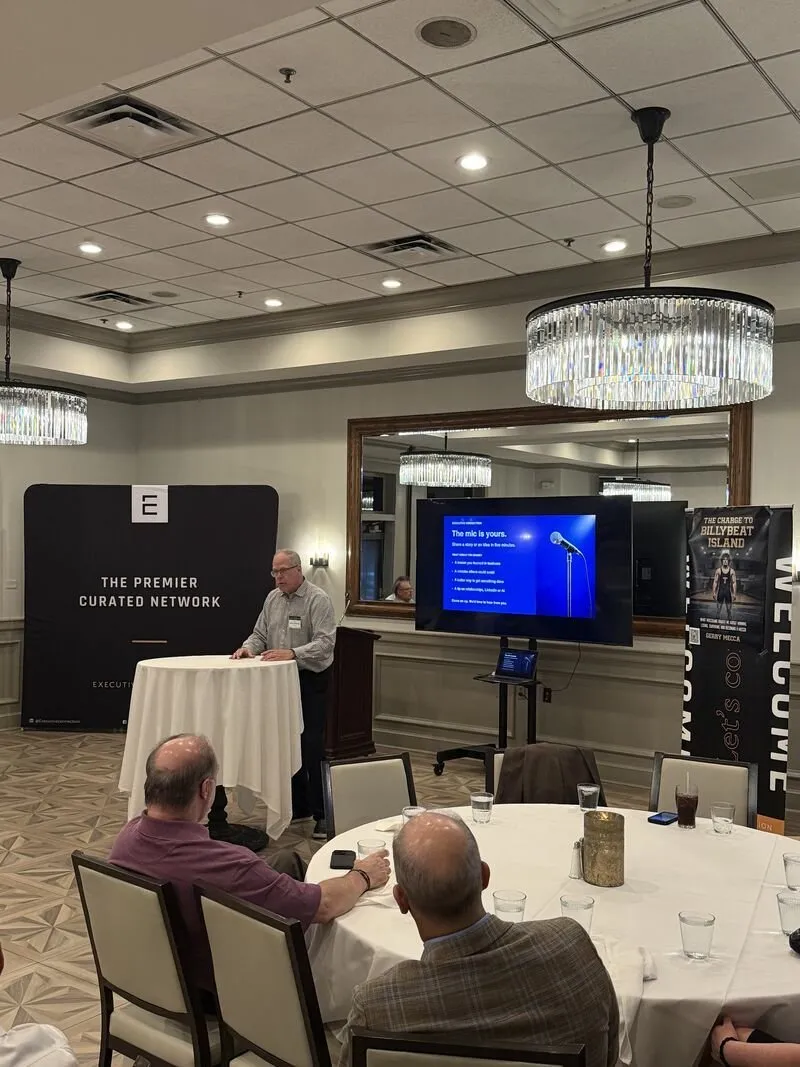
He’s been signing books, reading to rooms full of people, sitting down for podcast interviews, and speaking at business networking events with the book banner standing next to him. That’s what a book does when the author uses it. I tell every client the same thing on our first calls: the book is the foundation, and speaking is where it pays off.

Do you have a book in you?
Gerry ended his post with a line for anyone thinking about it: “If you have a book in you (or 2), click on Richard’s link. You won’t regret it!” I’ll take that.
Maybe your book is the one you’ve already planned. Maybe it’s the story you tell at dinner that makes the room go quiet. Either way, we’ll find it in the interviews. I can write it for you, coach you through writing it yourself, or do a bit of both, the way Gerry and I did. If it’s your life story, start with how I write memoirs.
And Gerry, since you asked how you did: you did great.
