
Why Leaders Who Quit Lose
Featuring Gerry Mecca on Leaders and Their Stories with Richard Lowe
How do sports like wrestling build grit and leadership?
TL;DR: What This Conversation Establishes
- There’s shame in quitting: Gerry’s father drilled a finish-what-you-start ethic that became his core leadership principle
- The best coaches lead by belief and responsibility, not by screaming; short-term fear works but never builds long-term performers
- In IT, your people are professionals with positions to play, not hourly employees who clock out when the network is still down
- A real C-level leader has double digits in both people hired and people fired; most aspiring CIOs have only 40 to 60 percent of the full skill set
- Fractional CIO work lets a seasoned technology leader serve several companies at a quarter to a third of a full-time CIO’s cost
What You’ll Learn
- How a finish-what-you-start ethic translates from the wrestling mat into leadership
- Why belief and responsibility beat fear as a coaching approach
- How to lead IT professionals as experts instead of hourly staff
- The real test that separates a C-level leader from a long-tenured employee
- What fractional CIO work is and when a company needs it
Gerry Mecca joins Richard Lowe (The Writing King) on Leaders and Their Stories for a conversation about where real leadership comes from. From a Camden, New Jersey row house with five boys in one bedroom to fractional CIO work, Gerry traces a straight line from the wrestling mat to the boardroom.
Along the way: the finish-what-you-start ethic his father called shame in quitting, why the best coaches build people up instead of screaming them down, and how to lead technology professionals as experts instead of hourly staff.
It’s exactly the kind of hard-won operating knowledge that becomes a book, which is why I work with technology leaders through executive ghostwriting.
Gerry Mecca is a career technology executive and fractional CIO, founder of EKG Group LLC. He leads IT strategy, cybersecurity, infrastructure, and talent development for companies that need senior technology leadership without a full-time hire.
For more like this, see the Leaders Hub, and on how a book compounds a career, how a book builds your personal brand. Find Gerry at ekggroupllc.com and on LinkedIn.
Full transcript of the interview follows.
From a Camden Row House to the Wrestling Mat
Richard Lowe: Hello, I’m Richard Lowe, the writing king and ghostwriting guru. And this is the Leaders and Their Stories podcast. And I’m here with Gary Mecca. We’ve known each other for quite a long time and he’s got some very interesting stories to tell that apply to leadership and how to get ahead in the world. So, Jerry, take it away.
Gerry Mecca: So it’s so funny, you briefly called me Gary and I always think to myself, the G followed by the E is a softer G generally like George Washington or Gerry Mander, but it’s very common. Thanks for the intro. Man, I’m happy to be here, Richard.
I think this is an interesting forum to talk about leadership and we’re not all doing it the same way.
So I hope whatever I share today is meaningful for your listeners or your viewers, I guess. It’s no longer a podcast. It’s now a video podcast. Is there a video podcast? Well, I’m ready to go. What’s on your mind?
How does wrestling build leadership skills?
Richard: It’s a video podcast, Well, why don’t you spin, just tell a couple of paragraphs about your, your, how you got started in wrestling and what it meant to you and how that, how that helped you as a leader.
Gerry: Sure. Sure. Sure. you know, I’m from a family of wrestlers. And so almost without much, well, when you have five boys in the house at the same time, and at one point we’re all in the same bedroom in Camden, New Jersey, wrestling is like a byproduct. The leadership part came from the great coaches and my dad, maybe my dad more.
you know, there was shame in quitting and, and maybe that’s not super motivational to call it shame and quitting, but man, I’ll tell you at the end of the day, Anything I want to do, I’ll wrestle it to the ground, to the point where I’ll be successful at it or I’ll die trying. And so that, yeah, that’s kind of like a,
Richard: That makes sense.
Why is finishing what you start a leadership trait?
Gerry: And you know, I know we’re going to talk about my book, but throughout the book writing, it’s been a theme that, you know, quitters are like the worst form of anything. And I still carry that through to anybody who just mails it in.
Even with my kids, If they start something, they’re allowed to stop it, but not in the middle of it. You follow me?
Richard: I do follow you and I remember that. That’s a very important lesson.
Gerry: Yes, for sure. mean, it’s horrible to be on a soccer team and, and, you know, your daughter loves the game, but the kids are, are mean.
And I mean, some, you know, some kids are cut out for athletics where, where it’s push and shove and summer cut aren’t, and she wasn’t so, but she stuck it out, got a couple of trophies, remembers it fondly, but won’t ever do it again.
And needs to recognize when she’s kids that if she’s a personality that fits, it fits. Otherwise, you know, it’s a lesson worth learning. Nothing, what’s the old state? that’s worth doing is worth doing badly or something of that nature.
Richard: Right. I think it’s anything worth doing is worth doing well.
Gerry: Okay, you know, sorry, I do have a tendency to lean to the negative side. So that’s right. Well, you’re the writer. You’ll remember the right way to say it. yeah, but even after maybe junior high school, immediately I’m a Mecca. I’m coming into the high school for the high school wrestling team.
There’s sort of like this assumption that I’m going to be really good and that I’m going to be a great leader. And man, I was reluctant.
Richard: It’s totally fine.
Becoming a Reluctant Leader
Gerry: leader. I, I was wanting to have fun and, and, you know, I, I think I even told you, I got into trouble. I didn’t even do what I got in trouble for, but I got kicked off the wrestling team.
And if it hadn’t been for the captains of the wrestling team, telling the coach, Hey, you know, Jerry’s got some spicy rough edges, but, he’s a good wrestler.
And you know, the kids look up to them and I’ll think I, and I, I owe a lot to them. recognizing that I had a value that, and the part about being on the dugout or being in the locker room wasn’t something I really was tuned into yet.
And then I later learned it was a responsibility that I needed to show them how to work and to demonstrate that in everything I did.
What makes a coach a real leader?
Richard: Would you say that the coaches who rescued you, so to speak, were leaders, acting like leaders at that point?
Gerry: You know, I would, I would, but I think they may have been a little on the selfish side. And I say that because as an example, as a senior, I led our wrestling team in points scored. Now that means that for the most part, I probably wrestled in every dual meet and every tournament and scored highly.
Usually by fall, I was a pin expert. I could usually win a match in the first period by fall, by pin for those who don’t know what that means. And, I’d stick guys. And so my point totals went way up. And so by the time we got to the end of the season, but I also think they knew that because we wanted to be the dual champs.
We wanted to be the state champs and we achieved both of those things. I think they thought we wouldn’t without me. But I didn’t think of myself like that. In fact, I was as shocked as anybody else when they gave me that award. I didn’t even realize I’d done it.
Heck, I took second in state. I thought I was a loser. You know, it’s funny. But yeah, the wrestling coaches and the captains were very important. But my dad really was the person who said, Jerry, I don’t know what it is, but they’re paying attention to you and you need to recognize that for whatever it’s worth and channel that somehow, because you’ll get more out of everybody else.
And so I was great with the underclassmen. And I started, you know, I played baseball and I played soccer and I never played anything that you had to really jump for, forget basketball or gymnastics. but yeah, I really felt and I had one coach, particularly a guy by the name of Paul Aubrey.
who was the, he was a national champion from OU in the late fifties. He was a pilot and he wasn’t needing to work. So he volunteered as a volunteer coach. And, and, that also has a, a little bit in my, in my psyche. I still coach, I get paid by the Texas Rangers to do youth academy.
It’s a nominal amount of money, so don’t make it sound all that exciting. But I’ve been coaching youth baseball for free for so long that I think a lot of that came from knowing that you have an impact on kids at a certain age and if you put the time in, they just might be great.
Richard: And I think that that’s a part of leadership is to understand that some you have things to teach.
What is a coaching leadership style?
Gerry: For sure, the right things to teach. I get often asked about my leadership style when I go into a project, know, the bid I’m doing and the leadership wants to know, you know, what kind of style. I said, well, I’m a classic coach.
You know, I’m gonna give the kids enough rope, but I’m not gonna let them hang themselves. And I’m not a yeller. I’m going to…
Richard: Yeah, of course. All
Gerry: pat them on the butt and whack them on the back of the head if they do something wrong, and I mean that metaphorically. Well, no, I actually would pat them on the butt.
I wouldn’t whack them on the back of the head, but they’ll get a wake-up call if they’re missing on their, expectations and their skill don’t align.
How do lessons from athletics apply to business leadership?
Richard: course. So you’ve had all this experience as a coach, not as a coach, as a wrestler. How did that apply as you started to go into the business world?
Gerry: Yeah. Well, similarly, all of those coaches taught me how to set goals, how to, you know, I mentioned not give up on them, how to go the extra mile, how to work out more than your competition. I joked about it with employees. Everything’s a baseball metaphor for me as a general.
I don’t do a lot of wrestling metaphors because people just don’t know the vernacular, but but to talk about their experiences as sports, I go, look, you guys are professional IT people, professional, not part-time, not winging it, not valiant. I’m giving you a sizable salary to do something very needed.
You’re my shortstop, my second baseman, my center fielder, my starting pitcher, my catchers. You have to fill your role at an expert level. And that’s way I’ve motivated people to recognize that there’s a workout regimen, even in the professional world. You can’t leave with the fire burning in the back room.
I don’t care, frankly, if it’s five o’clock, if the network is down and you’re responsible for network. We’ll make it up on, you know, PT, but don’t leave now just because you have to and you want to punch out. That’s just not my style.
Richard: Yeah, they’re not hourly employees. they’re, they are.
Why are IT leaders expected to be available around the clock?
Gerry: No, Particularly if you get into IT, your life is over. No, that sounds negative. And you know all about this. Yeah, yeah. If you’re in technology, I used to call myself the most available person on the planet. I had a pager, a cell phone.
My phone at my house pinged my pager to tell me I had a message left, you know, because my bosses, you know, when I started supporting C-level,
Richard: Hahaha. I was an IT, I understand.
Gerry: You know, that was, there was no option to not be available. Yeah. And, and that also was an example.
So in the second part of being a coach and giving them the, the, the proper accountability is the mere fact that you have to show that you’re also willing to do the job and that lead by example, do the job.
Don’t, don’t, no, I don’t want to be known as the guy that’s going to fix the CEO’s iPhone, but, but,
Richard: Right, of course.
Gerry: It was never below me if he was sitting, I’m sitting in a meeting and he’s freaking out, you know, for me to grab hold of it and give him a hand. But, but as a general rule, that’s, that’s something that you do want to, you know, sort of have a good group that can take care of them.
Even if I have to say, text somebody say, Hey, re re send that app to, to Roger. needs his, his app, you know, refreshed on his device and it would just happen. And he’d like, what, what happened? How’d you do that? I was like, well,
Richard: Of course. course. Magic!
Gerry: We have a console where you can upload your stuff.
Richard: Yes, indeed. I remember those days from my career as well.
How do you motivate each individual on a team?
Gerry: I want to forget them. You know, the other thing about about leadership, particularly, you know, is finding the thing, whatever it’s that motivates each individual versus thinking that there’s one thing that could motivate them all. And so I there are a lot of leaders who only know how to yell.
Richard: Yeah. Right.
Does yelling at players or employees work?
Gerry: There’s a coach down at UT. He’s revered. I think is, I want to say Augie Gurrito is his name, but don’t hold me to that. But he is, if you get a chance, Google him and watch a couple of his locker room videos.
I refuse to believe that 18 year olds need that much screaming at him. Much less 19, 20 and 21 year olds. And, but. You know, it does work in the short term.
Richard: Yeah, but it’s not a good long-term motivator.
Gerry: and I’ll So when I say I’m a coach leader, I don’t want people to think, I often will say I’m not a screamer. I’m a nickname giver. I’m a attaboy giver. I’m a, you’re the captain today, you’re the captain tomorrow.
I’m a, know, a doler out of significant responsibility to show that I care and I believe and not later yell at them for not achieving it or as well as somebody else. giving great, know, giving, cause everybody improves at a different rate.
Richard: But I’d be willing to bet that if somebody’s not up to snuff, you’re going to be fairly ruthless after a while.
How many mistakes should an employee be allowed to make?
Gerry: Well, sure. I’ll go ahead and say that you’re allowed to make one big mistake. I used to have this thing I’d say to the guys, look, if you’re an analyst, you get to make 10 or 12 mistakes. If you’re a senior analyst, you get to make five. If you’re a manager, you get to make three.
If you’re a director, you get to make one per year. And I’m really kidding. I’m not keeping a scorecard, but that’s kind of, you never make the same mistake twice.
Richard: Agreed.
Gerry: And so that’s the, and I, I put that out there. I’m not shy. Yeah. I also have a, a little, these are all mechanisms. That’s what my team called them, but like I would, I’d say somebody would be whining about somebody in another department and I’d let them whine.
And then I go, okay, well, I’m to go ahead and say this the only way I know I ha I can, I like to play golf. You just brought me a gigantic ball.
Richard: Yeah, I know that.
Gerry: and a great big Bertha, and I’m about to hit this thing down, and this person in this other area is gonna be feeling the pain.
Or were you just blowing off steam, trying to let me listen, to tell me that you’re about to go to this person you’re pissed off at for some, and try to bury the hatchet?
Because if you’re not gonna do that, this will be the last conversation we have, you know. And just to try and give them feeling that, look, I’m here to support you, but I’m not here to. win and fight your battles for you. And so what would, you know, of course I can’t think of a time where someone said, yeah, you’re right, I should probably talk to them.
And then I’d say, hey look, if you go over there and you’re still button heads, both of you come back, we’re getting all the liars together in the room and we’ll knock this thing out. But it’s not gonna be because you’re gonna come whine about your employee or your peer or some department head without you doing that job I assigned for you to manage that department head.
| Role | Mistakes allowed |
|---|---|
| Analyst | 10 or 12 |
| Senior analyst | 5 |
| Manager | 3 |
| Director | One per year |
Can a ghostwriter help write a memoir about growing up in a big family?
Richard: Indeed, indeed. Right, right. So I understand that you’re working on a book. So why don’t you talk, if you can, why don’t you talk a little bit about that.
Gerry: Yep. No, I can. I can. Well, coach, you might say it’s about a third of the way done, maybe 100 % in my head. It really sort of goes into the why am I the way I am.
You know, it goes through the trials and tribulations of my parents who decided for whatever reason they were going to deliver at least, they tried to have more, but at least eight kids onto the planet, five of them being boys.
And mom was a waitress, dad fixed TVs, you know, and it wasn’t like they were in great financial shape. Now, both of them emerged. My dad, significantly advanced his career and mom didn’t always have to go wait tables, but there were some tough times and I sort of, you know, kick off the story of the first real downtime that I could recall as a child because until you’re three or four, you really don’t notice.
And so my opening chapter is on how we made it through that. How did we end up in a row house in Camden, New Jersey with five boys having to sleep in the same room? But how did we make the best of it? And it’s a fun story to tell.
It’s not going to be autobiographical. It’s sort of, you know what? I’m still debating that, Richard. I may end up this being as true to life a story, at least as far as I can remember. but now I got seven other stakeholders who want to make sure I’m not lying about them.
you know, there’s a part of it. And we all remember things differently. I don’t remember if I’m writing into the story or not about the injury where my brother trips me and I smash my head on the windowsill. And it was the first time that I’d ever
Richard: Hahaha. Of course, of course.
Gerry: had a room by myself. Because if I didn’t, know, with my head cracked open and a bunch of rambasting little boys, you know, and a chief instigator, my oldest brother Len, who was 10 years older than me, but six years older than my older brother between us.
And we were a force to be reckoned with. There weren’t a whole lot of people who wanted to fight with the Mecha Boys.
What is a fractional CIO?
Richard: How bad, I’ll bet. So you’re now a fractional seed level person?
Gerry: Yeah. So look, I’ve always been entrepreneurial. And so I have the general skills to be CEO and COO and CMO, but my career has been in technology. So I’ve been a career technologist, CIO, CTO, EIEIO. I often say, I don’t care what you call me.
The guy in charge of all the technology, regardless of what department And, uh, and, uh, you know, when I left corporate world, which I w which was somewhat, I don’t need to get into that story, but let’s just say I, I really wasn’t ready to leave, but it was, it was necessary.
And, uh, so I hung my shingle and, uh, began to get fractional work, which is often 10, maybe 20 hours a week. at a reasonable hourly rate and usually reporting directly to the CEO or the strategy leadership to assess what’s going on. The company doesn’t think they need a full-time CIO or they’re just in a sort of interim state, but they do need the comprehensive leadership skills that a CIO of a corporation does.
Yes, he better understand infra. Yes, he better understand apps. Yes, he better understand cyber. Yes, he better understand data. Yes, he better understand incident management and operations and support. Yes, he better understand the business’s applications for technology. He better understand contracts, licensing, outsourcing. I’m not sure what I’m leaving out.
IT finance, how to, you know. how to argue positively in a boardroom for a particular ROI for an IT project. I just rattled off 12, in fact, I’d love to see those bullet ties, because I may reuse them, but those 12 sort of aspects of a CIO, and I haven’t even mentioned leadership, talent management, recruitment, the HR aspects.
So now there’s 15, but most the guys I meet, and gals that want to be CIOs for lack of a better, okay, up and coming technology leaders, they have about 40 to 60 % of that, but they don’t have it all. But they’re already called CIO because by default or maybe by DEI or whatever this person got promoted and they’re going to give them a shot because they have high potential and they’ll probably be successful.
but it’s an expensive, very expensive experiment. And I’ve found that if you have some really good up and comers you’re trying to mold and you’re a CEO of a corporation and you want to bring in a guy like me who’s been there, done that and find the talent, figure out where the diamonds in the rough are, build a strategy.
Hell, I left that out. Strategy, IT strategy planner, you know, all of the things that map to the business’s strategy. These are all And this is sort of my question. How many people have you hired? They’ll tell you. How many have you fired? If somebody doesn’t have double digits in both of those categories, they’re not a C-level person.
They’re just a person who’s by default the person who’s been in the IT department the longest. I haven’t even mentioned innovation. We’re up to 20 things now that a CIO does. So all right, enough said, but that’s kind of what’s going on.
Richard: Right, right. Okay.
Gerry: I get hired to do that. They’re often, you know, four months, six month gigs. Sometimes they’re a retainer where they just bring you in and they pay you whether they bring you in or not, not to be, you know, always try to do a checkpoint with the CEO, even if it’s five hours a month, you know, but I don’t like those five hour ones.
I want it to be a 10 hour a week. Maybe I do two of those with two different companies. So that’s the other good part about it for me. I don’t have to be stuck with one company. Usually a quarter or even maybe a third of the cost of a CIO full time. So it’s better priced. And in the end, I think everybody’s happy with what they get.
Gerry Mecca on the line from the wrestling mat to fractional technology leadership.
Where to Find Gerry
Richard: Awesome, awesome. How can people reach you?
Gerry: Well, so I have a website, ekggroupllc.com. The EKG Group is my company name, my brand. EKG stands for Everybody Knows Jerry. Just something that stuck. My email address is gerry.mecca at ekggroupllc.com. I’m on LinkedIn. Maybe you can. post some of that stuff after you produce this thing and I’m happy to talk to anybody.
I got into the placing of CIOs for Fractional Work totally by accident. I don’t know if we talked about this, but I started coaching last fall. I started having coffee with guys and gals that were wanting to make the, I want to say, know what it is, but north of 50, maybe early 60s, been the corporate world, want to do their own thing, need a little sort of structure, and I’ve got the structure.
And then I place them through a placement firm. The firm pays me. The customer pays the firm. Everybody’s happy. And sometimes, two times I’ve done fractional work and I’ve become the CIO of the company. That’s not what I want. I want to stay
Richard: Interesting.
Gerry: Now I want to stay independent. say that, what’s it? Famous last word, somebody’s going to twist my arm. But I think most of the people I’m talking to have finally said, you know what? I’ve done the corporate thing.
I don’t want to go to work for PwC or Bain or McKinsey or, you know, be inside some private equity firm.
You know, I want to, I want to do my own thing. I want to, you know, make a couple hundred dollars an hour for what I do. And, and run my own business.
Richard: Well, very good. And thank you for appearing on the podcast. Appreciate it.
Gerry: No, my pleasure. I hope it was, or it’ll be valuable to whoever watches it.
Richard: So you’ve been listening to leaders and their stories and I’m the writing king and the ghost writing guru. And I produce books for leaders, for coaches and for seniors looking for a legacy. You can find me at the writing king.com that’s the writing king.com or ghost writing.guru.
And appreciate your time, Jerry. And you’re going to have a great time. Thank you. Bye bye.
Gerry: No problem, enjoyed it. Thanks for all the help on my book. I’ll talk to you later.
Quotable moments
There is shame in quitting. You are allowed to stop something, but not in the middle of it. Finish what you start. — Gerry MeccaShare on X
Your IT team is not hourly. They are your shortstop, your pitcher, your catcher. Each one has a role to play at an expert level. — Gerry MeccaShare on X
A real C-level leader has double digits in both people hired and people fired. Everyone else is just the person who has been in the department the longest. — Gerry MeccaShare on X
Your story could be a book
Every leader I interview has a book in them. If you’ve spent a career learning what works, let’s talk about turning it into the book that outlasts the work.
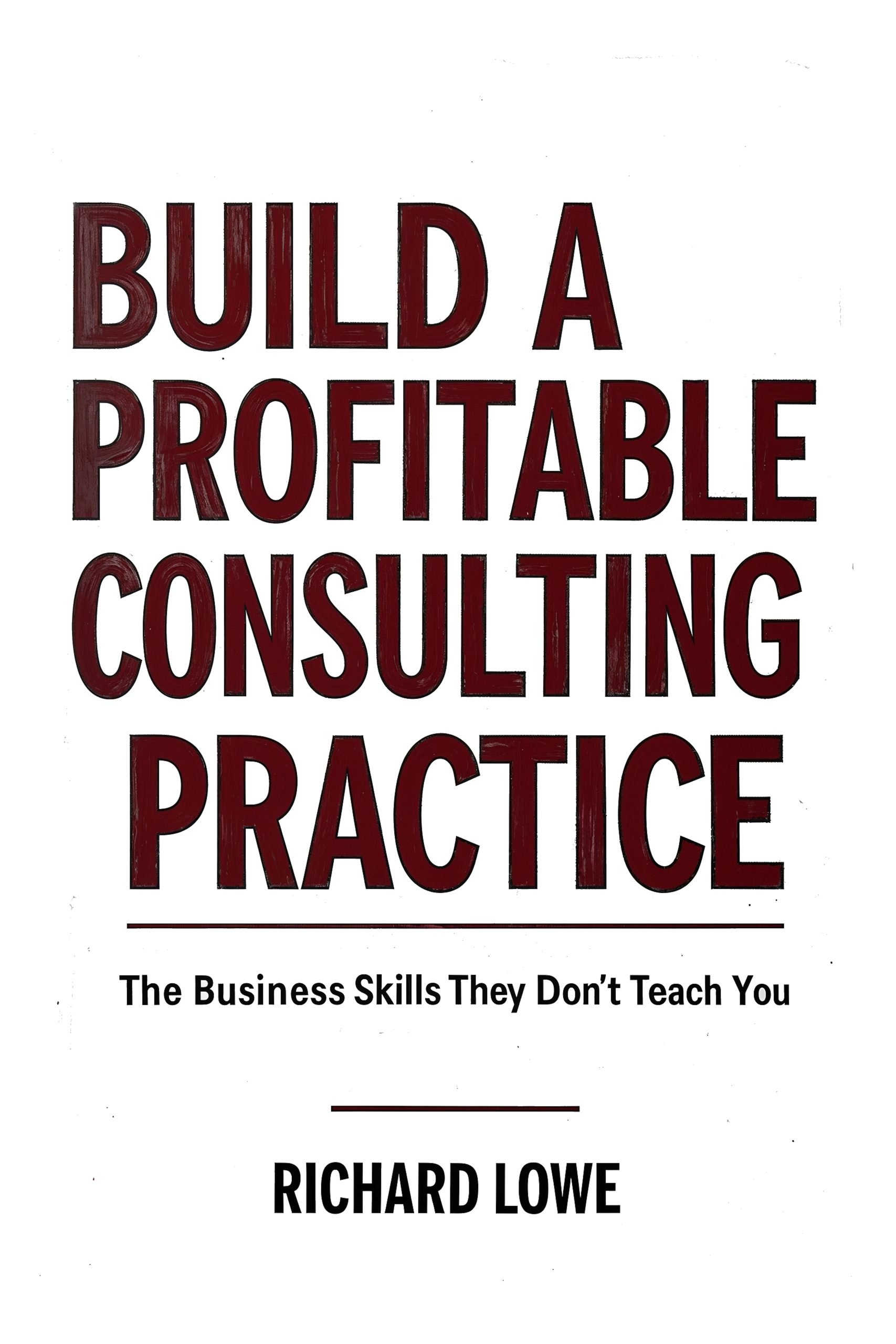
For anyone going independent after a corporate career, I lay out how to build a profitable consulting practice without the common mistakes that destroy most consulting businesses.
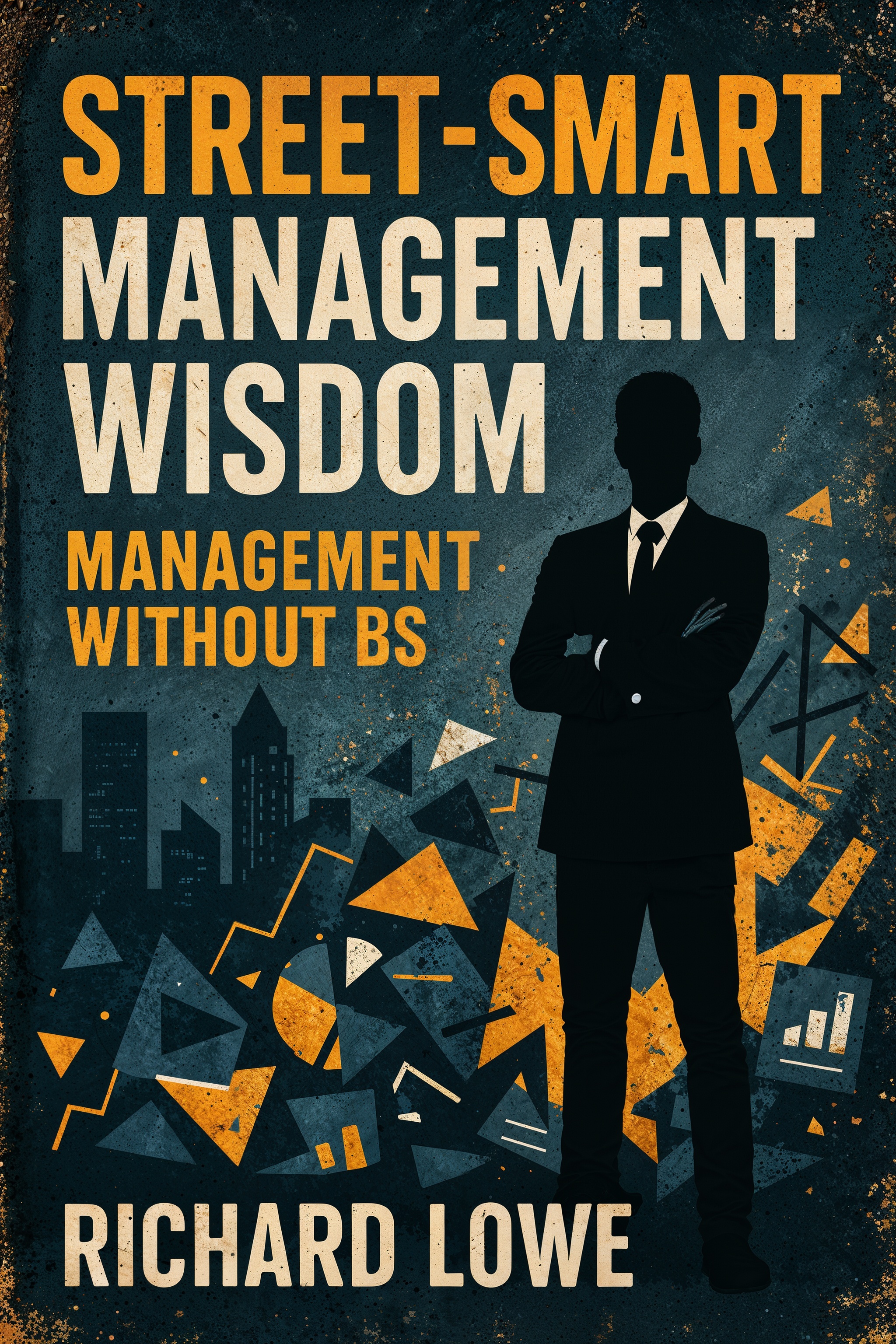
Three accidental managers learn that real leadership comes from surviving organizational chaos, not from following business school theories. I wrote it for leaders who learned on the job.
