
Most people picture a book starting with someone alone at a keyboard, typing for months until a manuscript appears. It’s a nice picture, and for plenty of authors it’s accurate.
Unfortunately, that picture has kept a lot of people with great stories from ever starting. Think of a founder who has built three companies and can’t get through a paragraph of her own email. She has a book in her, and somewhere along the line she was told that books belong to people who write easily.
That apology is never needed. Clients apologize to me all the time for their writing, or tell me flat out they can’t write, and I tell every one of them that people hire a ghostwriter for that reason.
Picture a building with a ramp at the front entrance. The ramp changes how you get in, and everything past the door stays exactly as it was, owner included. A ghostwriter is the ramp to your book. You arrive by talking instead of typing, and everything inside is still yours.
Can I write a book if I have dyslexia?
Yes. Your book gets written when your stories and ideas reach the page, and a ghostwriter carries them there from your spoken words. The spelling, the reading speed and the fight with a blank screen become the ghostwriter’s problem.
Plenty of people with dyslexia have spent decades being graded on the wrong thing. A red pen on a spelling test measured spelling, and that’s all it measured. It never measured whether you could run a crew or tell a story that makes a room go quiet.
A ghostwritten book starts with interviews. I record every call, on Zoom, by phone, or on a tablet when we meet in person, and I tell clients that up front and in the contract. After each session, I make a summary with AI’s help and send it to the client. For a client who finds reading hard, the phone in their pocket will read that summary aloud.
Your voice on the page comes from how you talk, and dyslexia never touched that. The phrase you use for a bad day and the words you reach for when you’re angry both turn up on a recording, and a ghostwriter’s job is to keep them intact when the story moves onto paper.
If you’d rather write some of it yourself, dyslexia doesn’t rule that out either. Dictation software turns speech into text, and a book coach can help you shape what you dictate into chapters.
Will a ghostwriter work for someone with ADHD?
Yes. The ghostwriter takes over the hours of solitary focus at a keyboard, and you talk in sessions of an hour or two. Why fight your own attention for months over a document when you can tell the story out loud, one session at a time?
Your voice on the page comes from how you talk, and dyslexia never touched that.
Conversation suits a lot of people who can’t sit still with a document. A good interviewer follows a promising tangent and steers back from a dead end, and the tangents turn up material. I ask about the same event several ways on purpose, because people misremember, merge stories and inflate or shrink what mattered. A client who jumps between topics gives me several angles on the same story without meaning to.
Sessions don’t need to be tidy. Bring whatever’s on your mind that day, even a story from the wrong decade, and let the ghostwriter sort it into the outline afterward. Nobody grades you on staying on topic. A story that surfaces out of order is still a story, and the recording keeps it safe until it finds its chapter.
The structure lives outside your head. The ghostwriter builds the outline, tracks which stories are in which chapter, and knows which gaps still need filling. Your job is to show up to the sessions and read, or listen to, the chapters when they arrive. My article on the time a ghostwritten book demands of you lays out what that commitment looks like across a project.
Recordings take pressure off your memory between sessions. You don’t have to remember what you told me last Tuesday or keep notes. The summary tells both of us where we left off, and the next call starts from there.
Say something if you’re going to disappear for a while. My contract puts a project on hold after 30 days without contact and treats it as abandoned at 60, and some clients have negotiated longer. A two-line email saying “I’m buried until next month” keeps the book alive.
Can I still get my book written if I can’t type or see well?
Yes. A book built from conversation needs your voice and your memory, and neither one depends on your eyes or your hands.
Memoir clients in their nineties are fairly common in my practice. Plenty of my clients dislike Zoom, and they work by phone or in person. Local clients meet me in a reserved room at the Safety Harbor library, and I record the session on my tablet. My article on writing a memoir as a senior covers the practical side for older authors.
Handwritten material works too. More than one book I’ve written started with pages in someone’s own hand, and a ghostwriter can work from a shoebox of notes, letters and journals as well as from a keyboard draft. If the hand that wrote them can’t write anymore, the pages still carry the voice.
A caregiver or family member can sit in on the calls to help with the technology, and a good ghostwriter welcomes it.
For low vision, ask for chapters as audio or in large type, and let your screen reader or your phone’s zoom handle the summaries. Anything a ghostwriter sends you can come in the format your eyes or ears manage best, and a writer who can’t do that is a writer to skip.
Tell your ghostwriter what you need before the first session. Larger type on anything printed, calls at the time of day you’re sharpest, shorter sessions, a family member on the line to help with the technology: none of it is a big ask, and a good ghostwriter will say yes to all of it.
How do I review my manuscript if reading is hard for me?
By ear, by conversation, or with help. You don’t have to read a word of it silently on a screen to approve it.
Text-to-speech on your phone or computer will read a chapter aloud in whatever voice and speed you like. Some authors ask a spouse or a grown child to read chapters to them. A family reader knows the stories too and catches mistakes you’d miss. A ghostwriter can walk you through a chapter on a call, scene by scene, and take your corrections as you go.
Your ear is a good editor. You’ll hear a sentence that doesn’t sound like you faster than you’d spot it on a page. Every chapter has to pass one test, whether it sounds like you, and hearing it read aloud answers that question well. One client read each chapter as I delivered it and told me I’d caught his real voice.
Corrections work the same way. Say what’s wrong out loud, into a voice memo or on a call, and let the ghostwriter make the change. Nobody needs your notes in the margin. A client who says his father would never have called it that has given me a better edit than a page of red ink.
Is it still my book if I can’t write it myself?
Yes, completely. Your stories and your voice make up the book, and you approve every chapter before anyone else sees it. The ghostwriter supplies the sentences, and you hired that part out on purpose.
Approval stays with you from start to finish. Nothing goes to an editor or a printer until you’ve heard or read it and said yes, and a change you ask for in chapter nine gets made in chapter nine.
Who decided a book only counts if the author typed it? Nobody asks whether a building belongs to the owner who came in by the ramp. Ghostwritten books have carried the names of presidents and athletes for generations, and nobody seriously argues those people didn’t have something to say. Whether you tell anyone you used a ghostwriter is entirely your call, and your disability is nobody’s business unless you choose to make it part of the story. My article on how credit and authorship work in ghostwriting goes through the options.
Some authors decide to make it part of the story. A memoir about building a career while every form, contract and report was a struggle is a book plenty of readers need. The decision belongs to you, and a ghostwriter should help you make it either way.
Should I use dictation software or AI instead of a ghostwriter?
If the budget isn’t there, yes, and it can work. AI is a tool, and people who use it as a tool do fine. People who hand AI the entire book bring me manuscripts that came out badly, and more of those arrive all the time.
Dictation gets your words onto a screen and solves the typing. It doesn’t solve structure, and it doesn’t solve the months of rereading and reorganizing that turn a pile of transcripts into a book. For someone with dyslexia, that rereading is the struggle, and dictation leaves it untouched. A book coach can help you through it, and some authors split the work, with a ghostwriter on the hardest chapters and a coach on the rest.
I’m angry at the course sellers and software companies that market a book in a weekend, no writing required, to exactly the people who’ve struggled with writing all their lives. That promise is bullshit. They cash the payment and leave the customer with forty thousand words of disorganized transcript and one more reason to believe they can’t do this, when the product was the thing that failed them.
What if a disability means I tire quickly in interviews?
Shorter sessions, more of them, and a schedule built around your good hours. A ghostwriter should adapt to you, and a professional will.
Fatigue and chronic pain change how long anyone can talk productively. Two forty-five-minute calls give better material than one exhausted two-hour marathon. If a session has to stop halfway, it stops, and the next one picks up the thread. Hard material gets the same patience: I let clients approach the most painful parts of their stories over several sessions.
Medical appointments, medication schedules and bad days all belong on the calendar the ghostwriter works from. Tell them which hours are yours, and let the interviews fit around those hours. A book that takes a few extra weeks because the sessions ran short still comes out in your voice, and nobody reading it will ever know how many calls it took.
A ghostwriter who insists on video for every call, or on a fixed weekly slot that ignores your health, is the wrong ghostwriter for you, and my article on wanting to meet a ghostwriter in person covers what to do when the format doesn’t fit.
If your health makes the timeline urgent, say so at the start, so the interviews cover the stories that matter most to you first.
My take
Dyslexia, ADHD or a bad hand shouldn’t keep your book from existing. You talk, the ghostwriter writes, and reviews can happen by ear. Insist on sessions that fit your health. Two short calls beat one exhausted marathon. Walk away from a writer who demands video every time or a fixed weekly slot that ignores your bad days. Nobody reading the book will know how many calls it took, and you owe nobody an explanation.
How do I start a book if writing is hard for me?
Stop waiting for writing to get easier, because it won’t, and you don’t need it to. Write down the three stories you’d most want in the book, or say them into your phone, and call a ghostwriter this month. Tell them on the first call what makes writing hard for you and what you need. Ask how they’d handle chapter reviews for someone who reads slowly, and listen for a ready answer. Would you trust your life story to a writer who has to stop and consider that one?
If you want someone to write it for you, my ghostwriting services build the whole book from conversation, and the Book Discovery Intensive is a shorter first step before you commit. If you want help writing it yourself, my book coaching does that. The Ghostwriting Hub has the rest.
It makes me furious that a school system’s red pen convinced so many capable people their stories didn’t count. They count. The front steps were never the only way into the building, and the day you come up the ramp, you’ll find your own book waiting inside with your name on the door.
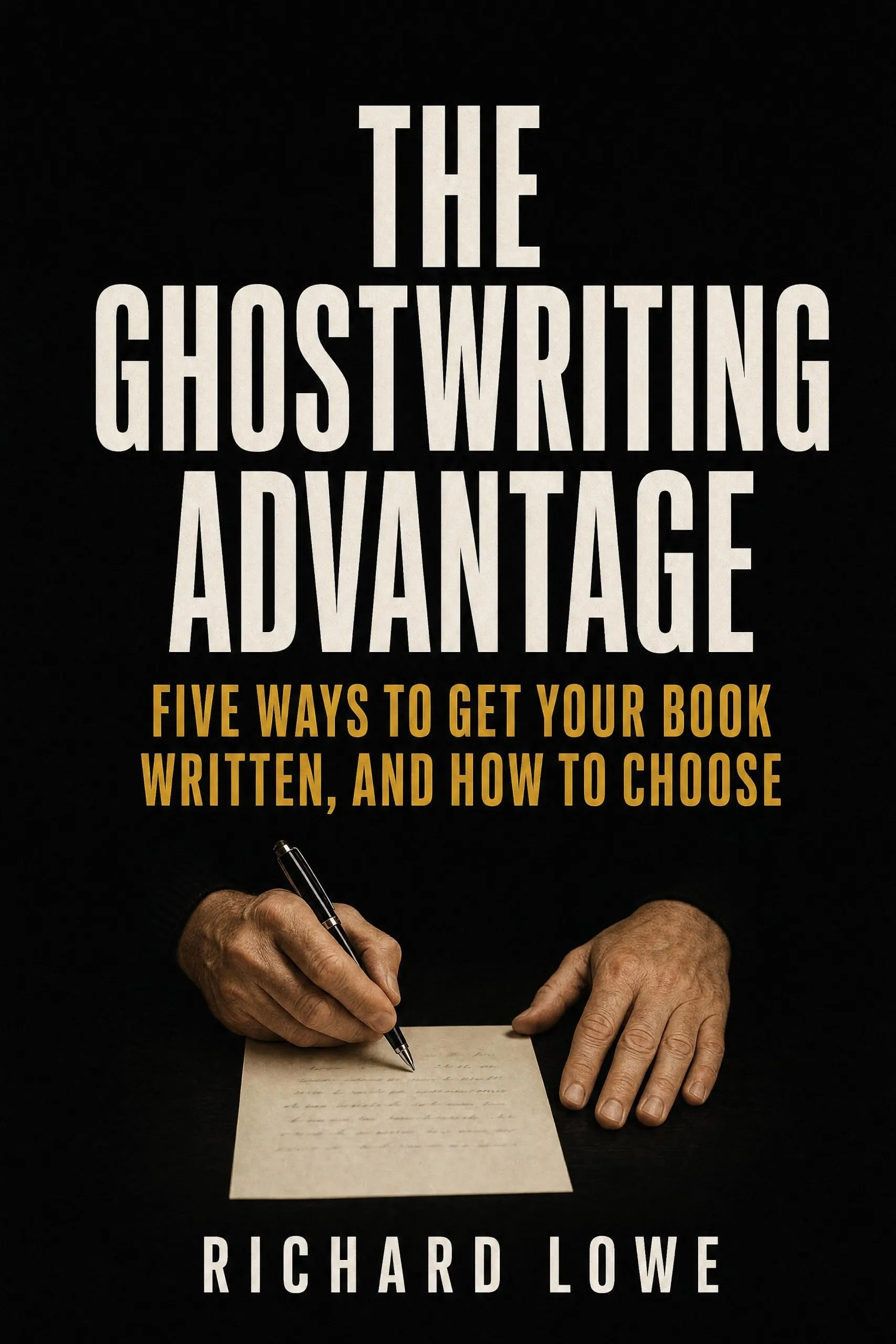
Dyslexia and ADHD can make the typing hard, and your ideas still belong in a book. The Ghostwriting Advantage explains how to get your book written for you while you do the talking and the writer does the typing.
