
Writing groups rarely admit it, but sometimes the people you’re afraid of do exactly what you feared. They read it, they hate it, and they make you pay for it. I know because it happened to me, around 1987. And I’m still telling you to write the book.
An admin in a memoir writers’ group posted this week about the fear of being judged. Years ago, she wrote, she could write freely as her true self. Now judgment falls faster, so she catches herself curling her words into a shape society will approve of. And every time she does it, she loses a little more of her voice.
She quoted Marion Roach: “The bridge from here to there, from not having a writing voice to having one, is crossed when you confront your fear of being heard for who you really are.”
The replies were honest, and more thoughtful than most of what shows up in writing groups. One writer said she keeps her circle small because of that same fear, and knows a memoir writer can’t afford that luxury. Another said she holds back on social media but writes what she wants in her books. A retired man said he doesn’t care what anybody thinks, then admitted he probably did when he was younger and had more to lose.
I’ve had that fear too.
The phone call that started my first autobiography
My mom and I had been estranged for years. We were on the phone one day, and she said something that stuck. “We don’t even know you, son. We have no idea who you are.”
So I thought, okay. I can fix that. I sat down at one of the old classic Macs and wrote my autobiography. It took me a year. When I was done it ran 2,000 pages, every one of them typed by hand. I put in pictures. I put in drawings, including little sketches in the margins. I put in color photographs. In 1987 or 1988 that was not easy. Color was difficult and expensive then in a way people who grew up with inkjet printers can’t imagine.
Then I printed twelve copies and had every one of them bound in hardcover. The binding alone for twelve volumes cost over a thousand dollars. I shipped them out to twelve relatives.
That was my answer to “we don’t know who you are.” Here I am. All of me, two thousand pages of it.
What happened when my family read my autobiography?
My dad hated it.
He called all the relatives and told them to burn it. He told me I was no longer part of the family. He told me I was going to hell, right into Lucifer’s mouth. I was the worst son in the world.
Most of the relatives ignored him about the burning. But from that point on, none of them talked to me again. Except to ask for something. Even my dad, the man who had disowned me, would get in touch when he wanted something. To this day I don’t know what set him off. He never said. I’ve gone over it more times than I can count, and I still couldn’t tell you which page did it.
What I found interesting was what they didn’t object to. The book described the abuse my parents did. Neither of them ever complained about those parts. Not one word.
My sister’s criticism was more specific. She thought I got a little too far into the romantic side of my life in some of it. It wasn’t that bad. It was mild stuff. She did think the book was pretty cool. Out of twelve relatives, she liked it. Nobody else did.
It took me a few years to get over that.
I still have my copy. Two thousand pages, the margin drawings, the color photos, the hardcover binding. It sits on my shelf, and it’s still the record of who I was at that age.
I mailed my 2,000-page autobiography to twelve relatives. My father told them all to burn it. Decades later I wrote my story again. – Richard LoweShare on X
Is the fear of being judged for a memoir justified?
Sometimes, yes. I won’t tell you it isn’t.
Most writing advice goes soft right there. It tells you the fear is all in your head. Share your truth, it says, and people will understand. Some will. Some won’t, and a few will be vicious about it. My father answered two thousand pages of his son’s life by trying to have it burned.
But look at what the fear was protecting me from. The family was already gone. My mom said so herself on the phone. They didn’t know me before the book, and they made it clear afterward they didn’t want to. The book didn’t break anything that wasn’t already broken. It just made the break visible. That’s true for more memoir writers than will admit it. The relationships you’re afraid of losing by telling the truth are often relationships that only survive because you don’t.
Why do people judge memoir writers so harshly?
Because a memoir doesn’t stay on the page. Everybody in it reads it as a statement about them.
The relationships you’re afraid of losing by telling the truth are often relationships that only survive because you don’t.
A novel can be about anybody. A memoir is about you, and it’s also about your parents, your siblings, your ex and the people you worked with. When they read it, they aren’t reading a story. They’re reading your version of their lives, and very few people enjoy that. Some of them will see things they’d rather nobody knew. Some will remember it differently. And some will be angry that you said anything at all.
My father never told me which page set him off. I’ve come to think it may not have been any one page. It wasn’t the pages about the abuse. It wasn’t the pages about the abuse. It may have been the book itself. A son who writes two thousand pages about his own life is saying, on every one of those pages, that his version counts. Some families can’t stand that.
Strangers judge too, and the group admin was right that it comes faster now. Post one honest paragraph online and somebody will have an opinion about your character before lunch. That kind of judgment is loud, but it’s shallow. The judgment that hurts comes from people who knew you before the book, and it’s the one worth preparing for.
What happens to a memoir when you write it for approval?
It dies. The group admin said the same thing in her own words, and she’s right.
A memoir written to be approved of is a press release about your life. It leaves out the parts that would upset your father, your church, your neighbors, the other parents at school, your ex, your boss. By the time you’ve cut everything somebody might object to, what’s left is a résumé with feelings. Who wants to read that? Worse, who would you even be writing it for?
I’ve ghostwritten memoirs for years, and the drafts that don’t work share one problem. The writer is standing in front of the story, guarding it. Every hard chapter gets a softening paragraph. Every person who hurt them gets an excuse written in by the person they hurt. Readers feel that immediately.
Can you blame them? They can tell when a writer is performing for an audience of relatives instead of telling the truth. I’ve written about the difference in emotional truth in memoir writing. The reader will forgive almost anything except being lied to.
How do you write a memoir without worrying what your family will think?
Separate writing from publishing. They’re two different decisions, and the fear lives almost entirely in the second one.
Write the first draft as if nobody will ever read it, because at that stage nobody will. Put everything in. The ugly scenes, the things you did wrong, the things done to you, the parts your sister would say go a little too far. You can take things out later. You can’t take out what you never had the nerve to put in.
When the draft is done, then decide. Who reads it, when, and in what form. Some people publish. Some print one copy for their children. Some give it to a therapist, a spouse or nobody at all. Every one of those is a legitimate choice, and none of them requires you to write a smaller book.
If you do publish and real people are in it, get the legal side covered. Truth doesn’t protect you from everything, and I’ve laid out the basics in writing about family without a lawsuit. Keep an eye on your motive too. A book that exists to punish somebody is a different book, and the revenge memoir is usually a mistake.
How much romantic or personal detail belongs in a memoir?
As much as the story needs, and no more.
My sister’s one complaint was about the romantic material. She thought I’d gone a little too far into that side of my life. By anybody’s standard it was mild. But it was enough to bother the one relative who liked the book. That tells you something. Romantic material hits family harder than strangers. Family can picture it.
Here’s a simple test. Does this scene change how the reader understands the story? If a romantic or personal moment explains a marriage, a breakup, a decision or a wound, it belongs. Write it plainly. If it’s only there because it happened, it probably doesn’t. That isn’t about protecting anybody’s feelings. A scene that doesn’t move the story is dead weight, romantic or not.
Be more careful with other people’s private details than with your own. You can choose to expose yourself. You can’t make that choice for an ex or a friend. That’s where the legal and ethical trouble starts.
What should you do if your family turns against your memoir?
Decide in advance how much of a blow-up you can take. Nobody else can answer that for you.
I didn’t ask it in 1987. I wrote the book, spent the money, mailed the copies and assumed I’d be understood. I wasn’t. Nobody warned me to get ready for the phone calls.
If your family objects, you’re an adult and the story is yours to tell. Some families come around. Some never do. Some, like mine, cut you off and then call when they need a favor. That tells you everything you needed to know about the relationship. I’ve written a whole piece on what to do when your family is against your memoir, and another on writing a memoir about family estrangement.
Don’t let their reaction rewrite your story after the fact. My father’s opinion of those two thousand pages didn’t change a single thing that was in them.
Sometimes the fear waits until the book is out. A first-time memoirist in a writing group posted that her book had gone live on Amazon a few days earlier, after three years of work. She had a small launch coming up in the pub where her story began, and she was suddenly terrified, almost paralyzed. Strangers didn’t scare her. The people she knew did.
Other memoir writers told her it’s common. One felt the same surreal panic at her own launch and is glad now that she recorded it. The panic passes, so go to the launch.
My take
Write the first draft for yourself and nobody else. When I mailed my autobiography to twelve relatives, my father told every one of them to burn it. It took me years to get over that, and his opinion didn’t change a word on those pages. Decide who reads it later. Expect some of the reaction you fear, and don’t sand yourself down to dodge it. If the panic hits at your launch, go anyway.
Would I write my autobiography again?
I did, in a way.
Decades later I went back to my own story and wrote My Life in Crazytown, the book about the nineteen years I spent in that house. Nothing in it is softened for comfort. By then I’d already been through the worst reaction a family can give, and I’d come out the other side still writing.
The fear leaves one part out. You survive it. The judgment comes, it hurts, it takes a while, and then you’re still the person who wrote the book. The people who judged you are still the people who judged you.
If you’re sitting on a memoir because you’re afraid of who’s going to read it, write it anyway, for yourself first, and make the publishing decision later with clear eyes. The memoir hub covers every stage, and if you’d like help getting the story onto the page, here’s how my memoir process works. My mom said nobody in the family knew who I was. Twelve hardcover volumes later, at least the record exists, and my copy is still on the shelf.
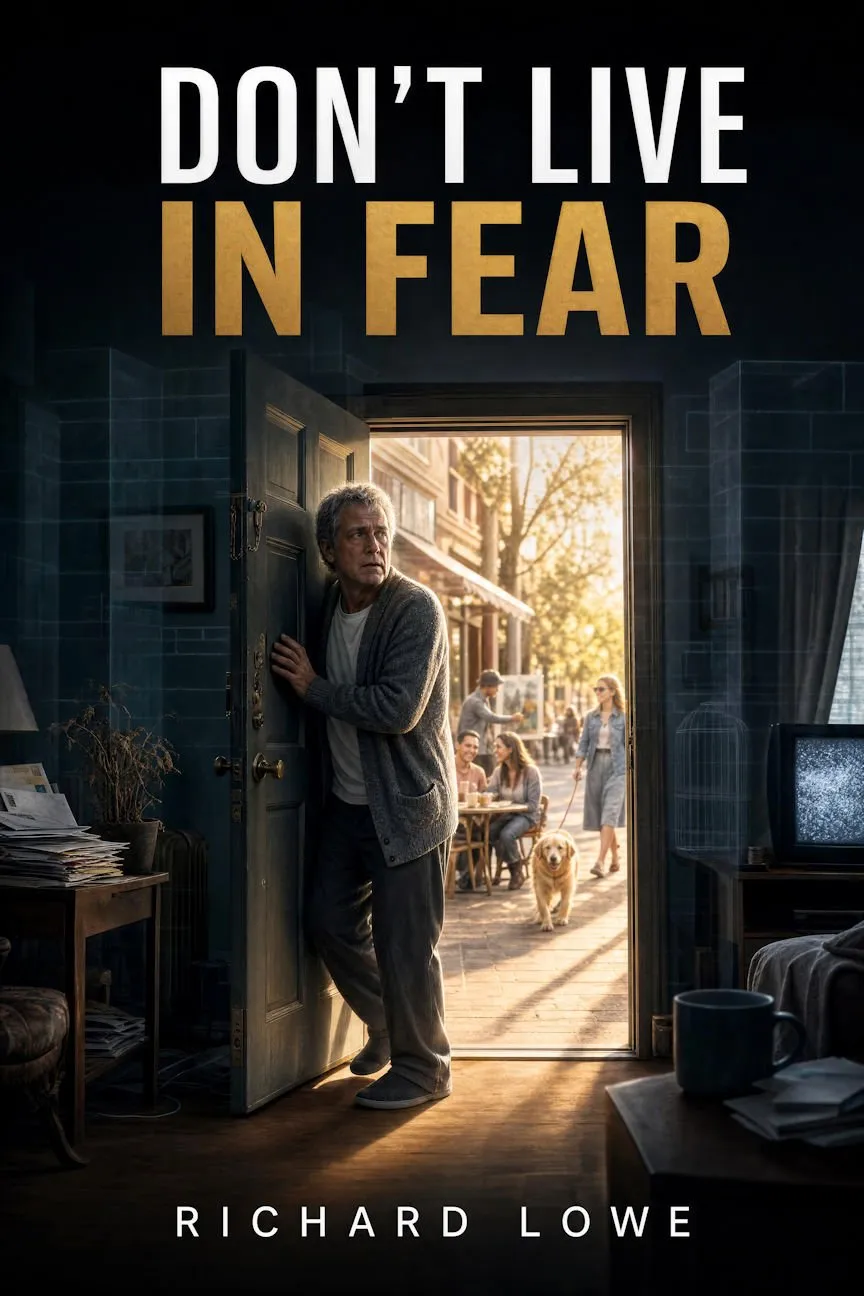
Don’t Live in Fear is my book about the walls fear builds and how to get past them. I lost a job I wanted to one of those walls.
