
A book cover is wrapping paper. It gets the reader to pick up the package. Lately a lot of people are ready to throw away the gift because they don’t like where the paper came from.
A self-publishing author in a big KDP group asked a fair question. If someone writes a book completely by themselves, with their own story, characters and writing, and uses AI only for the cover, is it an AI book? Would the AI artwork make readers assume the writing was AI too?
The first reply I read coined a term for it. Yall can’t stop asking about AI, the commenter said, so what do you think the people with AI Derangement Syndrome are going to say? Do what you need to do. You don’t need their validation, and they won’t give it.
The rest of the thread proved the point. A reply called the commenter a cultist with an imaginary condition. Another said an AI cover meant the inside was stolen content. Someone brought up drinking water, someone else brought up Facebook’s data centers, and a graphic designer said AI had cost them a job.
A few people answered the question. The rest were arguing about the paper, and some of them were happy to call a stranger a thief to win.
What is AI Derangement Syndrome?
Four steps to a pile-on. The step that would stop it is the one nobody takes.
It’s the point where AI stops being one fact about a book and becomes the only fact. The story, the research, the years of work and the quality of the writing all disappear. All that’s left is whether a machine touched any part of it.
Disliking AI art isn’t the syndrome. Neither is refusing to buy a book with an AI cover. Those are preferences.
Readers are entitled to them, the same as they’re entitled to skip a book because they hate the font.
The syndrome is the leap. One commenter said they would assume the inside was stolen content because the author used AI for the cover. Someone answered with two words: You would “assume.” Exactly. An author who wrote every word gets accused of theft by a stranger who never read a page, on the strength of a picture.
Put yourself in that chair. You spend a year writing a book, and somebody who’s never read a word of it tells a group of thousands that you stole it. Would you put up with that from a coworker? From a neighbor? People do it in writing groups every day and call it principle.
An author who wrote every word gets accused of theft by a stranger who never read a page, on the strength of a picture.
And the syndrome is the rage. These threads don’t stay on topic. They pull in the environment, the economy, billionaires, artists, the future of human emotion, and anyone who disagrees is a thief, a bad person or a cultist. I’ve written about these pile-ons before, including a Renaissance Faire booth dogpiled over AI art and an author called a thief for asking how to publish a bedtime story. The pattern doesn’t change.
Grown adults who say they care about creativity talk to strangers this way over a picture on a book. It’s mean, and it never sold one illustration.
Watch: Artists are losing the war against AI, Grayson's Graphics
Does an AI cover make it an AI book?
No. The book is the text. A writer who wrote every word wrote the book.
One reader in another writers’ group admitted something most critics won’t. An AI cover makes him wonder where the writer stopped: the plot, the sentences, the grammar. He said the suspicion isn’t fair to the writer, and he can’t shake it anyway. I respect the honesty. A hunch you admit is unfair is still a hunch, and a book deserves to be judged on its pages.
Several commenters made the distinction well. One commenter’s advice was to learn the difference between assistive and generative AI. Another said a book written by a person with an AI cover is semi-homemade, like a good recipe that uses one store-bought ingredient. A third pointed out that most covers are made with software of some kind, that Canva has AI features built in. Plenty of professional cover artists use AI tools without telling anyone.
Another commenter suggested KDP should separate AI text from AI graphics, since most readers are fine with help on a cover and won’t buy a book with AI text. Amazon’s disclosure question already asks about AI-generated text and images, though shoppers never see the answers. (See why human-written labels won’t settle it) I covered what you owe readers in AI disclosure on your book.
Ask a group where the line is and you’ll get a line for every member. In another writers’ group this week, an author asked whether using AI for a promotional flyer was any different from using it to write a book. The answers landed right where you’d expect. AI images were understandable on a tight budget, said one writer, but AI writing was not OK. Another said hire a human, and if you can’t afford one, learn to do it yourself.
Notice where people draw it. The line almost always sits at the edge of their own craft. Writers forgive the AI flyer and condemn the AI paragraph; designers do the reverse. My line doesn’t move with the tool. Is the work good, and is the person honest about how it was made? A flyer that does its job is a good flyer, and a book that moves readers is a good book.
Do readers skip books with AI covers?
Some do. Several readers in the thread said they scroll past anything that looks AI-made. One said there’s no way to know where the author drew the line, and there’s no time to investigate every cover. Another said AI covers in a genre all look alike, with the same oranges and blues, and make a book harder to stand out.
That’s a market fact.
Weigh it. I wrote about it in why book ads get clicks but no sales.
Look at who was answering, though. The question went to a group of authors, and a lot of authors are against AI in general. One commenter said exactly that: this forum isn’t the place to ask if you want a real answer, because the buying public is more mixed. Another doubted the average reader puts any thought at all into whether a cover is AI. A third couldn’t tell an AI cover from any other unless it had too many fingers.
The most useful evidence came from an author who wrote every word of a book over several years, paid an artist for a cover that printed badly, and ended up making one in Canva. The author sold 20 copies at work, and every buyer asked for a signature. Avid readers, all of them, and not one mentioned AI. The writers group liked the cover too, and one member said he’d use AI on his next book. Twenty sales is a small sample. It’s twenty more real readers than the ones yelling in the thread.
And one reader said what I believe: a cover catches the eye, and the blurb decides the sale.
Ads are where this gets measured instead of argued. In another thread in the same group, an author asked whether to use AI images in Meta ads, and the answers split along the usual line. Plenty said they’d never touch AI and would skip any ad that used it.
The authors who had tested it said something different. One six-figure author said generated images cut his cost per click and cost per sale by about 20 percent across science fiction, fantasy, LitRPG, thrillers and romance, and that most high-earning authors he knows use them for exactly that reason.
Others reported the same thing in smaller numbers: more clicks, no backlash worth counting, a few angry comments from people who were never going to buy. One noticed that Meta itself now generates AI variations of uploaded ad images, and hers outperformed the ones she’d made by hand. For anyone worried about training data, Adobe built Firefly on images it licensed, so that one tool sidesteps the argument.
Whatever you decide, test it. Clicks and sales are the readers voting, and they’re quieter than the comment section.
A book cover is wrapping paper. AI Derangement Syndrome is throwing away the gift because you don’t like where the paper came from. – Richard LoweShare on X
Why are artists and authors so angry about AI book covers?
Some of the anger comes from real loss, and it deserves a straight answer. A graphic designer in the thread said they lost a job and have been looking for a new one for more than a year, because the company would rather get free art than hire a person.
That’s a livelihood gone, and nobody should wave it away.
Other commenters argued that an author who wants to be paid for writing should pay for art. Nobody is entitled to a cover they can’t afford, they said. If you can’t pay an illustrator, draw stick figures or use a plain design. One commenter said seeing an AI cover means they can’t trust the writer as an artist.
Fine. People are entitled to make that argument. When someone tells a hobbyist she has no business publishing unless she can afford two thousand dollars of art, that goes a long way past it. That’s gatekeeping, and nobody in a Facebook group gets to decide who’s allowed to be a writer.
The other side talked about money. A commenter said a custom cover illustration runs two to three thousand, editing about the same, and then readers expect the ebook for 99 cents. Another said nobody can afford $500 for an illustrator. Someone suggested premade covers at $150 to $200, and someone else answered that plenty of people writing as a hobby don’t have that to spare. One author said letting a talented nephew draw the cover wouldn’t pay a professional either, and nobody would call that robbing an artist.
I covered the deeper reasons writers react this way in why writers are so angry about AI. The anger is understandable. Calling an author a thief over the cover, without reading a word of the book, is where it turns into a syndrome.
How I make my book covers
I make my covers with Leonardo AI and put them together in PaintShop Pro. Nobody has said a word about my covers, and nobody has said a word about the inside of my books.
Not one reader.
I don’t care whether other authors use AI either. I care whether the material is good. Is the book a good book? If they used AI, they used AI. Who gives a shit?
I mean that.
A reader who opens a book and finds a story that grips them, characters they believe in and sentences that work got what they paid for. A reader who opens a book with a hand-painted cover and finds a mess got robbed, and the artist’s brushwork won’t give the money back. Read the sample. The book will tell you what it is.
What should an author do about an AI cover?
Decide who your readers are and make the cover for them. If you write in a genre where readers are loudly against AI, a premade cover, a photograph you own or a clean typographic design in Canva keeps you out of the fight. One commenter said a basic Canva template with text boxes and no AI features is a perfectly good cover.
If you use AI, make it good. A commenter put it bluntly: if you can tell it’s AI, you’re doing something wrong. Fix the hands, fix the eyes, and put real work into the typography and layout. I wrote about what makes a cover work in why book covers matter.
I don’t do my own graphics. Most of that work goes to a freelancer. My covers are the exception, and I make those with Leonardo, a high-end AI image tool. It has a cheap preview mode that lets me test a look before I render the final cover. The final cover comes out so sharp you really can’t tell it’s AI.
One commenter releases the AI cover as an alternate cover edition alongside human-made art. It’s an option for an author who wants to reach both audiences.
And don’t ask a Facebook group of authors to bless your choice. One commenter said you already know what the majority is going to say, so why stir the pot? They won’t give you their approval, and you don’t need it.
It’s a tool. Use it or don’t. The people calling you an idiot for picking it up are telling you a lot about themselves and nothing about your book.
My take
Judge the book, and leave the cover out of it. I make my covers with an AI image tool and finish them in PaintShop Pro, and nobody’s ever said a word about them. If your readers hate AI, use a premade or a clean typographic design and skip the fight. If you use AI, make it good enough that nobody can tell. Anyone who calls a writer a thief over a cover on an unread book tells me a lot about himself and nothing about the book.
Is the book a good book?
That’s the question that matters, and every other one is about the wrapping paper.
The AI and writing hub has more on using AI as an author without losing your voice, and the thread on why writers care if you use AI shows the same argument from the inside. If you’d like help getting a book ready for readers, cover and all, my self-published author service covers it. Write a good book, wrap it in whatever gets it picked up, and let readers open it.
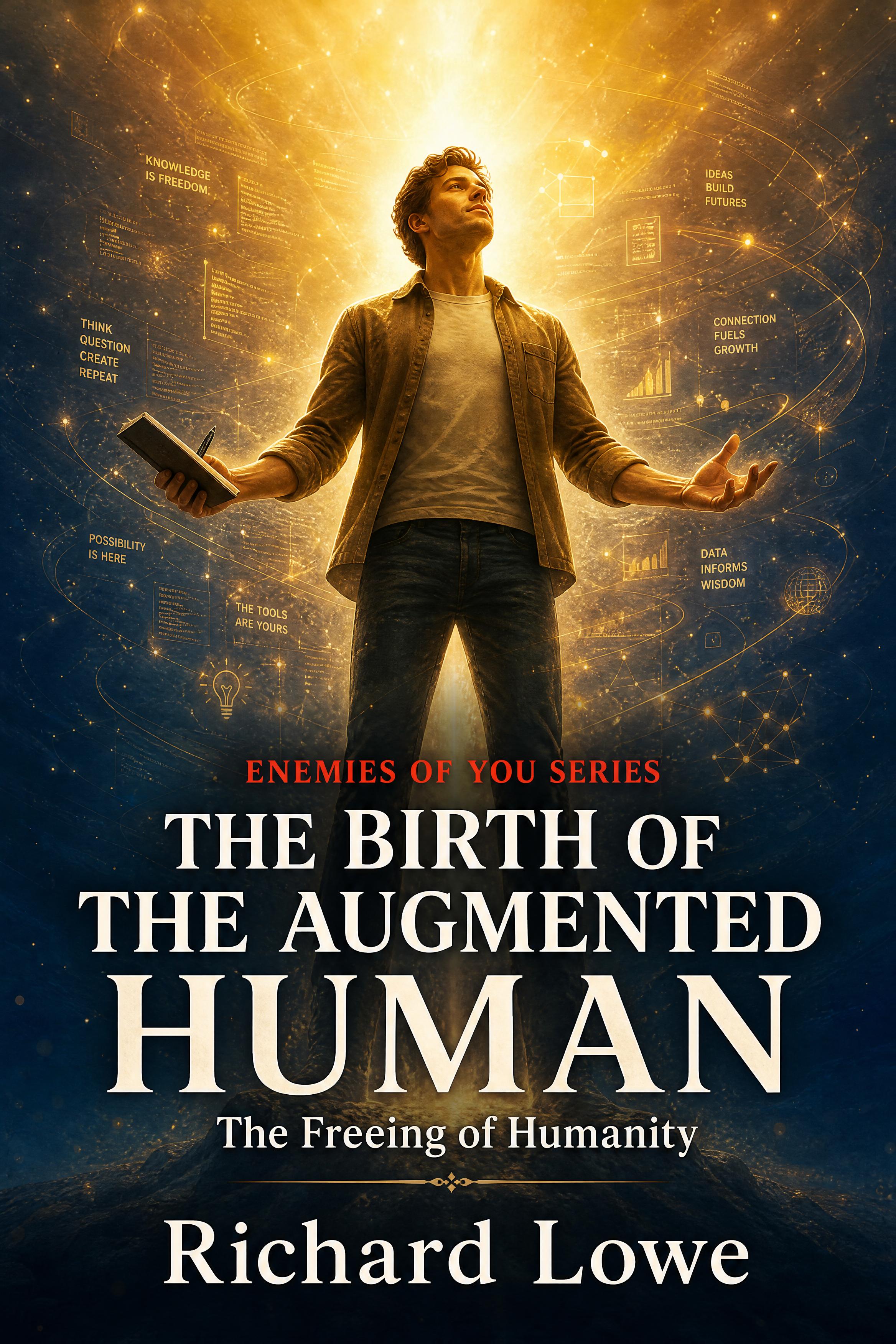
Anyone tired of the shouting over AI can read The Birth of the Augmented Human, my book on what goes right when people use AI properly.
