
Call a writer a thief, and you’d better be able to say what they stole.
Thief is a serious word. It means somebody took something that belonged to somebody else. Yet in writing groups across the internet, people throw it at strangers every single day for typing a prompt into ChatGPT. A woman asks how to publish her bedtime story, mentions that she used AI for the pictures, and a crowd shows up to call her a thief. Nobody in that pile can name the book she copied, because she didn’t copy one.
I use AI every day in my writing. It’s a digital assistant, like a virtual assistant that lives in my computer, and I still do the writing. My position on the tool itself is simple. It’s a tool. Use it or don’t. My position on calling people thieves for using it is less polite.
What does theft mean in copyright law?
Copyright protects expression: the actual words of a book, the actual lines of a drawing. Infringement means copying that expression without permission. (More on why a never-ethical stance on AI abandons working authors) Ideas and facts aren’t protected, and neither is a writing style. A thousand thriller writers can sound a little like Lee Child for that reason, and none of them owes him a dime.
So the question in any theft accusation is plain. Which work got copied, and where’s the copy? If you can’t point to both, all you’ve got is a feeling, and a feeling is a lousy reason to call a stranger a criminal in public.
I’ve written more about what copyright infringement looks like for writers, and the short version holds here. The law cares about copying. It doesn’t care which tool you held when you wrote.
Watch: Is AI Art Theft? Debate, Sharkyevno Talks
Did AI companies steal books to train their models?
Some of them took books they had no right to keep, and a court said so.
The theft argument has real teeth here, and it’s aimed at the companies.
The big case so far is Bartz v. Anthropic. In June 2025, Judge William Alsup ruled that training an AI model on books the company had bought and scanned was fair use. He compared the model to any reader who studies books to become a writer. He also ruled that downloading millions of pirated books from shadow libraries and keeping them in a permanent library was not fair use. Anthropic settled with authors for $1.5 billion, about $3,000 per book, and a federal judge gave the settlement final approval in July 2026.
A few days after the Alsup ruling, Meta won a similar case brought by authors in front of Judge Vince Chhabria. He ruled for Meta on the record in front of him and warned that authors who could prove AI books were flooding the market and eating their sales could win the next one.
The New York Times case against OpenAI and Microsoft is still open. Both sides filed for summary judgment in September 2026, and the U.S. Department of Justice filed a statement arguing that training on copyrighted material should count as fair use. No judge had ruled on it as of late September 2026.
My view hasn’t changed since I wrote about AI copyright for writers. A company that built a product on books it took without asking owes the authors, and I’m glad one of them had to pay. That’s a fight between authors and billion-dollar companies, and it belongs in a courtroom.
Call a writer a thief, and you’d better be able to say what they stole. – Richard LoweShare on X
Is a writer who uses AI a thief?
No, and the lawsuits show it.
The authors in Bartz sued Anthropic. In the Meta case, authors sued Meta. The Times sued OpenAI and Microsoft. Nobody sued the novelist who used Claude to outline chapter six, because the novelist didn’t download a pirated library or build a model out of anybody’s books.
I make my book covers with Leonardo, an AI image tool, and finish them in PaintShop Pro. Not one reader has ever said a word about them. Nobody has ever written to tell me which painting I stole, because I didn’t steal one.
When you ask an AI for a draft, it generates new text. It doesn’t look up a page of someone’s novel and hand it to you. If a court ever does find that some company broke the law building its model, that company pays. The person who typed a prompt pays nothing, because the person who typed a prompt didn’t take anything.
The people shouting “thief” know this, or they’d know it if they checked. What they’re doing is taking anger that belongs to a corporation and dumping it on the nearest human being with a keyboard. That human being is a hobbyist, a first-time author or somebody’s grandmother trying to make a picture book for her grandkids. She never scraped a single book, and she sure as hell didn’t train a model.
I call that reflex AI Derangement Syndrome: the moment AI stops being one fact about a book and becomes the only fact. It turns ordinary people into prosecutors who skip the evidence and go straight to the sentence.
Is everything AI writes stolen because it was trained on other people’s work?
That’s the argument underneath most of the thief accusations, and it proves too much.
Every writer alive learned by reading other people’s books, and nobody calls their novels stolen for it. Judge Alsup made the same comparison in Bartz. What makes a copy illegal is copying, and a model that writes a new paragraph about your dog hasn’t copied anybody’s paragraph about theirs.
Plenty of authors disagree, and they have a case. The Times argues that training a commercial product on its articles without paying is infringement by itself, whatever the output looks like, and some authors’ lawyers argue the same about books. Courts haven’t settled that across the board. If they rule against the companies, the companies pay.
The writer who used the product still didn’t copy anything.
When does using AI cross into plagiarism or copyright infringement?
It crosses the line when you copy somebody’s work, the same as without AI. The tool doesn’t change the rule, and it doesn’t excuse you from it.
Every writer alive learned by reading other people’s books, and nobody calls their novels stolen for it.
A model can occasionally spit back a recognizable passage from something it was trained on. The Times built part of its case on examples it said showed exactly that. If you ask an AI to reproduce a famous book page by page and then publish the result, you’ve infringed, and blaming the software won’t help you. If you lift a paragraph you know came from someone else and sign your name to it, that’s plagiarism, and it was plagiarism back when people did it with a photocopier.
The fix is ordinary professional practice. Read what the tool gives you. Rewrite it in your own words, and put your own thinking into it. If a passage sounds suspiciously polished or familiar, search it. Disclose AI use where a platform requires it, the way KDP asks when you publish. And keep in mind that raw AI output can’t be copyrighted, so a book that’s mostly unedited machine text leaves you owning very little of it. My AI copyright guide goes through how to document your own authorship.
That’s the same care any honest writer takes with any source.
Why do people call AI writers thieves?
Because they’re scared and angry, and some of that anger is earned. Writers watched companies feed their books into machines without asking. They watched a flood of junk AI books bury real ones on Amazon. I’ve written about why writers are so angry about AI, and plenty of it makes sense to me.
Unfortunately, the anger lands on the wrong people. You can’t punch a trillion-dollar company in a Facebook comment. You can punch the woman who asked an innocent question about her bedtime story, and a crowd did exactly that. She walked away with no answer to her question and a pile of strangers calling her a criminal.
A person who calls a stranger a thief on a hunch is treating a human being like garbage. It’s bullying with a cause attached.
Would any of those commenters say it to her face at a library table? Would they say it if they had to prove it?
What should you say when someone calls you a thief for using AI?
As little as possible. Say what you used the tool for, say you wrote the book, and stop. “I used AI to help with the illustrations, and I wrote every word of the story” is a complete answer. You don’t owe a pile of strangers a defense of the entire AI industry, and you can’t win an argument with someone who decided the verdict before you finished your sentence. Every extra word you type gives them another line to quote back at you.
Then check yourself against the standard that matters. Did you copy anyone’s work? Did you follow the platform’s disclosure rules? Did you read and shape what the tool produced? If you answered yes to the last two and no to the first, you haven’t stolen anything, and you can let them yell.
If you run a group, stop letting members do this. A rule against AI content is your call, and plenty of groups have one. A free pass to call members thieves is something else entirely, and it drives off the people you started the group to help.
My take
Theft means copying someone’s protected work, and a writer who drafts or edits with AI hasn’t copied anybody. The lawsuits are about how AI companies trained their models, and they’re aimed at those companies. When someone calls you a thief, say what the tool did, say you wrote the book, and stop. Check yourself against the standard that counts. Did you copy anyone, follow the disclosure rules, and shape what the tool produced? Group admins who let members throw that word around drive off the people they meant to help.
Who should pay for AI training on authors’ books?
The companies that did it. One of them already has. That’s the right target for the anger, and it’s where the money came from. Authors who want more of it should watch the Times case and the next round of author suits, and tell their representatives what they think.
What they shouldn’t be doing is calling a retired teacher a criminal because she used a chatbot to fix her commas.
If you want to use AI in your writing and keep your own voice, the AI and writing hub covers how. If you’d like help figuring out where AI belongs in your work, my AI services can help. Use the tool or don’t. Either way, save the word thief for people who’ve earned it.
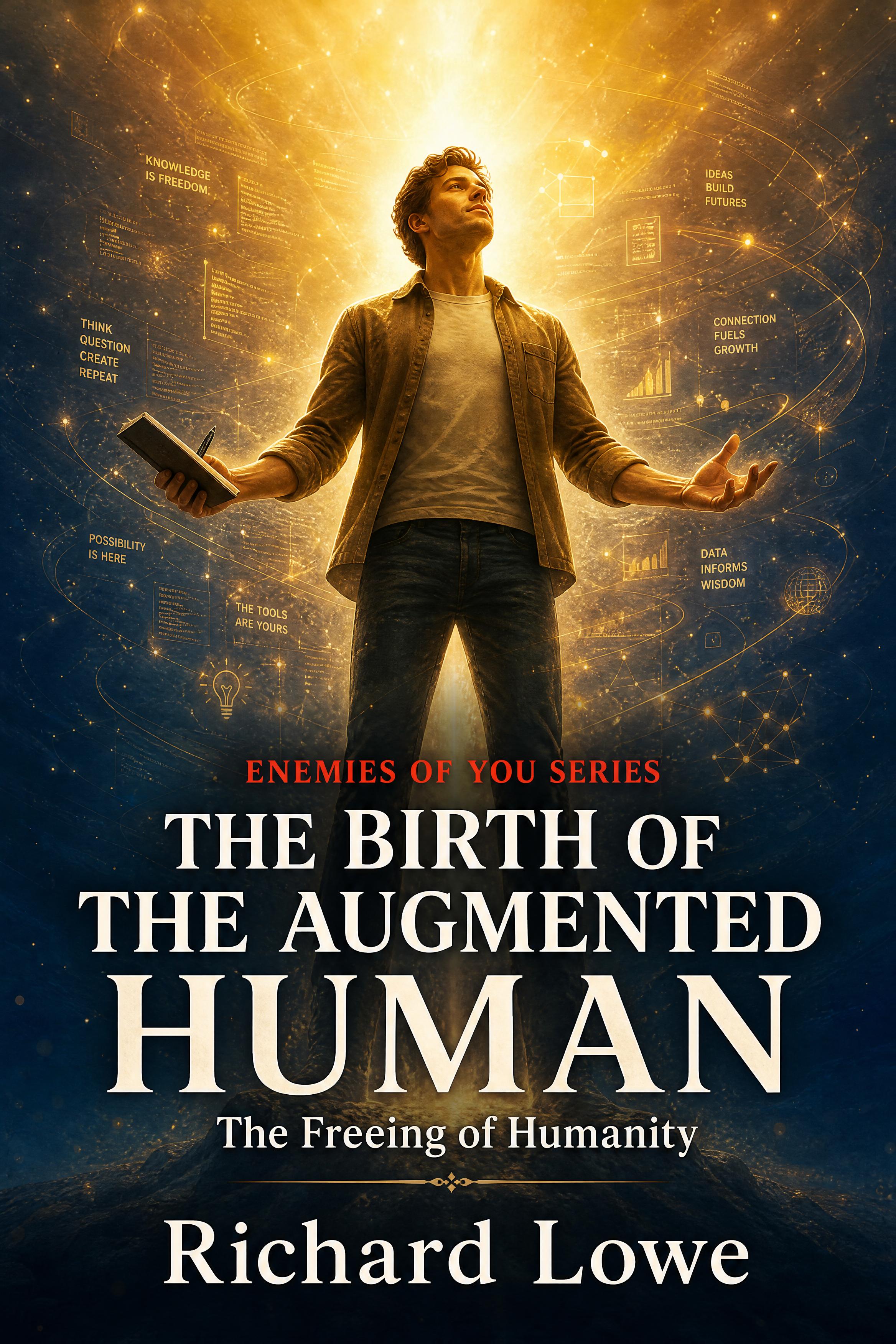
The Birth of the Augmented Human is my case for using AI as a force multiplier for your own thinking, with no credential or certification required.
