TL;DR: AI already runs your spell check, search results, spam filter, photo editor, route map, medical scans, code autocomplete, music recommendations and fraud detection. None of those announced themselves as AI when they arrived, and over twenty years they became normal. What I tell clients about AI is that the next wave will land the same way, and the people who notice it landing will work alongside it.
I find the loud version of the AI conversation exhausting. Half of it is people promising the machines will replace everyone by next year, and the other half is people promising it’s all a bubble. (See also the AI payoff that macro charts miss) Both camps are arguing about a future that’s already sitting in your pocket, and they’re shouting too loudly to notice. Think about yesterday. Just yesterday, the ordinary day you had, between waking up and going to bed.
You typed something and your phone underlined a misspelled word in red.
You ran a search and got results ranked by relevance to your specific query. You opened your email and your spam folder had a dozen messages that never reached your inbox. You took a photo and the camera adjusted exposure and color before you even saw the image. You used GPS to drive somewhere and it predicted traffic and rerouted you around a slowdown. You opened your messages and your phone offered three plausible replies to a text.
You streamed music and an algorithm chose what to play next. Your bank flagged a transaction in another state and asked if it was you. Your code editor suggested the rest of a function as you typed.
Every one of those interactions was AI. Every one of them was performing tasks that, twenty years ago, were research projects. Every one of them now runs invisibly in software you use without thinking about it. This is what I mean when I say the AI revolution already happened. The thing the headlines are still announcing is a wave that’s been integrating into your life for two decades, and the next wave is going to land the same way.
Where is AI already running in your life?
This isn’t a list of future possibilities. It’s a list of what’s already happening, in software you’ve used today, without anyone calling it AI.
The actual AI revolution already happened quietly, and you participated without noticing.Share on X
Spell check and grammar suggestion. Modern autocorrect uses language models trained on billions of words to predict what you meant to type. The technology underneath your phone’s spelling correction is a smaller version of the technology underneath ChatGPT. Nobody calls it AI because it’s been there since the 90s, but the mechanism is the same family.
I use AI every day the same quiet way.
It cleans up interview transcripts, turns a session into a summary I can send the client, and gives me a first pass at an outline. I still write the book. That arrangement feels about as revolutionary as a better filing cabinet, and I’d hate to give it up.
Search ranking. A machine learning model trained to predict which result you’ll click has reranked every search engine result you see. Google deployed RankBrain in 2015. The system that decides which of the 50,000 pages about your search you see first is the same kind of system that’s now generating chatbot responses.
Spam filtering. A classifier trained on billions of emails to predict which messages you’ll consider unwanted fills your email’s spam folder. The accuracy is so high you don’t think about it. You don’t think about how the classifier filtered out the messages you didn’t see. You probably don’t even check the folder most days. AI made one of your daily problems disappear from your awareness.
Photo editing. Every phone camera in the last five years has run a machine learning pipeline on every photo you take, before you see it. Exposure, color balance, noise reduction, sometimes object recognition for portrait mode, sometimes background separation for blur effects. AI edited the photo you took yesterday before you ever saw the unedited version. There’s no unedited version. The phone never showed it to you.
GPS and route prediction. Google Maps and Waze use real-time data from millions of users to predict travel times and reroute around traffic. The prediction is a machine learning model. The reroute decision is a machine learning model. The estimate of when you’ll arrive is a machine learning model. None of it announces itself as AI.
Smart reply. Your phone and your email client offer three plausible quick responses to most messages you receive. The system that generates those responses is a language model trained on patterns in how people reply to messages. It’s been in Gmail since 2017. Apple added smart replies to iPhone Mail in iOS 18. You use it without thinking about whether to call it AI.
Music and content recommendations. Spotify, YouTube, Netflix, TikTok, Instagram. A machine learning model trained to predict which content will keep you engaged generates every recommendation you see. The model decides what it shows you and in what order. You experience this as “the algorithm” instead of as AI, but the underlying technology is the same.
Fraud detection. A fraud detection model evaluates every credit card transaction you make in milliseconds. It decides whether to flag the transaction, ask you to confirm it, or let it through. The model learned from billions of historical transactions. It’s been running on your card for at least fifteen years. You only notice it when it gets you wrong.
Fraud detection is my favorite example, because nobody complains about AI when it stops a stranger from running up charges on their card.
Code autocomplete. Every modern code editor offers suggestions for what you’re typing as you type it. GitHub Copilot is the public version, but plain autocomplete in IDEs has been using machine learning for years. Software engineers don’t experience this as AI. They experience it as “the editor is suggesting what comes next,” and they accept or reject the suggestions hundreds of times a day.
Medical imaging triage. Hospitals have been running machine learning models on radiology scans, pathology slides, and other medical images for the past decade. The model flags scans that look unusual for the radiologist to review first. The radiologist still makes the diagnosis. The model triages the order in which the radiologist sees the scans. This is augmented medicine, running every day, in hospitals that don’t put it on their website.
What do everyday AI tools have in common?
None of them announced themselves as AI when they arrived.
Each of them integrated into existing software as a feature improvement. The user didn’t have to learn anything or opt in. Nobody had to read a press release about how the technology was going to change their life. The technology made the thing they already used a little better. Then a little better. Then a little better, until the user could no longer remember what the thing had been like before.
And in each case, the user was working alongside AI for years without thinking of themselves as augmented. The driver who uses Google Maps is augmented.
The email user with the spam filter is augmented. The photographer with the iPhone is augmented. The radiologist with the triage system is augmented. None of them experience their work as “I’m an augmented human collaborating with artificial intelligence.” They experience it as “this thing I use works pretty well now.”
The next wave will look the same. Bigger language models, more capable assistants and more autonomous systems are going to slide into the software you already use and become features. The loud version, where AI announces itself and replaces a category of workers, is happening at a small number of companies and producing the public failures the magazine covers love. I have no sympathy for executives who gut a department to chase a headline and then act surprised when the work falls apart.
What does the quiet AI revolution mean for the next five years?
If the pattern holds, and it’s held for every previous wave of technology since the printing press, the next five years will produce three things in roughly equal measure.
The first is a wave of public AI deployment failures, where companies try the loud version of the technology, the version where AI replaces a category of workers and announces itself in the press release. Some of these will produce headlines. Some of them will produce lawsuits. Most of them will reverse within 18 months. Why Most AI Rollouts Fail walks through the Klarna case as the template.
Those reversals are unfair to the workers caught in them. People lose their jobs to a press release, and when the company changes course, nobody gives them back the months in between.
The second is a quieter, broader integration of AI features into the software professionals already use. Your email client will get better at drafting replies. Your spreadsheet will get better at analyzing data.
Your design software will get better at generating variations. Your CRM will get better at suggesting follow-ups. The vendors won’t present any of these as AI replacing your job. They’ll present them as features that make your tools more useful.
The third is the slow, durable growth of augmented professionals, who use the new features to do their work better than their unaugmented competitors. The customer service agents whose AI assistant drafts replies they refine. The lawyers whose research tools surface relevant cases faster.
The writers whose research synthesis takes a week instead of a month. The doctors whose imaging triage lets them see the hard cases first. Augmented Beats Replaced. Every Time. is the workforce model. The Birth of the Augmented Human is the longer version of what that looks like across professions.
My take
You’ve been using AI for twenty years and calling it spell check. The next wave will arrive the same way, as features inside software you already use. The loud version, where a company guts a department for a headline, reverses inside 18 months and leaves the workers stranded. Watch the quiet features instead. Learn each one as it lands in your email, your spreadsheet and your research tools. The people who notice will end up working alongside it.
What to do with this
Stop waiting for AI to arrive. It already arrived. It runs your spell check, your search engine, your spam filter, your photos, your routes, your music, and your bank. You’re an augmented human. You’ve been one for at least a decade. You just hadn’t noticed.
The work, then, is the same work it’s always been when a technology settles into your life. Notice where it’s already running and where it could run next. Get sharper at the parts of your job the technology can’t do, and hand it the parts it can so you have time for the rest. I tell clients to use AI like any other tool on the bench: point it at the grunt work and keep your own hands on the judgment.
The book on this: The Day Your Website Died is forty-two chapters on how answer engines decide who gets named, and what to do about it.
The augmented human is a present one. You’re either getting sharper at being one or you’re getting outcompeted by people who are. The five-article cluster from this series that lays out what that looks like in practice runs from How to Adopt AI at Work Without Breaking Your Business through Retrain or Be Replaced and the eighteen articles between them. Each one is a different angle on the same answer.
The technology you can deploy is always smaller than the press release, and the technology that changes your life arrives as features you stop noticing. The next wave is doing that right now. What frustrates me is watching capable professionals sit out the useful part because they’re still waiting for a robot to knock on the door, while the people already using these tools well take the work they’d like to be doing.
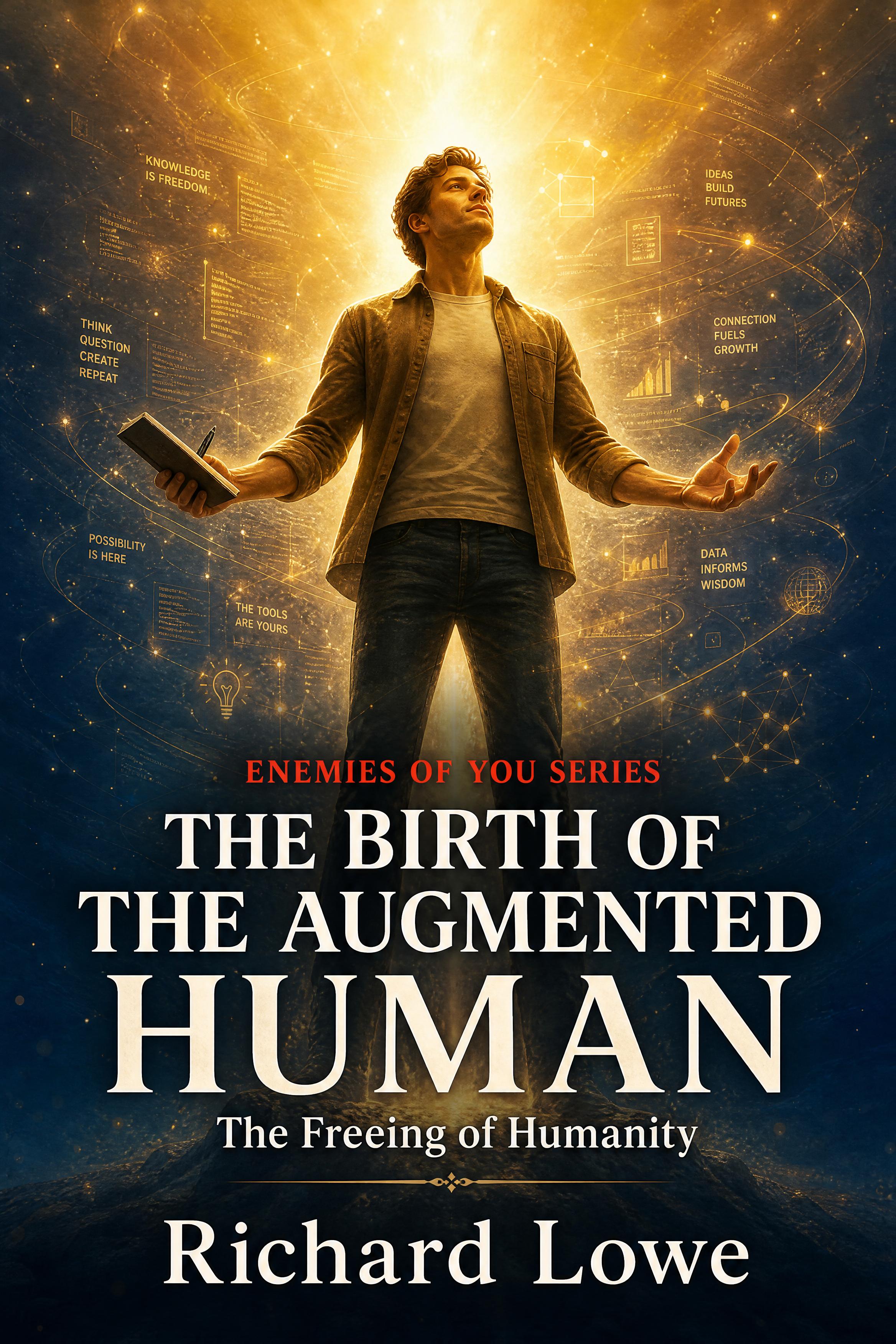
AI already sits inside the tools you use every day. The Birth of the Augmented Human is my book on putting it to work deliberately so it amplifies your thinking.
Frequently Asked Questions
- Save time with Smart Reply in Gmail, Google Workspace Updates
- Inside Google’s RankBrain, Fast Company
- Klarna Is Hiring Customer Service Agents After AI Couldn’t Cut It on Calls, According to the Company’s CEO, Entrepreneur