
You’ve spent thousands of hours in a world most people only see from seat 23C. I’ve spent 33 years in enterprise technology, including 20 as Director of Computer Operations and Technical Services at Trader Joe’s, and complicated systems don’t scare me. Your aircraft is mine to learn, and I’ll learn it. I had to learn all about dentistry for one of my early, early books, and a cockpit is no different. A ghostwriter learns a client’s field well enough to write about it in the client’s voice.
What does scare me is a ghostwriter who doesn’t bother. A pilot’s memoir with a wrong radio call on page twelve gets passed around a hangar as a joke, and the author’s name is on the cover. You earned your ratings the hard way. The book shouldn’t make you look like you didn’t.
Pilots make good memoir subjects for a reason most of them never consider. An airline career that started in the 1970s ran through deregulation and the collapse of Pan Am and Eastern, then through September 11 and the years the industry spent recovering from it. The people in the cockpit saw all of it from a seat nobody else had. US airline pilots have to leave the flight deck at 65, and a big generation of them is reaching that birthday now.
The airline captains get most of the attention, and they’re a fraction of the people who fly for a living. Corporate pilots and military aviators have stories too, and so do the bush pilots who flew mail and groceries into Alaskan villages that no road reaches. Most of those stories get told only in crew rooms and at the airport diner, to people who already know what a missed approach feels like. When the pilot stops flying, the stories stop too.
Is a pilot’s memoir different from any other ghostwritten memoir?
No. A pilot’s memoir is just another memoir.
You tell me your life, and I write it in your voice, with the same process I use for any client who wants their story on paper.
Readers want what every memoir reader wants: who you were before you ever touched a yoke, what made you want to fly, what went wrong along the way, and how you got through it.
The flying is the setting. The person in the left seat is the story.
Nobody has a perfect life, and nobody has a perfect career in aviation either. The checkride you failed and the marriage that didn’t survive the schedule are the chapters readers remember.
A memoir made entirely of greasers and sunsets reads like a recruiting brochure.
Why write it at all? For a lot of pilots, it’s the grandchildren.
They know you flew. They’ve got no idea what it was like to break out of the clouds at minimums with a planeload of people behind you, and when you’re gone, nobody will be able to tell them. A memoir keeps that from disappearing with you.
Can a ghostwriter get aviation details right in a pilot’s memoir?
Yes, if the ghostwriter does the homework and you check the work. A ghostwriter learns your field the way I learned dentistry, by reading what you give them and asking questions until the answers make sense. My piece on writing a book when the ghostwriter doesn’t know your field covers how that works in general.
Aviation readers are merciless about errors, and they should be. Phraseology, procedures, aircraft performance, the order of a checklist, what a particular airport looked like in 1987: pilots know this material cold, and a single mistake tells them the author wasn’t paying attention.
Do you want a retired captain writing a one-star review about your flap settings?
So the accuracy process has two layers. I deliver chapter by chapter, and you read each one as it arrives and mark anything wrong, from a frequency to a callout to a phase of flight described out of order. Then, before the book goes out, have another pilot who flew the same kind of aircraft read the whole manuscript. They’ll catch what you’ve stopped seeing.
Nobody has a perfect life, and nobody has a perfect career in aviation either.
Era matters too. A memoir that spans a long career crosses generations of equipment, from steam gauges to glass cockpits, from paper charts to tablets. Each chapter has to sound like the year it happened. Did you navigate that leg with an ADF needle or a moving map? Readers who flew then will notice if the book gets it wrong, so tell me what was in the panel and I’ll write it that way.
Hand over the manuals too. The operating handbook for each aircraft you flew, old training materials and any checklists you kept give me the vocabulary and the numbers before we ever sit down. Then our interview time goes to the stories, where it belongs, and you’re not spending an hour explaining what a V-speed is. Your logbooks help more than you’d expect. Dates, aircraft, routes and times anchor the stories, and they keep your memory honest about which year the engine failure happened.
How does a ghostwriter explain flying to readers who’ve never been in a cockpit?
By explaining only what the story needs, at the moment the story needs it. A reader in the middle of your engine failure doesn’t want a lecture on fuel systems. They need one sentence that tells them what the sound meant and why your stomach dropped.
You’re writing for two audiences at once. Pilots want the details right. Everyone else wants to feel what it was like.
You satisfy both by keeping the technical terms accurate while making sure no general reader gets lost, and the best way to do that is to translate the jargon inside the action instead of stopping the action to define it.
If a term will come up again and again, define it once in plain language and use it the same way every time. If it shows up once, cut it or explain it in passing. Acronyms get spelled out the first time. Radio calls stay accurate, with enough context that a non-pilot understands what was being said and why it mattered.
How much is too much? If a paragraph of explanation makes a non-pilot’s eyes glaze, it’s too much, and it goes in an author’s note at the back for the readers who want it. I’m useful here because I’m an outsider. When I don’t understand something you’ve told me, your general reader won’t either, and my questions show us exactly where the book needs a sentence of explanation.
How does a ghostwriter capture a pilot’s voice in a memoir?
By keeping the understatement and showing what was underneath it. Pilots are trained to sound calm on the radio no matter what’s happening, and a lot of them tell their life stories the same way. “We had a little problem with the number two engine” could describe the worst ten minutes of your life.
That calm voice belongs in the book, because it’s yours and because readers love it. But the reader also has to know what the calm was covering. So the chapter gives your flat radio call, then what your hands were doing and how long it took afterward before you could eat. The contrast between the voice and the facts carries more tension than any dramatic adjective could.
Your review is where the voice gets checked. If a sentence sounds like a movie pilot instead of you, strike it and tell me how you’d have said it.
How would you tell this story to another pilot at the bar after a trip? That version is the one I’m after.
How does a ghostwriter handle close calls and mistakes in an aviation memoir?
Directly. The close calls are some of the best material in any pilot’s memoir, and the mistakes you made and learned from are worth more to readers than any perfect landing. I probe for failures on purpose. Clients drift toward making themselves the hero of every emergency or toward beating themselves up over one bad decision thirty years ago, and I talk them toward the middle, where you tell what happened and what you’d do differently now. Other pilots read those chapters and learn something, and general readers trust you more for telling them.
Some of the hardest material in aviation memoirs is about the people who didn’t make it: the friend who died in a crash, or the student you soloed who later went down. Clients cry in interviews all the time, and it’s fine. I ease us into something unrelated for a while and come back to the hard story in a later session. When I offer to leave a painful story out, the client nearly always insists it goes in. My article on writing through loss with a ghostwriter covers what those sessions are like.
If you were involved in an accident or incident that was investigated, stick to what you experienced and what the public record shows.
If any litigation is still open, talk to a lawyer before you tell that story to anyone, including your ghostwriter.
A pilot’s memoir with one wrong radio call gets passed around the hangar as a joke. Get the details right or don’t write it. – Richard LoweShare on X
Can a ghostwriter help a military pilot write a memoir?
Yes. A military flying career has everything a memoir needs: training that breaks people, missions with real stakes, friends lost, and a return to civilian life that’s harder than anyone admits. My article on hiring a ghostwriter for a veteran’s or first responder’s memoir covers the military side of the process in more depth.
If you held a security clearance, find out before the interviews start whether your nondisclosure obligations require a prepublication security review of the manuscript. Contact the review office for your former service or agency and ask. Plan the schedule around that review, because a finished manuscript that sits in review for months is better than a published book that violates an agreement you signed.
Don’t skip the years after the uniform. The move from military flying to an airline or corporate cockpit, or out of aviation altogether, is a story plenty of readers are living right now. What did you miss? What surprised you? Those chapters speak to every veteran reading the book, whether or not they ever flew.
Tell your ghostwriter which operations and aircraft capabilities you’re not allowed to discuss, and then don’t discuss them in the interviews either.
I tell every client at the kickoff: never tell me anything you don’t want in the book. For a military pilot, that rule covers anything classified.
What can a pilot say about an airline employer in a ghostwritten memoir?
Your own experiences, told accurately and fairly.
Check your employment agreement and your company’s policy on publications before you write about a current employer, and keep proprietary procedures and internal documents out of the book.
Former employers and old captains are fair game for your honest account, with care. Describe what people did and leave out verdicts about their character. If you were treated badly, you’ll want revenge at first, and I understand why. I coach balanced rewording instead. It’s fairer, and it’s legally safer. I brief every client on the legal risks and show them how to change details so a story works without exposing anyone. My article on writing about living people without getting sued covers the rules.
I won’t write a revenge memoir.
If the point of your book is to settle a score with the chief pilot who washed you out, the book will hurt you more than him.
My take
Get every technical detail right, because pilots will read the book and one bad radio call loses them. Your writer doesn’t need to fly, but you have to check each chapter. Military pilots should find out about security review before the manuscript goes anywhere. Describe what old captains did and leave their character out of it. I won’t write a revenge memoir, and a book that settles a score with a chief pilot hurts you more than him.
What should a pilot prepare before hiring a memoir ghostwriter?
Pull out your logbooks, photos, letters and any journals you kept.
Make a list of the flights you still replay in your head and the moments you’re proudest of, even if you’d never say so at the airport. That material gives your first interviews a running start.
Every session is recorded, and you get a summary document afterward. A lot of my clients dislike Zoom and would rather talk by phone or meet in person. Local clients meet me at the Safety Harbor library, and remote clients call from anywhere. If you’re nervous about talking to a stranger for hours, my piece on what memoir interviews are like walks through it.
Look past the bookstore, too. You’re very unlikely to earn a ghostwriter’s fee back through book sales, and I tell every client that. The return comes from what the book opens up. Aviation museums, flying clubs, veterans’ groups and flight schools all book speakers, and you can order author copies at cost plus shipping and have them sent straight to the event.
Decide who the book is for, too.
Your grandchildren want a different book from the one other pilots want, and your ghostwriter needs to know which one you’re writing.
Start with the logbooks: go through them tonight and flag the ten entries with a story behind them. The Memoir Hub covers the rest of the process, and my memoir process page shows how a project runs from the first interview to the last chapter. The passenger in 23C only ever saw the wing. Your book lets them see what you saw from the front.
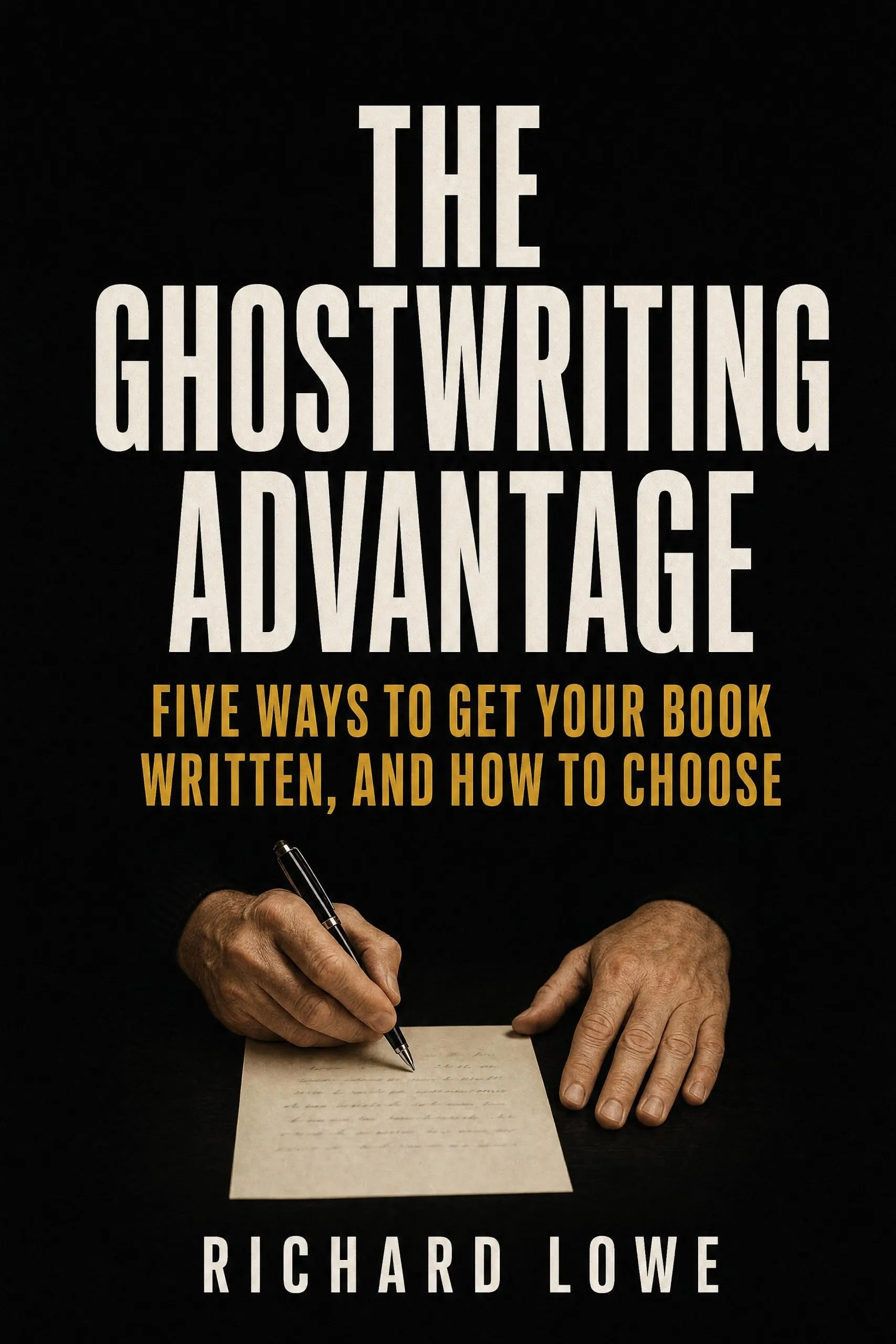
Pilots expect precision, and a memoir about flying has to deliver it. The Ghostwriting Advantage explains how to get your book written for you by a ghostwriter who checks the details.
