TL;DR
7/10. The broadest Writer’s Digest compilation, surveying the whole of fiction craft, character, plot, structure, viewpoint, dialogue, revision, from many expert contributors. Useful as a beginner’s map of the territory, but covering everything means each element gets only a survey. A sampler and starting point.
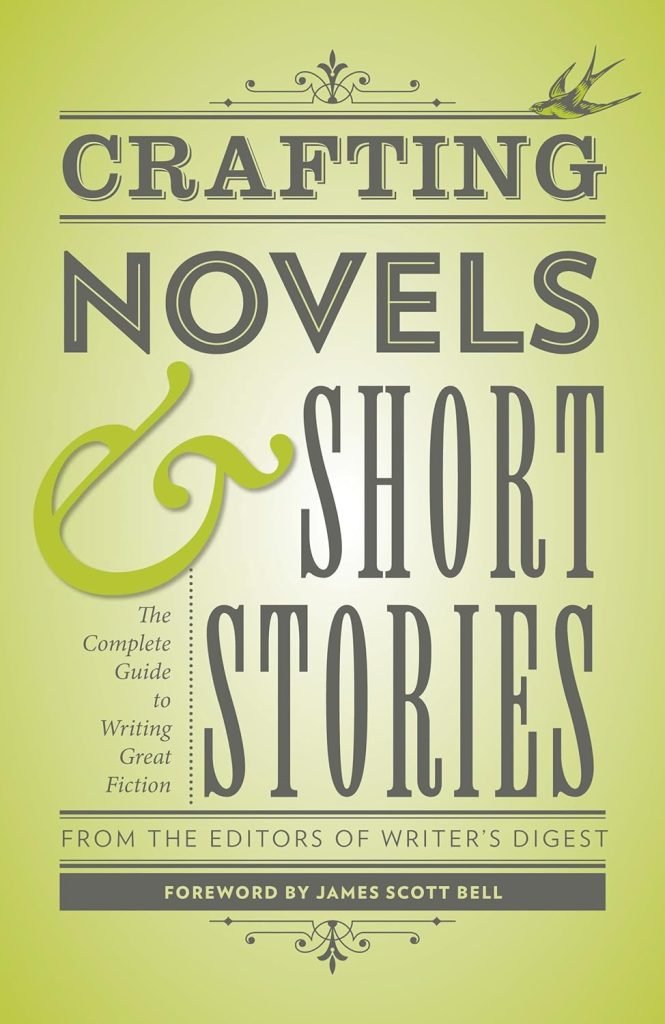
Crafting Novels & Short Stories is the broadest of Writer’s Digest’s compilation volumes, an anthology that gathers material from many authors and craft books to cover, in a single fat volume, the whole of fiction writing: character, plot, structure, viewpoint, dialogue, revision, and more. It’s the all-in-one option among the compilations, and reviewing it means weighing the appeal of completeness against the inevitable shallowness that comes with trying to cover everything at once.
For a beginning writer who wants one book that touches every major element of craft, the breadth is attractive, a single purchase that surveys the entire field.
The everything-in-one-place appeal
The book’s strength is exactly its scope. It gathers strong material on the full range of fiction fundamentals from many experienced contributors, so a new writer gets exposure to character building, plotting, structure, point of view, scene construction, dialogue, and revision all between two covers, each from a writer with real expertise in that area.
As an orientation to the whole of craft, a map of what a fiction writer needs to learn, it does a real service, and the contributor model means each topic comes from someone who knows it instead of from one generalist stretching across all of it.
Keep reading
Building a craft library: which books to start with: where an all-in-one survey like this fits among the focused books worth owning.
The cost of covering everything
The unavoidable trade-off is depth. A single volume covering all of fiction craft can give each element only a survey, so a writer serious about any one area, dialogue, structure, character, will quickly outgrow the relevant chapters and need a dedicated book. The compilation format worsens this: assembled from separate sources, it has the same unevenness and lack of progressive coherence as its sibling volumes, a collection of good pieces instead of a unified course.
It’s a sampler, excellent for discovering what you need to study next, limited as a place to study it deeply.
Keep reading
Story structure: the architecture every novel needs: one element this survey introduces, treated in the depth a single subject deserves.
The novel-and-short-story question
One more note: the title promises both novels and short stories, but the two forms have different demands, the short story’s compression and single effect versus the novel’s sustained architecture, and a single survey volume can only gesture at the distinction instead of treat each form’s specific craft in depth. A writer focused on the short story will find the coverage thin on what makes that form unique, and is better served by a book devoted to it.
Is Crafting Novels & Short Stories worth reading?
It’s a useful, broad orientation to fiction craft, valuable for a beginner who wants one book mapping the whole territory from expert contributors. It loses ground for the inevitable shallowness of covering everything, the anthology format’s unevenness, and a title that promises more form-specific depth than a survey can deliver. Buy it as a first overview and a guide to what to study next; don’t expect it to teach any single element deeply. A solid sampler of the craft, best as a starting point instead of a destination.
Explore the hub
The Writing Hub: the full range of fiction craft, gathered in one place.
Frequently Asked Questions
Other Books in the Creative Writing Essentials Series
Other Books From – Being an Author