Latest
Profiles in CourageAmerican SoldierI, RobotA World at Arms: A Global History of World War IICampus BattlefieldTime for a Turning Point21 Days to Success with LinkedIn: Business Social Networking the Gnik Rowten WayLifeOpen: An AutobiographyDid I Ever Tell You This?: A MemoirBeneath a Scarlet SkyLove’s Executioner and Other Tales of PsychotherapyStranger in a Strange LandShattered Sword: The Untold Story of the Battle of MidwayThe Bell JarThe Phone Book: The Curious History of the Book That Everyone Uses But No One ReadsDesigning Casinos to Dominate the CompetitionTrump: The Art of the DealMasters of NetworkingNetworking Your Way to SuccessSoldier for Life: Leader Lessons from the 12th Sergeant Major of the ArmyThe Library BookFlorida Roadkill21 Days to Success Through Networking: The Life and Times of Gnik RowtenPodkayne of MarsRight Wing RevolutionThe MAGA DoctrineThe College ScamStop, in the Name of GodPa’anRadioThe Sage of SagittariusDoes Explicit Sex Sell Books? An Answer to The Absolute Degeneracy of Modern WritingThe Mary Sue: How a 1973 Star Trek Parody Became a Writing TermWhat the AI Writing Survey Says About Jobs, Freelancers and Fiction AuthorsHow Long Does Google Take? Crawling, Indexing and Recovery TimesLife of Pi50 Years of Duty: One Police Officer’s Compelling Journey from State Trooper to County SheriffBreaking Rank: A Top Cop’s Exposé of the Dark Side of American PolicingBlack in Blue: Lessons on Leadership, Breaking Barriers, and Racial ReconciliationCalled to Rise: A Life in Faithful Service to the Community That Made MeVigilance: My Life Serving America and Protecting Its Empire CityTurnaround: How America’s Top Cop Reversed the Crime EpidemicCollaborate or Perish! Reaching Across Boundaries in a Networked WorldThe Profession: A Memoir of Community, Race, and the Arc of Policing in AmericaSTEP-UP and LEAD: A Guide for Dynamic, Innovative Leadership in Law EnforcementStriving for Justice: A Black Sheriff in the Deep SouthThe Diagram GalleryGar Travis: A Tribute to One of the Best Faire PhotographersReverse Tropes: Six Ways to Turn a Tired Trope Inside Out
The Writing King Your Ethical Ghostwriter. Your Story, Done Right.

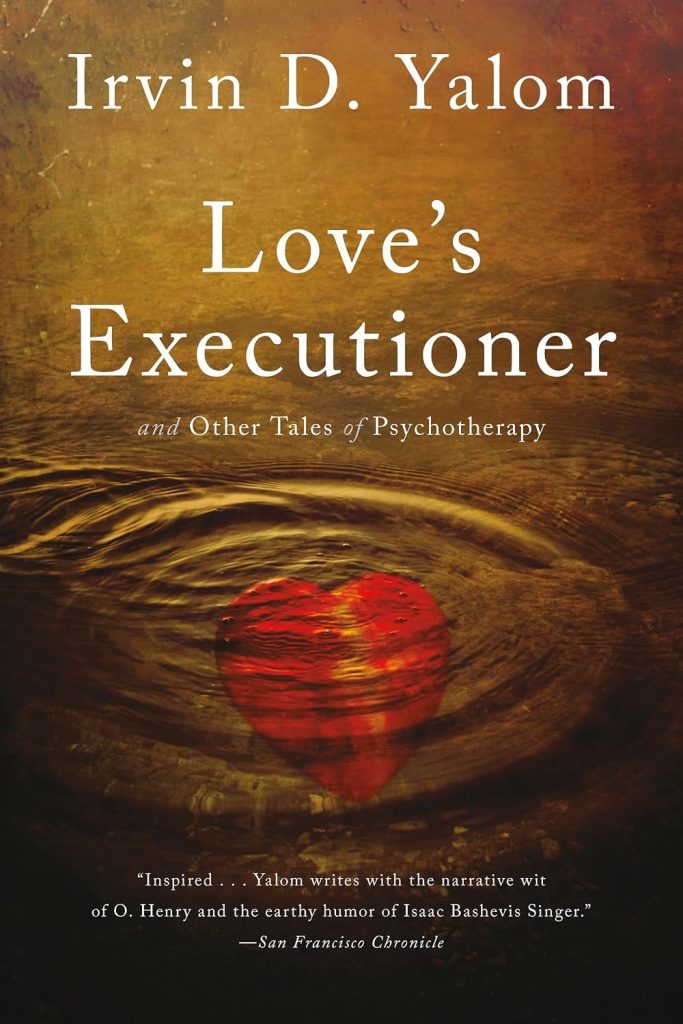
Love’s Executioner and Other Tales of Psychotherapy

Love’s Executioner and Other Tales of Psychotherapy

And Other Tales of Psychotherapy

Category:Psychology
Publisher:Basic Books
ISBN:0465020119
ISBN:9780465020119
Language:English
Share:

Buy Now

Description:

TL;DR

Irvin Yalom’s 1989 collection of ten case stories from his psychotherapy practice. It reads like short fiction, it’s unusually honest about the therapist’s own mistakes, and it’s the book I point clinicians to when they ask how to write about patients.

Therapists who want to write a book usually stop at the same question. How do you write about patients without betraying them?

Irvin Yalom answered it in 1989. Love’s Executioner is ten stories from his practice, disguised so thoroughly that the patients can’t be identified and written so well that they read like short fiction.

What is Love’s Executioner about?

Ten patients, ten problems, and one therapist trying to help. In the title story, an elderly woman named Thelma is still obsessed with a younger therapist who had an affair with her years before. In another, a patient carries three unopened letters he can’t bring himself to read. Others deal with grief, a dying man’s fury, a woman haunted by a dead child and a patient who can’t let go of a lover who abandoned her.

Underneath every case are what Yalom calls the four givens of existence: death, freedom, isolation and meaninglessness. His argument, from his years of existential psychotherapy, is that a lot of what brings people into therapy comes from running into one of those four. The stories show him finding the given under the symptom.

Why is Love’s Executioner so candid?

Because Yalom puts himself on the page too, flaws included. He admits when he was bored, when he disliked a patient and when he got it wrong. The story readers argue about most is “Fat Lady,” in which he confesses his revulsion at a patient’s weight and then describes how the therapy changed both of them. Some readers find it hard to take. Others think it’s the most honest thing in the book.

Either way, it isn’t the voice of a professional protecting his image.

Who is Irvin Yalom?

An American psychiatrist, born in Washington, D.C., in 1931, and a professor emeritus at Stanford. He wrote standard textbooks on group therapy and existential psychotherapy before he turned to stories. After this book came novels, including When Nietzsche Wept. It built a fictional friendship between Nietzsche and the physician Josef Breuer.

What should a therapist writing a book take from Love’s Executioner?

That the composite and the disguise are the tools, and they work. Yalom changed names, ages, occupations and circumstances until the patient vanished and the clinical truth stayed. Every therapist writing about practice uses some version of that technique, and his book is the clearest model of it on the shelf.

The other lesson is the honesty. A clinician who writes only about successes produces a brochure. Yalom wrote about where he struggled, and the book is still in print after thirty-five years and still assigned to students who are learning what therapy feels like from the chair across from the patient.

Keep reading

Writing a book as a therapist: how clinicians write about patients without breaking confidentiality, and why the composite case works.
Frequently Asked Questions

How many stories are in Love’s Executioner?
Ten stories from Irvin Yalom’s psychotherapy practice, each built around a patient whose problems trace back to death, freedom, isolation or meaninglessness.
When was Love’s Executioner published?
Basic Books published it in 1989.
What are Yalom’s four givens of existence?
Death, freedom, isolation and meaninglessness. Yalom argues that many problems that bring people to therapy come from confronting one of them.
Are the patients in Love’s Executioner real?
They’re based on real patients, with identities heavily disguised so they can’t be recognized.
Why is the Fat Lady story controversial?
In it Yalom admits his revulsion at a patient’s weight, then describes how the therapy changed both of them. Some readers find his candor uncomfortable.
What else has Irvin Yalom written?
Textbooks on group and existential psychotherapy, and novels including When Nietzsche Wept.

About the author

Irvin D. Yalom

Irvin D. Yalom is an American psychiatrist and professor emeritus at Stanford, born in 1931, who wrote standard textbooks on group and existential psychotherapy. He then turned to stories and novels, including Love's Executioner and When Nietzsche Wept.

More about Irvin D. Yalom

Back