
Scott Raymond Adams was born in Windham, New York in 1957, took an economics degree from Hartwick College and an MBA from Berkeley, and worked at Crocker National Bank and then Pacific Bell before the comic strip he drew before work became his career.
Dilbert began syndication in 1989 and grew slowly until Adams did something almost nobody was doing in the early 1990s: he printed his email address in the strip. Readers wrote to him in enormous numbers describing what their own employers had done, and the strip's material shifted from a generic office setting to a documentary of corporate absurdity supplied by the people living in it.
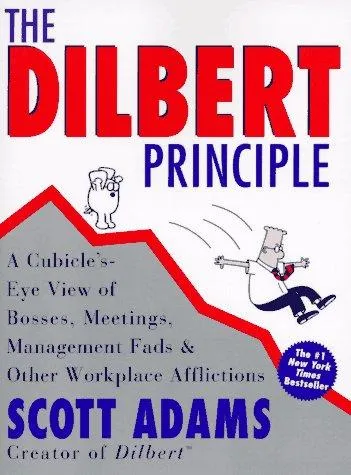
The Dilbert Principle, published in 1996, was a number one New York Times bestseller and put the reader mail to book length. Its stated principle, that the Peter Principle was too optimistic and that organizations move the least effective people directly into management to limit the damage they can do, is a joke with a real observation about incentives underneath it.
The serious argument in the book is that the people in it are not stupid. They are responding sensibly to systems that reward appearing productive over being productive, which means the failures are failures of incentive design and complaining about the people is the wrong response.
He published further collections and business satires, including Dogbert's Top Secret Management Handbook and The Joy of Work. He also wrote about his experience of spasmodic dysphonia, a voice disorder he eventually recovered from.
Adams became a controversial public figure through his commentary in later years, which led to the strip being dropped by most of its remaining newspaper syndication in 2023. The 1990s work stands on its own terms and its analysis of corporate incentive design has aged better than its technology references.
Scott Adams
Professional ghostwriting for executives, founders, coaches, and authors who want to get the book done right. 113+ books authored. 54+ ghostwritten for clients.
Ready to discuss your book?
BOOK YOUR PRIVATE CONSULTATIONNo pitch. No pressure.
© 2026 Richard Lowe. The Writing King. All rights reserved.