Latest
You Don’t Own Anything AnymoreThe Budget Decided How My Department Was ShapedWhy Your Competitor’s Book Is Working and Yours Would NotWhy Are These Guys Smiling? A Business Book That Became a Wrestling MemoirPangram Wants to Decide Who Gets PublishedWhat You Have Enough Material For Right NowWhen a Book Is the Wrong ToolThe Woke VirusGalactic InvasionChatGPT Turns Four: From a Free Research Preview to GPT-6What’s New at The Writing King: Week of November 1, 2026Diwali: The Festival of Lights and the Story Behind the LampsHow Much Water and Power Does Heavy AI Use Take? I Ran My Own NumbersBad Boys: Ride or Die (2024)Anti-Communism Week: Remembering the Writers Communism SilencedVesuvius Day: The Teenager Who Wrote Down Pompeii’s Last DayVoyager 1 One Light-Day: Fifty Years to Travel One Day of LightVellum Added an Optional AI Feature. A Pile-On Killed It in a Day.Are AI Subscriptions Losing Money? The Gym Membership Math Says NoAI Terms Every Writer Should Know, and Why Each One MattersWorking While Sick: What 24/7 On Call Cost MeHe Banned AI From His Writing Group. His Own Cover Got Called AI Slop.Who Writes the Fake Fan Mail Authors Get? Inside the Scam CompoundsSMS Appointment RemindersJoe Rockey: Ghostwriting His BookFree BooksDarrell Stern: Stop Being Invisible, Become UnmissableHow to Turn Your Expertise Into a Book People Want to Read | The Expert MethodWhat’s New at The Writing King: Week of October 25, 2026Challenger Remembrance Day: The Engineer Who Wouldn’t SignJoel Salomon: The Truth About MoneyReddit Is Putting Up a Login Wall. Wikipedia Won’t Be Far Behind.Victoria Chemko: The Body Is the First TechnologySir Patrick Stewart: A TributeA Year in the Bank: ADHD, Face Blindness and the Freedom to Walk Out | The Impossible Puzzles Show, Episode 326A Yale Economist Says We Won’t Be Missed. He Forgot the Bread Line.Walter Koenig: A TributeAI Has Paid Off Outside Tech. Apollo Is Reading the Wrong Scoreboard.I Don’t Post Bad ARC Reviews. I Send the Author a Note.The Little Red Book of Stuff That Works!Your Kids Are Your Own FaultGrow a PairYou’re Broke Because You Want to BeIt’s Called Work for a Reason!No Time for TactShut Up, Stop Whining, and Get a LifeWilliam Bessette: AI Enablement and Child Welfare TechnologyFree Book Planning ToolsWhat’s New at The Writing King: Week of October 18, 2026Ghostwriting by the Numbers: Timelines, Word Counts and the First Call

Jerri Williams

Jerri Williams

Jerri Williams spent twenty-six years as a special agent with the Federal Bureau of Investigation, working primarily major economic fraud and corruption cases, and served as a media representative for the Bureau before retiring.

That combination of investigative work and public affairs is the reason her writing exists. As a spokesperson she spent years watching journalists, novelists, and screenwriters get the Bureau wrong and being largely unable to correct them, and the books and the podcast came out of that accumulated frustration.

She hosts the podcast FBI Retired Case File Review, in which she interviews former agents about the cases they worked. It has run to hundreds of episodes and functions as an oral history of the Bureau assembled from the people who were in it, which very little else does.

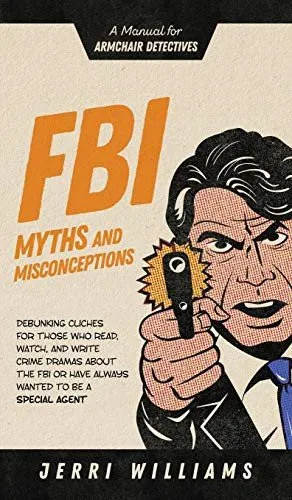
FBI Myths and Misconceptions: A Manual for Armchair Detectives, published in 2019, takes the twenty most common clichés about the FBI in books, television, and film and corrects each in its own chapter, supported by the Bureau's public information and by quotes from retired agents. It is written explicitly for writers, and its structural decision to end each chapter by assessing a real novel, film, or series against the fact is what makes the corrections stick.

The profiler material is the correction most novelists need. The popular image of an analyst who chases killers in the field and confronts the suspect derives from Thomas Harris and everything downstream of him, and the reality is analytical, mostly desk-based, and advisory.

She has also written crime fiction, including the Pagan Light and Greedy Givers series, drawing on the economic crime work that occupied most of her career.