TL;DR
9/10. A beloved and unexpectedly sophisticated book. A witty, romantic, swashbuckling adventure that delivers every thrill of its genre, and lays over it a sly humor and one of the cleverest framing devices in popular fiction. It gets a high rating for that double pleasure and its master-class metafiction, falling just short of the top only because its ironic narration isn’t to every taste.
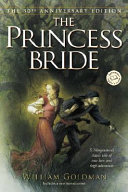
The Princess Bride by William Goldman is that rare book that’s beloved, a witty, romantic, swashbuckling adventure wrapped in one of the cleverest framing devices in popular fiction. Presented as Goldman’s abridgment of a much longer classic by the invented author S. Morgenstern, the good parts version his father supposedly read him as a boy, it tells of the most beautiful girl in the world, the farm boy who loves her, pirates, giants, swordsmen, and a thoroughly hateful prince, all narrated with a sly, knowing humor that’s charmed readers for decades. It’s a delight, and it gets a high rating for being both enormously entertaining and unexpectedly sophisticated.
The famous framing conceit is what gives it its charm. Goldman pretends to abridge a stuffy classic down to only its exciting parts. That lets him tell a rollicking adventure and gently mock the conventions of adventure at the same time.
Adventure and wit together
The book’s first great pleasure is that it works completely as the swashbuckling romance it pretends to abridge. The story of Westley and Buttercup, with its sword fights, its giants and schemers, its true love and high adventure, is thrilling and funny and romantic, delivering everything the genre promises.
Goldman layers wit over all of it. The narrative voice is constantly amused, slyly subversive, and aware of the conventions it’s honoring and sending up at once. The book satisfies as adventure while also being clever about adventure. That double pleasure, the straight delight of the tale and the knowing humor around it, makes it endlessly rereadable and beloved across generations.
Keep reading
Humor and wit woven through an adventure story: Goldman’s amused, knowing voice, in the craft of writing funny.
Watch: The Princess Bride by William Goldman, Regan Davis
The framing device
For a writer, the book’s most instructive feature is its brilliant use of the frame. By presenting the novel as his abridgment of S. Morgenstern’s longer work, complete with invented commentary about what he’s cutting and why, Goldman creates a layered, metafictional structure that lets him comment on storytelling itself, on what makes a story exciting, on the gap between the tale we want and the one we’re given, even as he tells the tale.
It’s a model of metafiction that never becomes precious or self-indulgent, because the underlying adventure remains engaging. The device deepens the book without weighing it down, showing how a clever frame can add a whole dimension of meaning and humor to a simple story.
Keep reading
Metafiction and the clever frame around a story: Goldman’s good-parts-version conceit, in the craft of stories aware of themselves.
What are the weaknesses of The Princess Bride?
The caveats are minor. The very thing that makes the book special, its constant ironic, intrusive narration, isn’t to every taste; a reader who simply wants the straight adventure may find the interruptions and the metafictional games more distracting than delightful, though most readers find them the best part. Its humor and sensibility are also somewhat of their time, and a few attitudes read as dated, in the gently self-aware way of older popular fiction.
And for readers who know the much-loved film first, the book is similar in spirit but different in style, with more of Goldman’s voice and digression. These are small notes against a delightful and clever book that fully deserves its devoted following.
Keep reading
My review of the 1987 film: how the adaptation handles the frame: the much-loved movie Goldman adapted from his own novel, and what it kept and changed.
Is The Princess Bride worth reading?
It’s a beloved and unexpectedly sophisticated book, a witty, romantic, swashbuckling adventure that fully delivers the thrills of its genre while layering over them a sly, knowing humor and one of the cleverest framing devices in popular fiction. It gets a high rating for that double pleasure, straight delight and metafictional wit together, and for being a lesson in how a clever frame and an amused voice can deepen a story without weighing it down.
It falls just short of the very top only because its constant ironic narration isn’t to every taste and a little of its sensibility is dated. For nearly any reader, and especially any writer interested in humor and frame, it’s a joy. Highly recommended.
Explore the hub
The Entertainment Hub: beloved classics and the books that delight, gathered in one place.
Frequently Asked Questions
Other Books From – Adventure Fiction
About the author