
Isaac Asimov (January 2, 1920 to April 6, 1992) was a Russian-born American writer and professor of biochemistry at Boston University, widely considered one of the most prolific and influential writers of the twentieth century. He wrote or edited more than five hundred books across every major Dewey Decimal category except philosophy, ranging from science fiction and mystery to popular science, history, biblical commentary, Shakespeare studies, and humor. Together with Robert A. Heinlein and Arthur C. Clarke, he is considered one of the Big Three of twentieth-century science fiction.
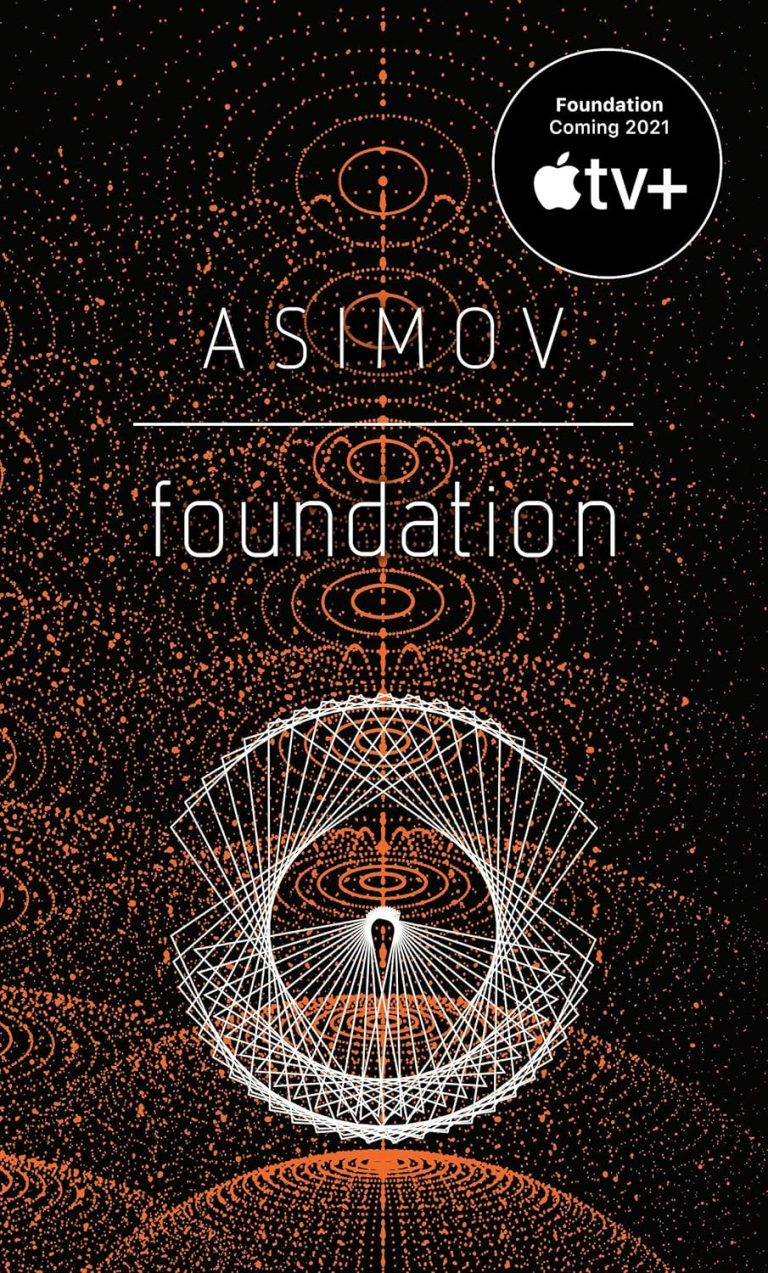
His Foundation series, beginning with the original trilogy Foundation, Foundation and Empire, and Second Foundation, set out a galactic-scale story of psychohistory and the collapse and rebuilding of civilization across thousands of years. The trilogy won the one-time Hugo Award for Best All-Time Series in 1966, beating out The Lord of the Rings. He later wrote additional Foundation novels that tied the series into his earlier Robot novels and the Empire novels, building a single shared future history that has shaped science fiction world-building ever since.
His Robot stories, collected in I, Robot and other volumes and extended into novels including The Caves of Steel, The Naked Sun, and The Robots of Dawn, introduced the Three Laws of Robotics, an in-fiction engineering framework that has since been quoted and debated in real AI safety and ethics literature. The Robot novels also helped legitimize science fiction by fusing the genre with police procedural and detective fiction, demonstrating that science fiction could carry serious adult plotting and characterization.
Asimov was also one of the most successful popularizers of science of his generation. He wrote essay collections for The Magazine of Fantasy & Science Fiction for more than thirty years, plus standalone books explaining astronomy, physics, chemistry, biology, mathematics, and the history of science to general readers. He also wrote multiple guides to Shakespeare and to the Bible, and the Black Widowers mystery series. He served as president of the American Humanist Association from 1985 until his death.
Born in Petrovichi, Russia (now in Smolensk Oblast), and brought to the United States as a small child, Asimov grew up in Brooklyn working in his family's candy stores, earned a Ph.D. in biochemistry from Columbia University in 1948, joined the Boston University School of Medicine faculty, and held the title of Professor of Biochemistry there for the rest of his life. He received multiple Hugo and Nebula awards across his career and the Science Fiction Writers of America Grand Master Award in 1987.
A note from Richard: I read Foundation and I, Robot when I was twelve, and they were the books that pulled me into science fiction for life. The Foundation books in particular shaped how I think about civilizations, history as a long arc, and the idea that one person's awareness can shift the course of everything that follows. The DNA shows up in my own Peacekeeper series, where Admiral Jessica Lang's awakening to cosmic consciousness in a crumbling galactic empire is, in a real sense, my conversation with Asimov forty years later.
Isaac Asimov

Isaac Asimov
Professional ghostwriting for executives, founders, coaches, and authors who want to get the book done right. 113+ books authored. 54+ ghostwritten for clients.
Ready to discuss your book?
BOOK YOUR PRIVATE CONSULTATIONNo pitch. No pressure.
© 2026 Richard Lowe. The Writing King. All rights reserved.